Sustainable Fashion is Expensive but Maybe That's A Good Thing
A common get out jail free card when it comes to sustainability is ‘it’s too expensive!’- one I often use myself whilst giving all the money I do have to fast fashion retailers. And it’s true, it can be expensive to support sustainable fashion. But maybe that’s not such a bad thing.
Buying a dress from a sustainable fashion brand such as Reformation rather than from a fast fashion brand such as Zara is going to cost two, three or maybe even four or five times the amount. This is because the processes involved in making sustainable clothing, from using recycled fabrics, to reducing the amount of water used in the production process, to paying workers proper wages, costs money.
Thinking about how much Reformation, to continue with this example, pays their factory workers, (approximately £5.70 per hour) in comparison to a fast fashion retailer shows, in itself, why Reformation clothing is far more expensive than its fast fashion equivalents. Reformation factory workers earn approximately £5.70 per hour whilst factory workers in Bangladesh creating clothes for fast fashion brands earn approximately £25 a month for working 14 hour days, which means, if they work 5 days a week, they earn approximately 8p per hour. Reformation factory workers wages are 71x higher than factory workers working for many fast fashion brands in deprived countries. Considering this, paying 3 or 4x the amount for a Reformation piece compared to a high-street piece doesn’t seem all that steep, and that isn’t even taking into account the cost of the environmentally friendly processes that goes into sustainable brands clothing.
The fact is, sustainable clothing is expensive to make. But it’s only expensive compared to high-street clothes that are made at the cheapest price possible so they can be sold for the cheapest price that will make the most profit. But these cheaply made clothes are destroying the planet, both their production and their lifespan after that.
I mean, this isn’t exactly breaking news. We all know fast fashion is a terribly polluting industry but, despite this, we still can’t, myself included, stop buying into the brands who are at the forefront of this pollution. And I think the reason we do this is because we have the get-out-of free card that ‘sustainability is expensive.’ But it’s only expensive in comparison to what we know to be the price of clothing.
For the sustainable fashion movement to truly take off, I believe we must re-define what the price of clothing is. Rather than considering £15, for example, as the average price for a t-shirt, we need to think of that as the average price of a t-shirt, that has not been made sustainably or ethically. The average price of a t-shirt, and every other single piece of clothing, is, in fact, higher than what we believe it to be, when they are made correctly, and rather than considering sustainable clothes as particularly expensive, we need to consider high-street clothing as worryingly cheap. Sustainability should be the standard not a selling point of a brand and changing our perspective is the only way that that’s going to happen.
Something that annoys me about myself is that I unthinkingly will buy 4 pieces of clothing that cost £20 each over the course of a month or a couple of weeks, but I will rarely buy something that costs £80. I’d like to think that I value quality over quantity in my wardrobe but somehow, it always seems that 4 ‘affordable’ pieces, probably not of the best quality, that I like, are a better investment than one more expensive piece, of much better quality, that I love.
This mindset is so damaging because not only am I supporting unsustainable fashion brands rather than the sustainable ones that truly deserve my money, but I am contributing to the supply and demand chain of fast fashion, buying lots of clothes because they’re cheap, thus suggesting to the retailers that they should keep making lots of cheap product.
On top of this, it is often hard to tell how much you truly like something when it’s cheap. I know that I think about whether I actually want something more when I’m spending more money on it, whereas with cheaper items I am often blinded by their price tag, buying them because I like them at the time and they’re a bargain, only to go off them a couple of weeks after because I haven’t truly thought about where they would fit into my wardrobe. This means they eventually end up in landfill, even if they go through the donation process first.
As a student who lives on very limited funds, I think it makes sense that I have always opted for cheaper options in the past because I am always thinking about how I can save money. Clothes make me very happy and are an important part of where I get my confidence from, so of course I want to have as many pieces in my wardrobe that make me feel that way as I possibly can afford. But the truth is, I’d probably like my wardrobe better if it was full of slightly more expensive clothes that I had really thought about and truly love, plus the ones that come with a guilt-free conscience, even if that means I had less clothes. I don’t think I’ll ever be a minimalist and capsule wardrobes scare me but I think there’s a lot to be learnt from both of these ideas, specifically that quality should always be prioritised over quantity.
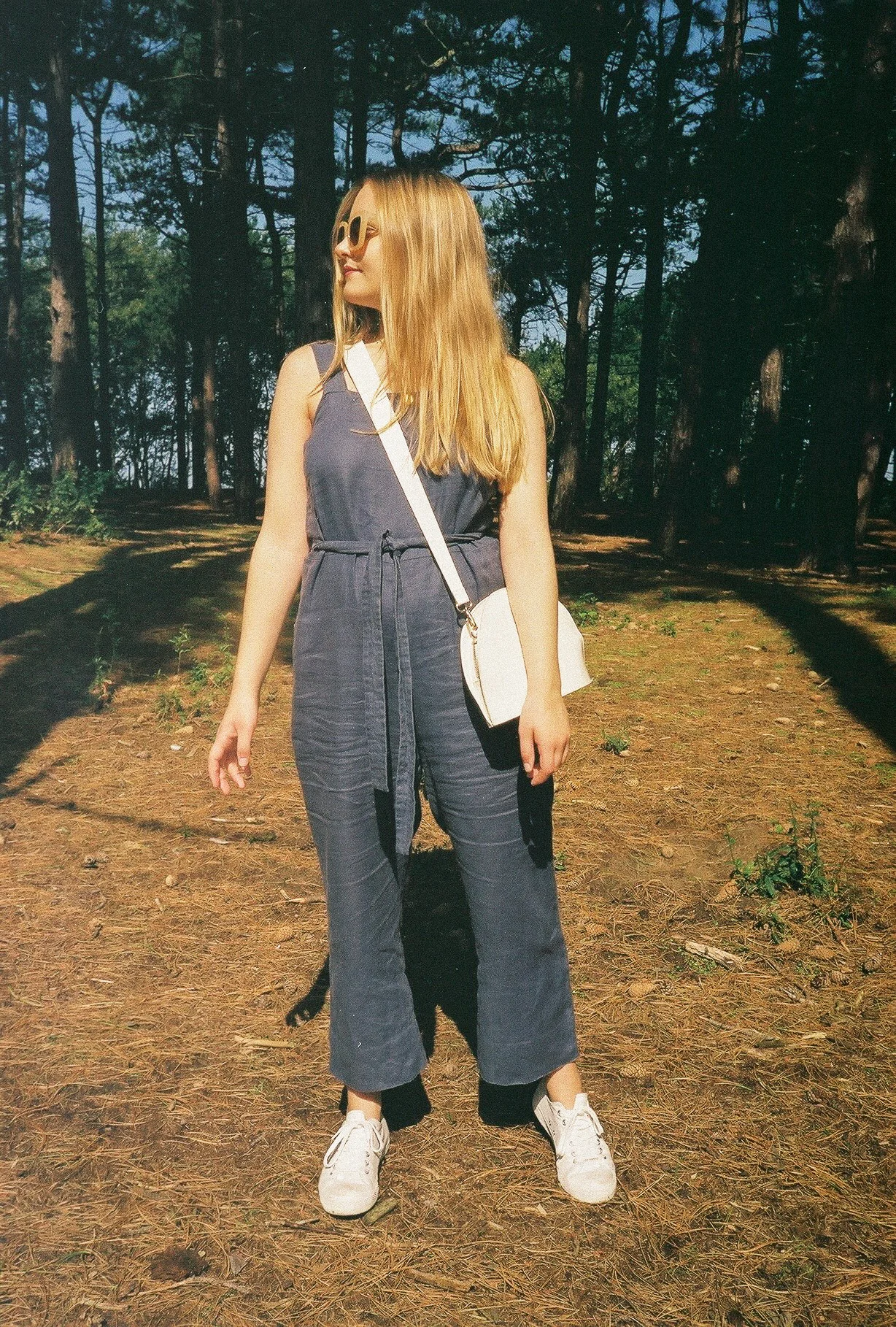
The Everlane jumpsuit I’m wearing in these photos is an example of a piece I was willing to spend a little more on, because of the brands sustainable and ethical credibilities, but also because I adored the fit and the quality. And I have probably got more wear out of it than any other piece in my wardrobe over the summer, because its price-tag meant I had to be sure I loved it and I think it’s a really timeless piece that will stand the test of time.
Sustainable fashion is expensive but maybe instead of dismissing it for this very reason, we should embrace the new perspective it can allow our wardrobes. We should love every single piece of clothing we own, and paying a little more for something will usually ensure we do, especially if your budget is as small as mine. Looking at the price tag of sustainable fashion this way might stop you, as it has with me, from being so quick to dismiss it, and consider how this type of clothing is not only beneficial for the planet and the people making your clothes but for your wardrobe too.
I’m not advocating a complete boycott of the high-street and I’m very aware that for some people on low incomes, especially those with children, genuinely cannot afford to support sustainable fashion. But if you’re spending £80 or more on your clothing each month, consider whether you really want that money to go towards lots of new high-street items, or a couple of sustainably made, incredible quality pieces, whose cost-per-wear will probably end up being smaller than the more ‘affordable’ high street pieces anyway. But most importantly, I think we should all be trying to change our perspectives on how much clothing truly costs and stop using fast-fashion pieces as a measure of this.
you might also like…
Why I Feel Confident in Unflattering Clothes
People often talk about clothes being flattering as if that’s the only thing that should be considered, “Does this colour suit me?” “This dress is hugging me in the wrong places.” A large number of people, I assume, would feel that if something made you look bigger where you wanted to look small, or smaller where you wanted to look big, or short where you wanted to look tall (vice versa and so on), then you shouldn’t buy it. As women, we are handed ever-changing images of how we’re supposed to look and in many ways, they dictate how we not only dress but live our lives, the way we eat, exercise, sit, do our makeup, and so much more.
Up until recent years, I’ve subscribed to the philosophy that clothes should be flattering and much of my wardrobe was dictated by what made me look skinnier. But the emergence of straight-leg jeans and oversized jumpers (to name two ‘unflattering’ trends) into popular culture and my increasing interest and awareness of fashion, trends and the clothes that I’m wearing has really allowed me to let go of that way of thinking.
I hadn’t really consciously realised that this was the case. I mean, yes, I have become aware that my Saturday nights are usually spent in jeans (or pyjamas, let’s be honest) rather than body-con dresses but I’ve put that down to lifestyle change, rather than a change in how I think about what I’m wearing. It was the skirt that I’m wearing in this photo that made me come to the conscious realisation that I feel great in ‘unflattering’ clothing and that most of my wardrobe is, in fact, made up of it, by the standards of popular culture.
This beauty of a skirt immediately stood out to me on the hanger; I’ve been looking to incorporate some pastel-coloured checks into my wardrobe for the season and this skirt ticked all of my boxes. However, when I tried it on I felt immediately conflicted about it. I was sure I had to have it but felt conflicted about wearing it. I put this down to the print, the shape and the unique nature of the skirt, making it a piece that is out of my comfort zone in these ways. However when I got home and my mum told me that it didn’t fit me properly around my waist, I realised that the reason I wasn’t sold on it was because it’s not a flattering item of clothing.
I ordered the size up because I was now certain that this skirt needed to be a part of my life and the medium does fit me better, but it’s still not a flattering piece. But I now don’t feel skeptical about wearing it at all. I love everything about the skirt and I can think of endless ways to style it. And it is what I’m wearing that really makes me feel confident, as I’ve written about before. I’ve realised over time that it isn’t looking slim or having clear skin or anything else that makes me feel good about myself, it’s the clothes on my body. So it doesn’t really matter to me anymore if my clothes make me look skinnier or more tanned, or anything else like that, it’s only important that I truly love the clothes I’m wearing and that they represent what I want my personal style to be.
Don’t get me wrong, sometimes I definitely do consider if an item is flattering, if that’s the look I’m going for, but even outfits I wear that I consider to be sexy aren’t necessarily flattering in the way that popular culture prescribes. I think this defiance against these rules of dressing also allows me a certain confidence. To know that I am able to disregard these rules and go with my gut when it comes to what I wear is empowering and I think getting dressed is the part of my life in which I feel most secure and sure of myself in.
Anyway, let’s talk a little bit about this outfit. It all started with the skirt, as is probably obvious at this point, and I was very excited to coordinate some of the other pieces in this outfit with the colours in the skirt. Made up of mauve like pinks, navy blue and mustard, some of my favourite colours of the season are incorporated into this picnic blanket dream of a skirt, a trend I am loving for spring. I found this jumper at the back of my wardrobe and was very pleased to find it almost perfectly matches this skirt, as do these trainers which I don’t wear very much for the rest of the year, but always feel compelled to wear them during the springtime. Finally, this bag, which I think this is going to be a really nice addition to my wardrobe for spring/summer, as it has the feel of a woven bag but without their usual structure, and is a really nice size for everyday.
Worn in front of these dreamy pastel houses, in which it’s my dream to live in one day, I love this outfit and, for me, it feels like everything spring dressing should be. Although, it could be improved, in that regard, if the knit wasn’t necessary, but as long as I can get my legs out, I’m not complaining!
I’d love to hear your thoughts on how you feel about wearing ‘flattering’ clothes in the comments! And please do note that I use the term ‘flattering’ by the standards of what popular culture dictates as such, because obviously flattering is what you make it to be, and for me, what flattering clothes really are those that compliment my personal style and who I am, rather than my figure.
you might also like…
The Importance of Shopping Sustainably and Independently
The Importance of Sustainable and Independent Fashion/Shopping
I've been wanting to write this blog post for a while now and have been really excited about it, hence me posting it in the middle of the week as a bit of a bonus post. The reason for this is the incredible top I am wearing in these photos. I picked it up at a store in the Gracia region of Barcelona, called the 8pm Store, conveniently situated just next to the apartment we were staying in, off my cousins recommendation. The 8pm Store is an independent concept, fashion store, stocking clothes all of which have been designed sustainably in Barcelona as well as an art exhibition. The clothing in the store was so cool and being in the store itself was an amazing experience. Plus, the owner was so friendly, explaining to me more about the idea and logistics behind the store, also gifting me a free postcard from their last exhibition, which was such a nice touch and really made me feel happy for the rest of the day.
This experience got me thinking about why it is so important to support independent fashion. I would never have had an experience like that in a high-street store and because fashion is a really creative thing for me, it's so inspiring to have a shopping experience like I did in The 8pm Store. Another really great shopping experience I had was also on my travels this year back in March when I went to Edinburgh at Armstrongs Vintage. I was also recommended to this shop by a friend, this is definitely the best way to find places to go when travelling from my experience, and it was probably (definitely) the best vintage shop I've ever been to. It was huge and the choice was incredible, from costume dress to the most incredible vintage denim. This is where I picked up the jeans I'm wearing in this photo, they're by YSL and cost me a mere £20. I have pretty much always been looking for the perfect pair of white jeans and these are them. I had to get them taken up, which wasn't expensive, but altering is definitely always worth it as a piece that fits you properly will mean you want to wear it more often and longer.
The Importance of Sustainable and Independent Fashion/Shopping
I realise I've spent the first half of this post gushing over these two shops, they're seriously worth the fangirling though, so I'm going to move on to what this post is actually about, why shopping sustainably and independently is important. We all know the horrors of fast-fashion, from horrendous factory conditions to the colossal environmental effect, so I'm not going to guilt-trip you with any statistics. Especially because I still very much buy clothes from fast fashion retailers, it's the most convenient and affordable way to shop and as much I've tried to avoid it, I just can't at the moment, partly because financial reasons and partly because of selfish ones. So, instead, I'm making a conscious effort to support sustainable and independent shops and brands more often as well.
The most expensive sustainable fashion tends to be the brands who have built themselves on this ethos because it's expensive being ethical in every single way and that's just the way it is. I'm talking about the likes of Reformation and Everlane. The 8pm Store falls into this category of store though and although it's more expensive than your average high-street store, it's still really affordable. The top I'm wearing in this photo, which is handmade and of incredible quality, cost me between €35-40 (I can't remember the exact amount), which is definitely more than I would spend on a piece like this at a high-street store. But I was willing to pay not only for this top that I love, but for the experience of being in the shop and the sustainablity behind the piece. This is something that can be hard to take into account when you put a similar piece from an independent, sustainable designer next to a Topshop piece for a fraction of the piece but I personally think, if you're able to, it's 100% worth supporting the former for the reasons I've just mentioned.
However, most of the time I'm just not able to buy expensive pieces, which often means I resort to the high-street. But another option is something that I love and have found some of my favourite pieces I own from, charity shops. They're so unbelievably cheap AND you're supporting a good cause by buying from them. My favourite pair of jeans cost £2 from a charity shop and the cost per wear is definitely in the minus' now. Although charity shopping can be time consuming, I'll often set out an entire afternoon or morning to go and look around the charity shops, it's so rewarding and can help you save so much money that it's 100% worth it. I know people are sceptical of charity shops but you won't believe the gems you'll find in there and most of the things haven't been worn or have barely been worn so there is no need to worry about that aspect of it. Obviously, as well, it's by far the most sustainable way to shop.
The Importance of Sustainable and Independent Fashion/Shopping
Moving on to the second part of the title of this post, shopping independently. This is something that I am very good at whilst travelling but pretty poor at when at home. At home I'm all too temped to revert to the trusty high street but on holiday, shopping independently is an amazing way to get to know the place you're in. The predominant way that I shop independently at home is through charity shops and vintage shops. Both of the places I am based, Liverpool and Manchester, have a great array of independent clothing stores that don't fall into the categories just mentioned and are a little more expensive but I think it's just getting into the habit and mindset of shopping there.
Nevertheless though, I still try and make an effort to shop independently because, as I mentioned, there's nothing better than having an amazing shopping experience and independent shops definitely offer that more than chains do. Plus, they give a place character. Whenever I go away, whether it's in the UK or abroad, I always try and steer away from what I'm going to call the 'chain area' of the city and venture out to the areas that actually feel like you're in a different place. I'd hate anywhere I live to not have this feel at all and if we don't support these independent businesses then they'll no longer exist.
Here's a list of some of my favourite independent stores, from fashion to all sorts of other things with links to their websites/social media:
The 8pm Store, Barcelona (Fashion/Art)
Armstrongs Vintage, Edinburgh (Fashion)
COW Vintage, Liverpool, Manchester and Various Other Places (Fashion)
Utility, Liverpool (Home/Gifts)
Chapter One, Manchester (Bookstore/Cafe)
Fred Aldous, Manchester (Art/Gifts)
Park St in Bristol has the best independent vintage shops, I can't choose just one from the one time I've visited (Fashion)
I hope you've enjoyed this post and that it's given you some encouragement to head down to your local independent clothing store, or try and shop a little bit more sustainably! You won't regret carving some time out to visit your local charity shops or vintage shops to grab a bargain. Even if you go high-street shopping afterwards, you've probably saved yourself some money by buying something second-hand and you're helping to save the world a little bit at the same time, so it's a win-win. I'd love to hear your favourite independent shops or the best ways, in your opinion, to shop sustainably in the comments or on social media! As mentioned, I'm by no means perfect with this and am not claiming to be so any tips and recommendations are very welcome!
The Importance of Sustainable and Independent Fashion/Shopping
Top- Dreamers Not Allowed
Jeans- Vintage YSL, Armstrongs Vintage
Shoes- Vans
Sunglasses- Mango
Hair Clips- Accesorize
Necklace- Alex Monroe