
"Little Women Style" Will Take Over 2020, Trust Me

I’ll say this once and never again: Amy was right and Jo was wrong. That’s when it comes to the power of books anyway and that ‘Perhaps writing will make [things] more important.’ Amy’s hypothesis will be proven, I believe, by the effect Greta Gerwig’s film and the resurgence of the novel it has encouraged will have on the way we dress over the next year and perhaps longer. And I promise there’s reason to this other than the fact I’m trying to make my acronym WMJBOAWI (would Meg, Jo, Beth or Amy wear it?) happen.
Jacqueline Durran won the Academy Award for best costume for Little Women and wow, did she deserve it! The costumes in the film are intricately designed and constructed. For example, each daughter has an individual colour or two that they wear throughout the film, with Marmee wearing a combination of them all (this is the same with their hair styles). Also, Jo doesn’t wear a corset which ‘lends a freedom to how she can move’, which, for me, added a lot to Jo’s characterisation in the film, especially in the dance scene and hill scene with Laurie, when the way in which she moves is so distinctive. Speaking of this scene, notice that the waistcoat Jo is wearing is the one Laurie wore when Jo jokily got down on one knee to him earlier on in the film.
The costuming of the film fascinates me because I think it is so fundamental to why it worked so well and how, despite the many film adaptations of Little Women, this one captured the essence of the novel in such an evocative and imaginative way. For me, the colours of the film was a significant part of this and much of this is down to the costuming. Period film costuming is often grey and dull and hardly inspiring. But Durran opted for colourful costume, which is actually factually accurate in terms of what people were wearing contemporarily. As Gerwig explains in this video, fabric dye was new and exciting in the late 19th century and so it was trend-forward to wear brightly coloured clothes.


This attention to detail in the costuming in Gerwig’s Little Women is undoubtedly a significant reason as to why the film’s dress has been so inspiring for many. But this has only spurred on the “Little Women style” obsession that has been growing within the fashion industry for some time. This mostly takes the form of prairie dresses, championed by brands like Batsheva and The Vampire’s Wife, but anything billowy, floral and/or made up of pastel checks resembles “Little women style” enough for me to deem it so.
So why has this style of dressing gained so much momentum? Like many trends, I think it stems from a sartorial nostalgia of sorts, when wearing your third best dress to lounge around the house in was the norm. Don’t get me wrong, I won’t be trading in my pyjamas any time soon, but sometimes I get bored of casual dress codes, especially given the fact that my life provides very little opportunity for formality, sothe idea of wearing a beautiful, extravagant dress for no reason excites me.
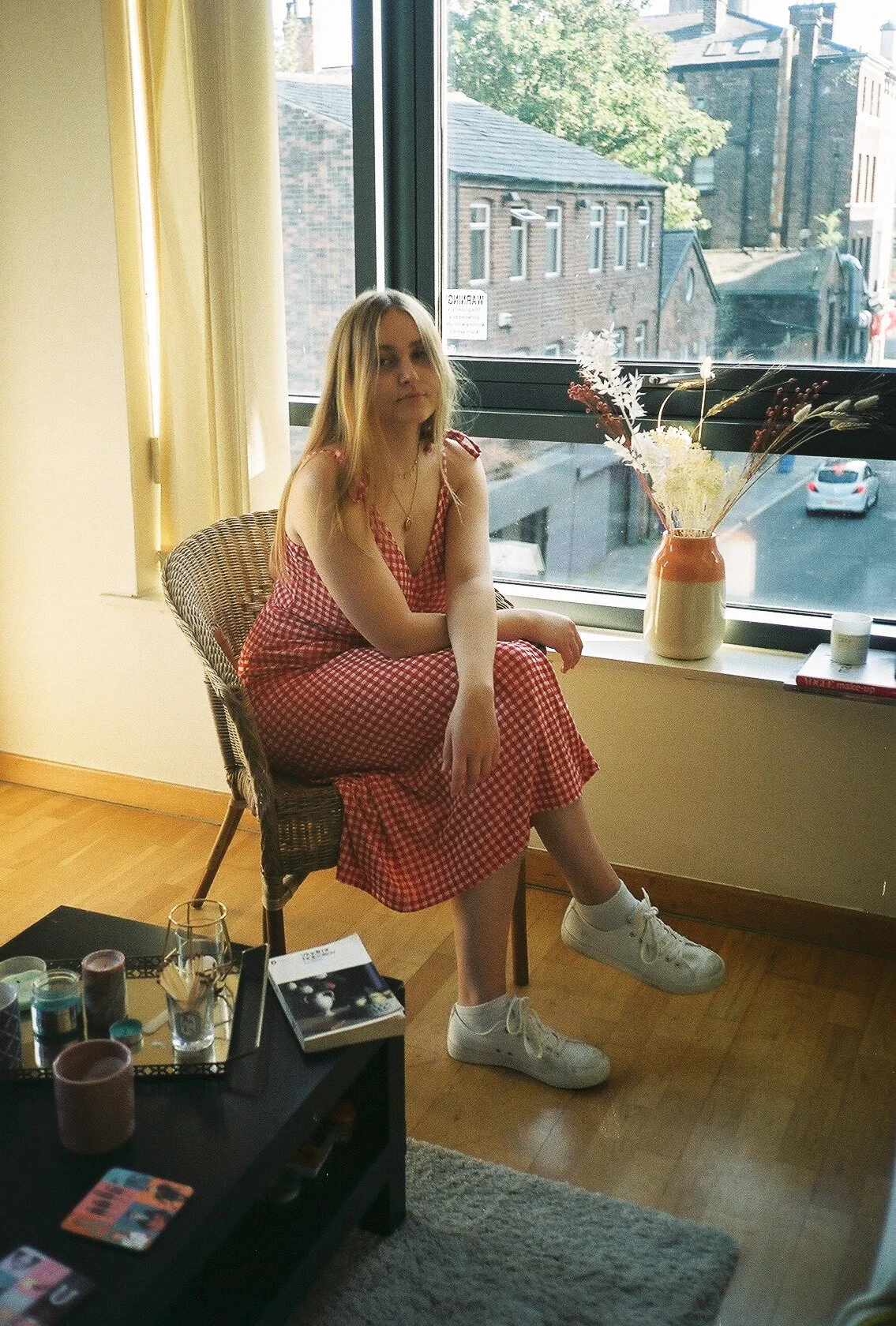
Further, it’s comfortable! Long billowy dresses mean lots of room for food babies (the one I’m wearing in these photos even has an elastic waistband: swoon!) and they’re practical all year long. In winter, with tights and in summer, without (they’re especially great if you don’t want to get your legs out, for whatever reason).


The dress I’m wearing here is from Nobody’s Child and I adore it. I’ve been loving wearing it in winter (with tights and thermals underneath) and I am looking forward to taking it into spring with, I get excited just thinking about it, bare legs! I love wearing this dress with more masculine pieces like these ankle boots to channel my inner Jo and I think the myriad types of styles this trend can work for is one reason why it will take over. Nobody’s Child is great for “Little Women style”, especially if you’re looking to find it from a brand with ethics at its heart, and I’m currently trying to avoid the website in order to protect my bank balance.
“Little Women Style” is a romantic, nostalgic and fun way of dressing and one that, when the situation allows, I’ve rarely been straying from. Anything to be more like Jo March and, luckily, it’s not quite as difficult as writing a book about your family or turning down Timothee Chalamet’s marriage offer.

A New Approach to Clothes Shopping

Just a heads up, these photos were taken for a different blog post that I then decided that I didn’t want to write, so I’m using them for this one instead, that I very much do want to write, even though they have no relevance whatsoever to the subject matter!
I’ve been thinking a lot lately about ways of shopping sustainably that aren’t:
Never buying clothes ever again
Exclusively buying clothes from sustainable fashion brands
Only shopping second hand
Each of these, especially the first one, feels too restrictive to me at the moment and when I try and put any of these methods into place, they are never successful. The truth is, I love shopping; I love clothes and I love getting dressed and new clothes do provide me with a lot of satisfaction, inspiration and genuine happiness.
Maybe this is materialistic- in fact, I’m sure it is. But having been brought up in a material world, as Madonna put it 15 years before I was born, it’s difficult and I would say impossible to just snap out of it, especially if, like me, fashion is the thing, or one of the things, you’re most interested in, and if, like me, it helps you to form your identity and is the source of a lot of your self-confidence.
So I’m trying to let go of any methods or mindsets that are completely abstinent in their approach, not because they’re not necessary, they completely are, but because, for me, they don’t work and I am desperate to find a sustainable way of approaching shopping for fashion that really works.
But although sustainability and the fact that our planet is in imminent danger is at the driving force of my new approach to shopping, it’s not the only reason for it. Having begun to clear out my wardrobe quarterly, I’ve noticed how many pieces in my wardrobe have been worn only a few times. I know a lot of people struggle with buying things for a particular events and only wearing them once but personally, I don’t find that this happens to me. My issue is the impulse purchase; the “oh it’s only £8 in the sale and I like it, why not?”


Well, why not is because this type of purchase is always the one that I’m getting rid of when I’m clearing out my wardrobe. These bargain pieces are the ones that fill up my wardrobe and make me feel like I’ve got nothing to wear, because all of the pieces in my wardrobe that I truly love are buried by these items of clothing that I feel more or less indifferent towards, after the gratification of finding such a bargain, that usually wears off within a few weeks.
Not only this, but these types of purchases are the ones that encourage fast fashion retailers to keep making cheap, disposable clothes that they can sell and make for cheap prices, in bulk and in the least sustainable, and most cost-effective way.
So, I’ve decided rather than having a wardrobe full of A LOT of clothes that I like, I want to have a wardrobe full of a selection of clothes that I love. Not a capsule wardrobe by any means (my bulging wardrobe doors will tell you that), but I am definitely taking some tips from the philosophy of the capsule wardrobe, the main one being that quality is better than quantity.
And I have decided that, for me, there is no real way to tell if I truly love a piece of clothing other than the price. I am never going to spend £80 on something (and that is A LOT of money for me on a student budget) unless I love it and know I will get lots of wear out of. And so, despite my limited funds this is the way in which I want to shop.


My plan is to buy one or two expensive pieces per month, ideally from sustainable brands but I am not going to feel endlessly bad about it if they do end up being from high-street brands or non-sustainable brands, because I know they will be sustainable purchases in that I will wear them for a long time and look after them well.
But because of my aforementioned shopping addiction, one or two pieces just aren’t going to cut it for me. I’d love to tell myself that they will, but realistically, if I set myself this target, I’ll only end up in and amongst the Topshop sale racks on my way home from uni buying those very pieces that never stand the test of time in my wardrobe. Getting dressed in the morning is often my favourite part of the day and I know I will feel the urge to buy more if I don’t have new pieces in my wardrobe to style, it’s not a sustainable mindset but it’s not something I can change overnight either, so I’m trying to find sustainable methods to deal with it.
The method I’m currently trying is that, along with my one or two expensive pieces a month, I’m also allowing myself to do as much second hand shopping as I want, and trying to visit charity shops at least weekly. If I slip and buy one or two high-street pieces a month at a lower price point, again, I’m not going to punish myself. One or two is better than four or five and I hope that, with time, I will stop buying from fast-fashion retailers altogether!
But, in reality, I’m not going to be able to afford many new clothes anyway after my investment pieces (I’m thinking of spending either around £80-120 on one item or £50-£60 on two items), so hopefully that will mean I have no choice but to abandon the high street and head to the charity shops.


So far this month, I’ve bought a dress in the & Other Stories sale for £26.55, obviously not a great start but it was a classic piece and I would like to think that I would have bought it at full price if I had the money to do so, and that it will last a long time in my wardrobe because of its timelessness. I have also spent £50 at Uniqlo on a jumper and a skirt (£25 each) but, again, both are great quality, classic pieces that I really don’t think I will grow tired of. Finally I bought a vintage playsuit that cost £19, which is in line with my new approach because it’s second hand.
So, clearly things aren’t going completely to plan yet, although Uniqlo and Stories are definitely better than lots of other fast fashion brands because they produce less clothing, but nevertheless, their sustainability credentials just aren’t good enough. I’m struggling with my investment pieces because I find it difficult to know when it’s the one I should be buying and I so I put the purchase of in case I see something I like more, but then this leads me to the high-street because I need to fulfil that space in my wardrobe (or the shopping urge) elsewhere. So maybe I should just be going with my gut instinct with investment purchases- any tips on this are welcome!
Anyway, I hope I can keep you updated on how this new approach to fashion goes, but so far this month (and during August) I’ve definitely bought less new clothes than I normally would, so my mindset must be changing, now my purchases just need to follow!

you might also like…



Sustainable Fashion is Expensive but Maybe That's A Good Thing

A common get out jail free card when it comes to sustainability is ‘it’s too expensive!’- one I often use myself whilst giving all the money I do have to fast fashion retailers. And it’s true, it can be expensive to support sustainable fashion. But maybe that’s not such a bad thing.
Buying a dress from a sustainable fashion brand such as Reformation rather than from a fast fashion brand such as Zara is going to cost two, three or maybe even four or five times the amount. This is because the processes involved in making sustainable clothing, from using recycled fabrics, to reducing the amount of water used in the production process, to paying workers proper wages, costs money.
Thinking about how much Reformation, to continue with this example, pays their factory workers, (approximately £5.70 per hour) in comparison to a fast fashion retailer shows, in itself, why Reformation clothing is far more expensive than its fast fashion equivalents. Reformation factory workers earn approximately £5.70 per hour whilst factory workers in Bangladesh creating clothes for fast fashion brands earn approximately £25 a month for working 14 hour days, which means, if they work 5 days a week, they earn approximately 8p per hour. Reformation factory workers wages are 71x higher than factory workers working for many fast fashion brands in deprived countries. Considering this, paying 3 or 4x the amount for a Reformation piece compared to a high-street piece doesn’t seem all that steep, and that isn’t even taking into account the cost of the environmentally friendly processes that goes into sustainable brands clothing.


The fact is, sustainable clothing is expensive to make. But it’s only expensive compared to high-street clothes that are made at the cheapest price possible so they can be sold for the cheapest price that will make the most profit. But these cheaply made clothes are destroying the planet, both their production and their lifespan after that.
I mean, this isn’t exactly breaking news. We all know fast fashion is a terribly polluting industry but, despite this, we still can’t, myself included, stop buying into the brands who are at the forefront of this pollution. And I think the reason we do this is because we have the get-out-of free card that ‘sustainability is expensive.’ But it’s only expensive in comparison to what we know to be the price of clothing.
For the sustainable fashion movement to truly take off, I believe we must re-define what the price of clothing is. Rather than considering £15, for example, as the average price for a t-shirt, we need to think of that as the average price of a t-shirt, that has not been made sustainably or ethically. The average price of a t-shirt, and every other single piece of clothing, is, in fact, higher than what we believe it to be, when they are made correctly, and rather than considering sustainable clothes as particularly expensive, we need to consider high-street clothing as worryingly cheap. Sustainability should be the standard not a selling point of a brand and changing our perspective is the only way that that’s going to happen.


Something that annoys me about myself is that I unthinkingly will buy 4 pieces of clothing that cost £20 each over the course of a month or a couple of weeks, but I will rarely buy something that costs £80. I’d like to think that I value quality over quantity in my wardrobe but somehow, it always seems that 4 ‘affordable’ pieces, probably not of the best quality, that I like, are a better investment than one more expensive piece, of much better quality, that I love.
This mindset is so damaging because not only am I supporting unsustainable fashion brands rather than the sustainable ones that truly deserve my money, but I am contributing to the supply and demand chain of fast fashion, buying lots of clothes because they’re cheap, thus suggesting to the retailers that they should keep making lots of cheap product.
On top of this, it is often hard to tell how much you truly like something when it’s cheap. I know that I think about whether I actually want something more when I’m spending more money on it, whereas with cheaper items I am often blinded by their price tag, buying them because I like them at the time and they’re a bargain, only to go off them a couple of weeks after because I haven’t truly thought about where they would fit into my wardrobe. This means they eventually end up in landfill, even if they go through the donation process first.
As a student who lives on very limited funds, I think it makes sense that I have always opted for cheaper options in the past because I am always thinking about how I can save money. Clothes make me very happy and are an important part of where I get my confidence from, so of course I want to have as many pieces in my wardrobe that make me feel that way as I possibly can afford. But the truth is, I’d probably like my wardrobe better if it was full of slightly more expensive clothes that I had really thought about and truly love, plus the ones that come with a guilt-free conscience, even if that means I had less clothes. I don’t think I’ll ever be a minimalist and capsule wardrobes scare me but I think there’s a lot to be learnt from both of these ideas, specifically that quality should always be prioritised over quantity.
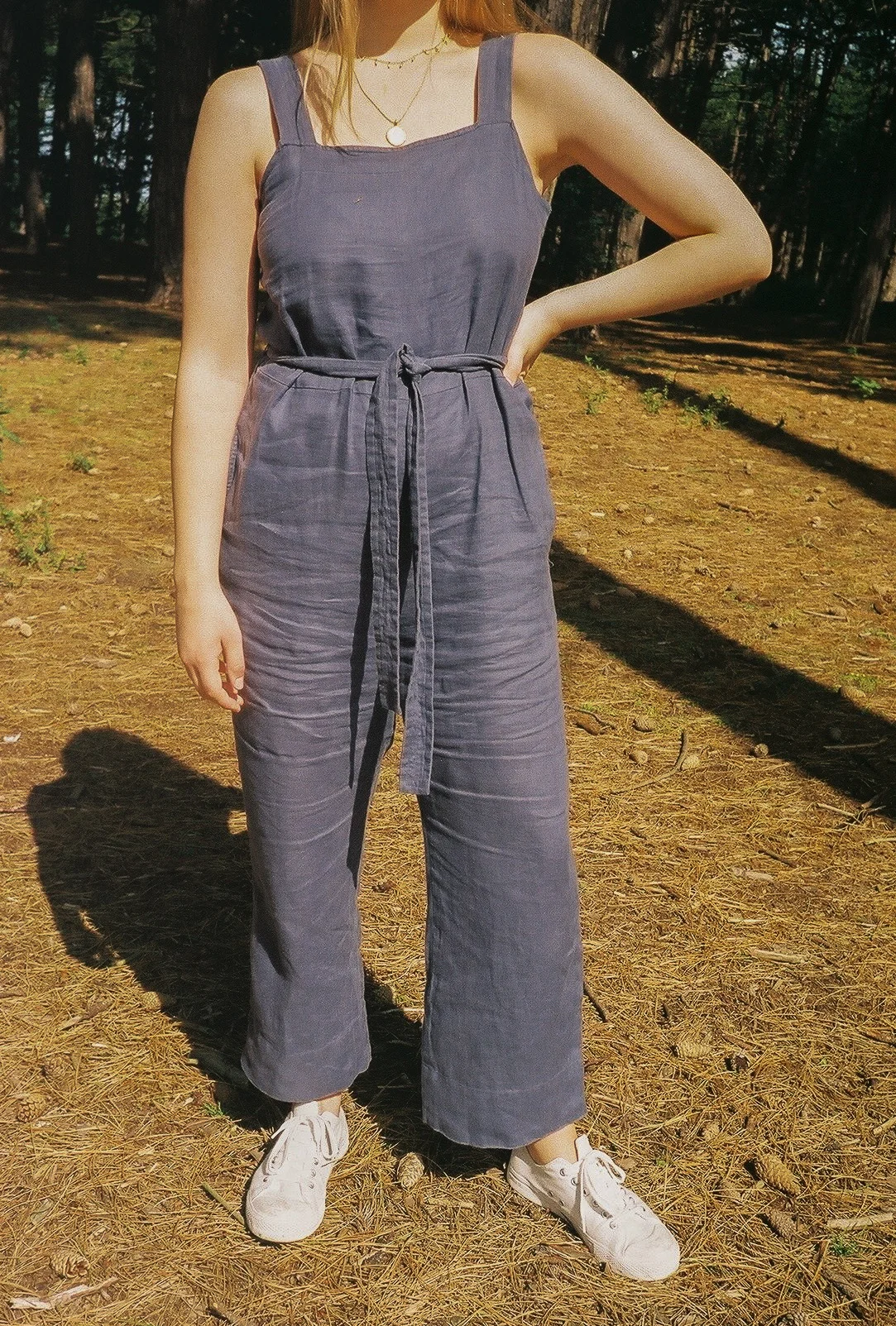

The Everlane jumpsuit I’m wearing in these photos is an example of a piece I was willing to spend a little more on, because of the brands sustainable and ethical credibilities, but also because I adored the fit and the quality. And I have probably got more wear out of it than any other piece in my wardrobe over the summer, because its price-tag meant I had to be sure I loved it and I think it’s a really timeless piece that will stand the test of time.
Sustainable fashion is expensive but maybe instead of dismissing it for this very reason, we should embrace the new perspective it can allow our wardrobes. We should love every single piece of clothing we own, and paying a little more for something will usually ensure we do, especially if your budget is as small as mine. Looking at the price tag of sustainable fashion this way might stop you, as it has with me, from being so quick to dismiss it, and consider how this type of clothing is not only beneficial for the planet and the people making your clothes but for your wardrobe too.
I’m not advocating a complete boycott of the high-street and I’m very aware that for some people on low incomes, especially those with children, genuinely cannot afford to support sustainable fashion. But if you’re spending £80 or more on your clothing each month, consider whether you really want that money to go towards lots of new high-street items, or a couple of sustainably made, incredible quality pieces, whose cost-per-wear will probably end up being smaller than the more ‘affordable’ high street pieces anyway. But most importantly, I think we should all be trying to change our perspectives on how much clothing truly costs and stop using fast-fashion pieces as a measure of this.


you might also like…


My Head Says Neutrals but My Heart Says Baby Blue | Conscious Styling Decisions vs. Impulse Purchases

Over the past few months, I’ve really been thinking more consciously about my shopping and styling decisions in order to protect both my bank balance and the planet. I’ve been curating my seasonal style inspiration Pinterest boards on a regular basis and have added a Wish List to my blog to keep track of the pieces I want to buy. And it’s been working! I think I could count on one hand the amount of new clothes I’ve bought (excluding charity shop buys) during the first 3 months of 2019 but, despite this, I haven’t been feeling bored or restricted by my wardrobe.
However, as the seasons are changing and the weather is warming up, I’m starting to see gaps in my wardrobe and I’m feeling the urge to shop. I’ve been religiously consulting my Pinterest boards and my Wish List before making any new purchases, thinking about if an item of clothing is really something that I want and am happy to spend my money on, as well as if it fits into what I want my style to be.
My Pinterest boards say that I’m very into neutrals (as do my ‘Saved’ images on Instagram) and neutral outfits are something that I think look really chic and would like to wear more. However, the pieces I gravitate towards and get really excited by don’t necessarily correspond with this. For example, I recently found my dream dress in the form of the Rixo Monet. It’s baby blue and leopard print with floral daisies printed all over it, I mean, far from my neutral aspirations.
I know I’d feel great wearing this dress. I know I’d give up a limb to own it. But it doesn’t fit into my ‘style vision’, so should I still be buying it? Of course, this is totally hypothetical; I don’t have a spare £300 to spend on a dress, or anything for that matter, and if I did, maybe these questions wouldn’t be quite so pressing for me and my wardrobe. But when my budget is limited, I want to make sure the clothes in my wardrobe are all pieces that I love and will get my wear out of. But I’m not sure which methods of purchasing are going to get me to that point.


Personal style is something that fascinates me, mostly because I don’t really think I’ve found my own. I know what clothes I like when I see them but do I dress in a way that is consistent? I don’t think so. And could I sum up my style in 3 words? Definitely not, apart from ‘I’m not sure’. I think people who have found their personal style will struggle less with these questions of conscious shopping decisions vs. impulse buys and can probably find pieces that they will love and wear through both methods. But for me, I’m not so sure that it works that way.
As the title of this post suggests, I am loving baby blue at the moment. Blue is always a colour that I’ve loved wearing; I have blue eyes and people often compliment them when I wear blue clothes so I think it’s become a subconscious liking of mine. So when I saw the satin midi skirt I’m wearing in this post, I knew it had to be mine! But I didn’t buy it straight away because a baby blue midi skirt wasn’t something that had made its way onto my Pinterest boards, or that I’d ever really felt the desire to own before. But I knew I loved this one, so when I saw that it was on sale for 25% off, I snapped it up.
I’ve only worn it once (I mean, that’s pretty good going as it only arrived 4 days ago) and I felt great wearing it but I’ve still found myself thinking a lot about whether it was a responsible purchase. It wasn’t even an impulse purchase as such, but just one that just didn’t fit into my ‘style vision’. Speaking of impulse purchases, I went into Topshop 20 minutes before closing time on Sunday and found a red and white satin mini skirt that I immediately fell for, as it reminded me of a Realisation Par piece that me and my pitiful bank balance have been admiring from afar. I bought it immediately, something I have not done in a while. Usually, I’ll try something on, go home and think about it and then purchase it (or not) a few days later. This was my first proper impulse buy in a while and I felt weirdly guilty about it. My immediate thoughts were ‘well, I can bring it back if I change my mind’. But no part of me wants to take it back. It’s a great piece with so many styling opportunities and it’s not like it broke the bank at £20.


This overthinking about these pieces has made me wonder how consciously I should be thinking about my shopping and styling decisions. I mean, isn’t the fun of fashion being able to wear whatever you like (as the name of my old blog ‘If You Like It Wear It’ would suggest) and whatever you feel represents you? Although my Pinterest boards can certainly be a place of great inspiration, I also worry that they can be a place of restriction too, moulding my style into whatever everyone else is wearing and whatever it is that I think I ‘should’ be wearing
So, to come to some sort of a conclusion, I really don’t know whether it’s best to follow your head or your heart when it comes to personal style. A combination of the two sounds about right, but it’s a tricky balance to perfect! There’s no doubt that thinking more consciously about shopping has improved my bank balance and helped me buy less fast fashion, which can only be a good thing. And using Pinterest really has made me more and more excited about getting dressed in the morning! But I also don’t think there’s anything wrong with buying a piece of clothing without having thought it through for hours and hours. Impulse purchases can be good for the soul and there’s no harm in them every once in a while. After all, there’s nothing quite like the excitement of buying something that you love on a whim and I wouldn’t want to lose that!
I’d love to hear your thoughts on this subject! Are you more of a planner and conscious thinker when it comes to buying new clothes or are you all about impulse purchases? Let me know in the comments!


you might also like…



Being More Sustainable Over the Holiday Period | 6th Day of Christmas

Photography by Jenny Gavan
Christmas really is one of my favourite times of the years, mostly because it involves spending lots of time with family and eating more food than is socially acceptable. However, despite it being mine and many others’ favourite time of the year, it’s not a very good time of the year for the environment, due to the wastefulness and excess of the holidays generally. So, along with all my other typically festive posts, I thought I’d include one that can have some sort of positive impact on the environment, providing you with some simple tips on how to have yourself a more environmentally friendly Christmas (not quite as catchy as Have Yourself A Merry Little Christmas but I tried!)
But first, here’s some facts on how the month of December affects our environment:
27,000 miles of wrapping paper is used each year in the UK alone.
Only 1% of consumer goods are still in use 6 months later.
The equivalent of 2 million turkeys end up in the bin every year.
1 in 10 unwanted Christmas gifts end up in landfill
(facts taken from https://www.asustainablelife.co.uk/12-not-so-fun-festive-facts/)

Now I don’t always like sharing facts like these because often guilt-tripping can scare people off. But I think it takes reading these types of statistics to actually make some changes, even if they’re only small! I’m not suggesting that you shouldn’t buy any Christmas presents or that you should carefully measure out all of the food you buy to ensure none of it goes to waste (although if you want to, great, go for it!) The amount of people who are willing to make changes like this is minimal, but if everyone could make just a few changes to the way they do Christmas, think of the positive effects this could have on our environment!
So, with that, here are my top 5 tips t be more sustainable this Christmas! They’re not groundbreaking but they’re easily doable so do try at least one of them…
1.Use 100% Recyclable Wrapping Paper & Switch Out Sellotape for Washi Tape
As shown from the previous statistics, wrapping paper is one of the main ways in which Christmas can be a very wasteful time of year. Obviously the most effective solution would be not to wrap your presents but I’m not quite ready to take this step yet, firstly because I really do love having wrapped presents and, secondly, because I don’t have the energy to explain to every family member why their present isn’t wrapped and have them assume that I’m just lazy!
So, instead I’ve bought one roll of brown wrapping paper (just the one you get in the post office). It’s 100% paper and totally recyclable, plus it only cost me about £3 and it’s about 5x the size of a normal roll of wrapping paper. I actually really like how presents looked wrapped in this. I must admit that I have bought a few rolls of ribbon to ‘jazz it up’ a little bit but I’m hoping to reuse that for next year (I’ll be that person crawling around picking it up off everyone’s presents once they’ve opened them).
Another way in which I’ve made present-wrapping more environmentally friendly is by sticking down paper with Washi tape rather than sellotape. Again, washi tape is 100% recyclable and it looks a lot nicer than sellotape too! Unless you’re going to pull all the sellotape off the recyclable wrapping paper you’re using, it can’t go in the recycling bin anyway, so by using this you can avoid that and still recycle all the wrapping paper you’ve used.
2. Give the Gift of Sustainability
The statistic that only 1% of consumer goods are used 6 months later is one of the most shocking to me! That’s a crazy amount of waste. So, for that person (those people) that you always have no idea what to buy, why not get them something that’s going to improve their climate footprint rather than something that’s going to sit around and eventually go to landfill?
I received a Chilly’s water bottle for Christmas last year and, not only does it look super attractive and is very practical, I’ve probably bought around 500% less plastic water bottles because of it. Other ideas for environmentally friendly gifts include a reusable coffee cup, such as the Keep Cup, bamboo toothbrushes, reusable straws and reusable shopping/tote bags (of which you can get very nice ones, see this Independent article). Some of these I would reserve for people who are actually interested in being more sustainable but things like the Chilly’s bottle and the reusable coffee cup would be great gifts for anyone!

3. Lower Your Consumption of Animal Products
This might be the point where, if you’re a meat-eater, you click off this post now. But wait! I promise I’m not telling you to go vegan tomorrow! Animal agriculture causes 18% of all greenhouse gases and consumption of meat, dairy and eggs is significantly increased over the festive period, probably making this number even higher.
I’m not telling you to switch out your turkey for a nut roast (definitely do so if you want to) but maybe try some vegetarian canapés rather than meat-filled ones? What about switching out some of your milk chocolate for dark every now and then? Little things like this, do make a difference, especially in terms of supply and demand over the Christmas period.
I have a post coming very soon (like, tomorrow) with some tips on how to be vegan during Christmas and lots and lots of examples of the best veggie Christmas food! So even if you’re not vegan or vegetarian, be sure to check that out to see how you could maybe swap out a few animal products for some animal-friendly ones over Christmas!
4. Leftovers
This is one that you’re going to like, I know it. I’m encouraging you to make the most of leftovers! Savour your Christmas dinner for as long as possible! Put it in sandwiches, eat it for breakfast, feed it to your pet. I know from my own experience, and I’m sure you do to, that the amount of food waste over Christmas can be crazy. Everyone panics and stocks up on enough food to last them a month on the days leading up to Christmas and so much of it ends in the bin, which then goes into landfill.
Firstly, try and not buy too much food! But when you inevitably do, make the most of it and eat ALL of the leftovers. Lots of food lasts for days even after it’s been cooked, such as all the vegetables that people avoid on their Christmas Dinner plate. So maybe even research/plan in advance the types of meals you can make with your leftovers, so your boxing day menu is just as good as the Christmas Day one. Also, if we’re talking about planning in advance, clear some space in your freezer so anything that can go in there for a later date instead of in the bin can fit.
5.Avoid Spending All Your Christmas Money on the Boxing Day Sales
There has been a huge increase in awareness of just how bad the fashion industry is for the environment over the past year. Black Friday, the Boxing Day sales and the January sales all fall in this period, causing many people to impulse buy clothes that they’ll only wear once, which will more than likely eventually end up in landfill. So, even though the sales are tempting, try not to buy anything that you wouldn’t already want to buy if it was full price.
It really gets on my nerves when bloggers tell people not too shop the sales, as, for many people, the only time that they can afford to buy clothing they want is when its reduced! So, I’m not saying boycott them. Just really think about the things that you’re buying (almost) as much as you would if they were full price items. Maybe even make a little wish list in the run up to Christmas of things you really like and have thought about, so when these sales do happen you can buy things you actually want rather than shop impulsively.

I hope this post has been helpful and that you’re considering taking some of these steps in order to have a slightly more sustainable Christmas! But, also, don’t feel guilty if you’re not having the most environmentally-friendly Christmas possible- we live in a world that generally has never really cared about the environment so you’re working against the odds in order to live in a way that is careful, especially around Christmas! So just try your best and hopefully, Christmas can become more and more environmentally sustainable every year.
Everything I Like Is Bad But Is Feeling Guilty About It Helpful?

EVERYTHING I LIKE IS BAD BUT IS FEELING GUILTY ABOUT IT HELPFUL?
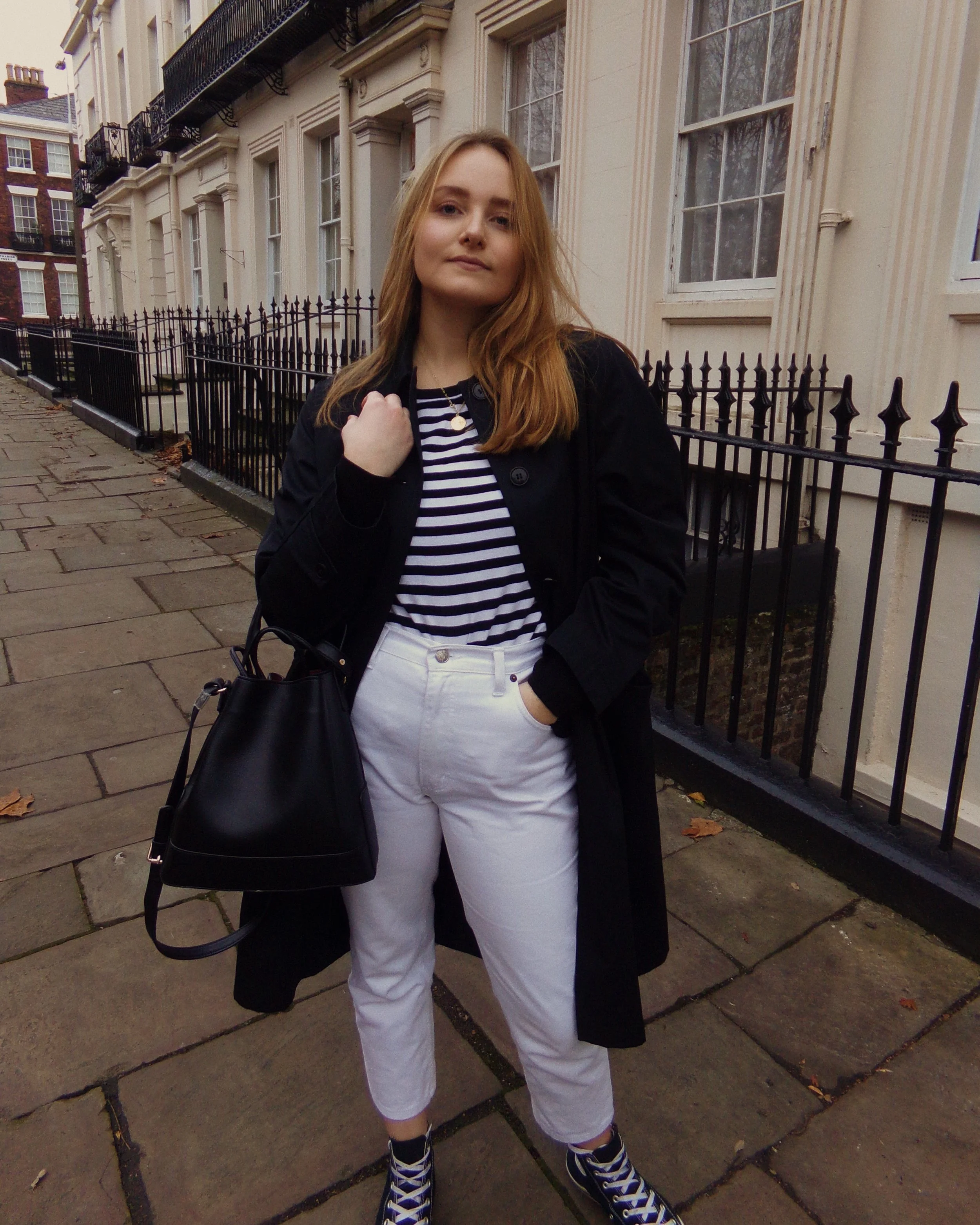
Top- Charity Shop, Second Hand (similar
)
Jeans- Vintage YSL, Armstrongs Edinburgh (similar
)
Coat- Charity Shop, Second Hand (similar
)
Shoes-
Bag- Zara (old, similar
)
Necklace-
As a society, and more specifically as a generation, we seem to be becoming more and more aware of how many aspects of our lives are harmful, whether that’s sustainably, ethically, psychologically- the list goes on. Every couple of months there seems to be a new realisation on how a fundamental part of many of our lives is not as innocent as we thought.
Fashion and buying clothes? That’s the second biggest polluter in the world. A mindless scroll through Instagram? The cause of all your insecurities. Reading a book, surely nothing wrong with that? Think again, do you know how many trees are killed to make one book? Eating anima... Oh wait, I’ve got this one down, I’m vegan so we’re all good there. Wait what? Palm oil is destroying rainforests and is in a whole lot of vegan products including... Oreos?? It all feels like too much.
I’m not saying that we should just be ignoring all these facts and statistics and that people are being ‘snowflakes’ (I hate that term) about these things- we shouldn’t and they’re not. Our consumption of fast fashion is excessive and is causing too much harm to our planet; social media can negatively affect people’s mental health (although this one isn’t as straightforward as others in my opinion, read my blog post discussing this here); kindles are much more environmentally friendly than a hard or paperback and palm oil is destroying rainforests. But I love buying and styling new clothes, social media is a HUGE part of my life, palm oil is in a lot of vegan products and is very difficult to avoid and well, to be honest, I just really don’t like kindles... perhaps I’m being a little stubborn with this one.

EVERYTHING I LIKE IS BAD BUT IS FEELING GUILTY ABOUT IT HELPFUL?

EVERYTHING I LIKE IS BAD BUT IS FEELING GUILTY ABOUT IT HELPFUL?
These justifications all sound a little trivial, I’m aware. But trivial or not, all of these things with negative impacts on our world are big parts of my life that I don’t know how, nor do I necessarily want to, be completely rid of.
(DISCLAIMER:Obviously there are countless more aspects of life that have negative impacts but these are the ones that I think are most relevant to my life, which is why I’ve used them as examples.)
So what I’m saying is, it’s impossible for me, and I’m hoping others too otherwise this post is pointless and I’m seriously weak-willed, to just cut anything with a potentially negative impact totally out of their lives. For me, even reducing my consumption/usage of these thing also proves difficult. So instead, lots of people, me being one of them, are talking about making a ‘conscious effort’ to reduce their intake of something/s that are harmful. But sometimes, at least for me and seemingly for some others, this just seems to be away of saying ‘I’m aware that this is bad and I know I should change my habits but I don’t know how to and therefore I probably won’t or at least not enough to make material change’.
Changing your mindset is one thing but changing your habits is another, much more difficult thing to do. So how do we do it? I honestly have no answer. In fact, I have many questions! And I think raising awareness of all of these things is great but what we really need is solutions that aren’t extreme but are practical, do-able steps that people can follow to try and change the way they live. I’m aware that in writing this blog post just to say this, I’m being a little hypocritical. But I don’t feel qualified to provide any answers and if anything this post is a cry for help and a call to arms to people who might be reading this who have managed to stop buying fast fashion or cut palm oil out of their diet to help us all and provide tips that don’t scare anyone, including me, off (I think I mentioned my weak will earlier?)

EVERYTHING I LIKE IS BAD BUT IS FEELING GUILTY ABOUT IT HELPFUL?
It’s also just a post to vocalise how I feel about the current climate being one in which we have to think about the ethical implications of everything we do, which can often make us feel a little bit helpless. And this is how I feel right now. I really want to find ways to deal with all of the problematic things I mentioned earlier and all of the other problematic elements of my life and habits that I haven't mentioned. But I also don’t feel like I can suddenly change pretty much every part of my life, big and small, which comes with a sense of guilt that isn’t really helpful or productive.
For example, I recently set myself a challenge of not buying any new clothes in November and failed a few weeks in (damn you Black Friday). But, for the most part anyway, telling myself I couldn't buy any clothes only made me want to shop more and left me with a list of things I was going to buy when this terrible month (I'm joking, kind of) was over, so it did anything but change this habit of mine and seemingly only made it worse.
I think manageable steps will work better for me and this is what I want to try and focus on but it still feels like I'm failing because I'm not doing enough in doing this. I feel like this despite the fact that manageable steps have proven to be more sustainable long-term for me. For example, every piece of clothing I'm wearing in this photo was bought second-hand, and I didn't even put these pieces together intentionally. So why do I feel guilty about not doing enough?

EVERYTHING I LIKE IS BAD BUT IS FEELING GUILTY ABOUT IT HELPFUL?
Changing our habits slowly doesn't bring the same sense of gratification as totally giving them up does, but I think sometimes the latter method is used only to prove yourself; for example, not buying any clothes for a month, posting about it all over social media, and then buying double the amount of clothes you'd usually buy the next month. I'm not writing this method of going cold turkey completely off as I'm sure it has worked for some people. But the narrative that the only way we can keep our conscience clear is by giving up things completely and the sense of guilt that comes with not doing this is unproductive and unsustainable.
Like I said, this post isn't providing answers. It's purely an attempt to vocalise how I feel about the societal guilt surrounding more and more things in our life and to consider how productive this is. Making a 'conscious effort' doesn't feel like enough but going cold turkey isn't a feasible option for many people, so how do we change our habits in a positive, sustainable way without feeling guilty about not doing enough? I'd love to hear your ideas on how we should deal with all the issues society is discovering with its ever-growing ethical, environmental , psychological (etc.) awareness without having to feel a sense of shame about everything we do. Let me know in the comments or on social media, and please share any links to resources you've found helpful on this topic!

EVERYTHING I LIKE IS BAD BUT IS FEELING GUILTY ABOUT IT HELPFUL?

EVERYTHING I LIKE IS BAD BUT IS FEELING GUILTY ABOUT IT HELPFUL?

EVERYTHING I LIKE IS BAD BUT IS FEELING GUILTY ABOUT IT HELPFUL?

Charity Shopping Tips & Tricks

Charity Shopping Tips & Tricks
Despite the fact that more and more people are trying to make better sustainable and ethical choices when it comes to shopping and the fashion industry, charity shopping is still so underrated. Some people think it’s pointless and that they won’t find anything they like, others just can’t get past the stigma that perhaps still surrounds it (that stigma being that charity shops are for old people). But I’ve been making the most of charity shops for the past couple of years and have found some incredible pieces there (including my favourite ever pair of jeans photographed here), so this post is an attempt to try and convert those of you who still aren’t buying from charity shops and to help those of you who already are really make the most of them.
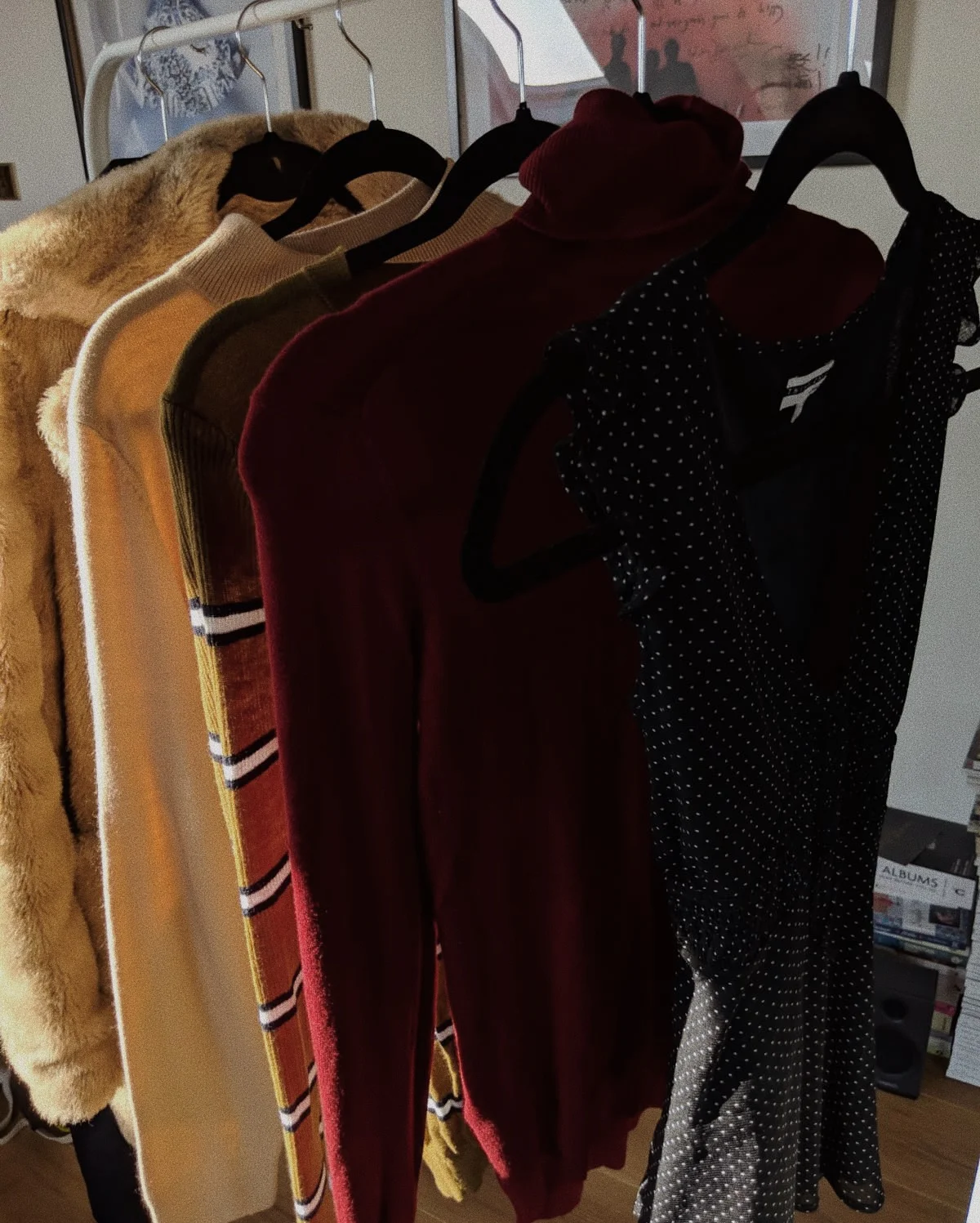
All the pieces on this rail, and the ones on my body, in these photos are some of my favourite pieces I've bought from charity shops and many of them are some of my most worn and loved pieces, from this faux fur coat, to my favourite pair of jeans to the various pieces of knitwear. And the best bit? I didn’t pay over £10 for any of them. The majority of them cost under £5. The jeans I’m wearing that I’ve definitely worn over 100 times cost a mere £2 times- how’s that for cost per wear?
There’s definitely a knack to charity shopping, although some of it is just luck, in order to avoid going home empty-handed, so I hope these tips will help you crack it and encourage you to head down to your local charity shop next time you have a free afternoon...
1. Carve Out Time
As a general rule, you’re not going to be very successful if you only ever ‘pop in’ to a charity shop when you have 5 minutes. This is because, firstly, you’re not allowing yourself much time to root through all of the clothes in there and, secondly, you’re not going to be in the right mindset to do so.
I always plan my trips to the charity shops, sometimes days in advance. Doing this usually means that I get excited to go charity shopping, which means I’m very much in the mood for it when the time I have allocated myself comes around! I think this is essential and it's the main reason why I always plan. It means you’re very willing to dig through piles and rails of clothes to find those gems and makes the ‘chase’ enjoyable rather than frustrating. Also, because you’ve carved out this time purely for looking round charity shops, you won’t feel guilty about it or like you need to rush yourself, making the experience even more enjoyable!
As well as carving out time, visit charity shops as regularly as possible! They're constantly getting new stock and obviously the best stuff is going to go the quickest so the more often you can get there the better. I try and spend an afternoon there at least monthly but I would do so weekly if I had the time!

Charity Shopping Tips & Tricks

Charity Shopping Tips & Tricks
2.Ignore The Sizes and Always Try On
This one is an essential for all kind of second-hand shopping. If you’re checking the size of everything to see if it will fit, it’s going to be a time-consuming and frustrating shopping trip for you. If you see something that you like but you’re not sure it will fit, take it into the changing rooms and find out for sure.
The black trench that I’m wearing in these photo is a size 16 (I’m a size 8-10 for reference) but it fits just as I’d like a trench to fit. I actually almost didn’t take it into the changing rooms with me because of the size but I’m so very glad that I did!
Sizes change over the years and so does the way in which we like our clothes to fit. This means that you can’t browse a charity shop like a high street store because the clothes generally aren’t made for current sizes or current 'trendy' fits. Obviously this is a general rule as there is some more recent pieces of clothing in charity shops too but even with these, as I do whenever I’m shopping really, I tend to ignore the sizes as they’re literally just a number that many brands get wrong!
3.Dress Appropriately
As mentioned, trying things on is really important so you don’t want to be wearing an outfit that’s super difficult to get on and off. You also don’t want to be wearing shapes and colours that you don’t usually wear as you’re looking for things that will fit into your wardrobe, so wear an outfit that is fairly representative of the pieces in your wardrobe.
I tend to wear a really basic outfit, usually my favourite pair of jeans, a white t-shirt, my go-to coat and my Vans. It’s easy to get on and off and I can generally tell that, for example, if a shirt doesn’t look good with my jeans, I’m not going to get any wear out of it. Or if a pair of jeans don’t work well with my Vans, I’m also probably not going to wear them. Wearing an outfit you like that is made up of staple pieces means that you’ll be able to see how any pieces you’re trying on will fit into your wardrobe.
Oh, and always bring a belt! As I said, sizes don’t really matter. Some things you’ll try on might need a belt or a bit of tailoring so to make life easier for yourself just always have a belt with you so you can check if things would look better slightly altered.

Charity Shopping Tips & Tricks
A beautiful blouse that I picked up in a charity shop in Barcelona whilst on the hunt for polka dots.
4. Look Out For Colours and Prints
Usually clothing in charity shops isn’t presented very well. Racks are packed full with so many items of clothing that you can barely really see any of them individually. So it’s not really necessary, or possible, to look through every single item of clothing. Instead, just look out for colours and prints that you like. Maybe even figure out a colour palette that you’re trying to incorporate into your wardrobe or that you're already wearing a lot a before you go and then look out for these colours. I certainly did this before my most recent charity shop trip where I picked up the camel top I'm wearing and the camel jumper on the rack and I've already got a lot of wear out of both the pieces!
Doing this means you don’t have to look through everything and can find things that are your taste simply. Obviously there might be other things that stand out to you that don’t fit into this colour palette and obviously don’t feel as though you can’t buy these, buy whatever you want! But by having a colour palette in your head it makes the experience a little less overwhelming and more productive.
5. Location, Location, Location
All charity shops are worth visiting in my eyes because you never know when you might get lucky, but they do vary in price and stock depending on the location you find them in. City centre charity shops tend to be a bit more expensive- I think this is because the people who work there might be more aware of how much the clothes they receive are worth and also just because they're generally busier. I also feel that the good stock goes very quickly from city centre charity shops because of the aforementioned reasons.
The best charity shops, in my opinion, are the ones in small towns, preferably a residential area where lots of elderly people live, as not only does this mean that there will be A LOT of charity shops but it means that you're more likely to be able to find vintage pieces and things that haven't been worn as much because of the huge amount of clothing these branches receive. There are at least 8 charity shops in the small area where I live when I'm at home and these are always my favourite charity shops to visit as I'm always the most successful here.

Charity Shopping Tips & Tricks

Charity Shopping Tips & Tricks
So, here's my tips summarised:
Carve out time to visit charity shops
Visit regularly
Ignore sizes
Always try on clothing items
Wear staple, basic items on your visits
Wear clothes that are easy to get on and off
Always take/wear a belt
Choose a colour palette and focus on looking for that
Favour charity shops in residential areas over city centres
Forget the stigma around them because they're an absolute goldmine!
I hope this post has been helpful, whether it's encouraged you to make a visit to your local charity shop or has given you some new ways to improve your already regular visits. By choosing to buy clothes from charities instead of from the high street every now and then you're protecting the environment, your bank balance and giving money to worthy charities rather than the likes of Phillip Green when you're shopping on the high street.

Charity Shopping Tips & Tricks

Charity Shopping Tips & Tricks
Charity Shopping Tips & Tricks

Charity Shopping Tips & Tricks