Sustainable Fashion is Expensive but Maybe That's A Good Thing

A common get out jail free card when it comes to sustainability is ‘it’s too expensive!’- one I often use myself whilst giving all the money I do have to fast fashion retailers. And it’s true, it can be expensive to support sustainable fashion. But maybe that’s not such a bad thing.
Buying a dress from a sustainable fashion brand such as Reformation rather than from a fast fashion brand such as Zara is going to cost two, three or maybe even four or five times the amount. This is because the processes involved in making sustainable clothing, from using recycled fabrics, to reducing the amount of water used in the production process, to paying workers proper wages, costs money.
Thinking about how much Reformation, to continue with this example, pays their factory workers, (approximately £5.70 per hour) in comparison to a fast fashion retailer shows, in itself, why Reformation clothing is far more expensive than its fast fashion equivalents. Reformation factory workers earn approximately £5.70 per hour whilst factory workers in Bangladesh creating clothes for fast fashion brands earn approximately £25 a month for working 14 hour days, which means, if they work 5 days a week, they earn approximately 8p per hour. Reformation factory workers wages are 71x higher than factory workers working for many fast fashion brands in deprived countries. Considering this, paying 3 or 4x the amount for a Reformation piece compared to a high-street piece doesn’t seem all that steep, and that isn’t even taking into account the cost of the environmentally friendly processes that goes into sustainable brands clothing.


The fact is, sustainable clothing is expensive to make. But it’s only expensive compared to high-street clothes that are made at the cheapest price possible so they can be sold for the cheapest price that will make the most profit. But these cheaply made clothes are destroying the planet, both their production and their lifespan after that.
I mean, this isn’t exactly breaking news. We all know fast fashion is a terribly polluting industry but, despite this, we still can’t, myself included, stop buying into the brands who are at the forefront of this pollution. And I think the reason we do this is because we have the get-out-of free card that ‘sustainability is expensive.’ But it’s only expensive in comparison to what we know to be the price of clothing.
For the sustainable fashion movement to truly take off, I believe we must re-define what the price of clothing is. Rather than considering £15, for example, as the average price for a t-shirt, we need to think of that as the average price of a t-shirt, that has not been made sustainably or ethically. The average price of a t-shirt, and every other single piece of clothing, is, in fact, higher than what we believe it to be, when they are made correctly, and rather than considering sustainable clothes as particularly expensive, we need to consider high-street clothing as worryingly cheap. Sustainability should be the standard not a selling point of a brand and changing our perspective is the only way that that’s going to happen.


Something that annoys me about myself is that I unthinkingly will buy 4 pieces of clothing that cost £20 each over the course of a month or a couple of weeks, but I will rarely buy something that costs £80. I’d like to think that I value quality over quantity in my wardrobe but somehow, it always seems that 4 ‘affordable’ pieces, probably not of the best quality, that I like, are a better investment than one more expensive piece, of much better quality, that I love.
This mindset is so damaging because not only am I supporting unsustainable fashion brands rather than the sustainable ones that truly deserve my money, but I am contributing to the supply and demand chain of fast fashion, buying lots of clothes because they’re cheap, thus suggesting to the retailers that they should keep making lots of cheap product.
On top of this, it is often hard to tell how much you truly like something when it’s cheap. I know that I think about whether I actually want something more when I’m spending more money on it, whereas with cheaper items I am often blinded by their price tag, buying them because I like them at the time and they’re a bargain, only to go off them a couple of weeks after because I haven’t truly thought about where they would fit into my wardrobe. This means they eventually end up in landfill, even if they go through the donation process first.
As a student who lives on very limited funds, I think it makes sense that I have always opted for cheaper options in the past because I am always thinking about how I can save money. Clothes make me very happy and are an important part of where I get my confidence from, so of course I want to have as many pieces in my wardrobe that make me feel that way as I possibly can afford. But the truth is, I’d probably like my wardrobe better if it was full of slightly more expensive clothes that I had really thought about and truly love, plus the ones that come with a guilt-free conscience, even if that means I had less clothes. I don’t think I’ll ever be a minimalist and capsule wardrobes scare me but I think there’s a lot to be learnt from both of these ideas, specifically that quality should always be prioritised over quantity.
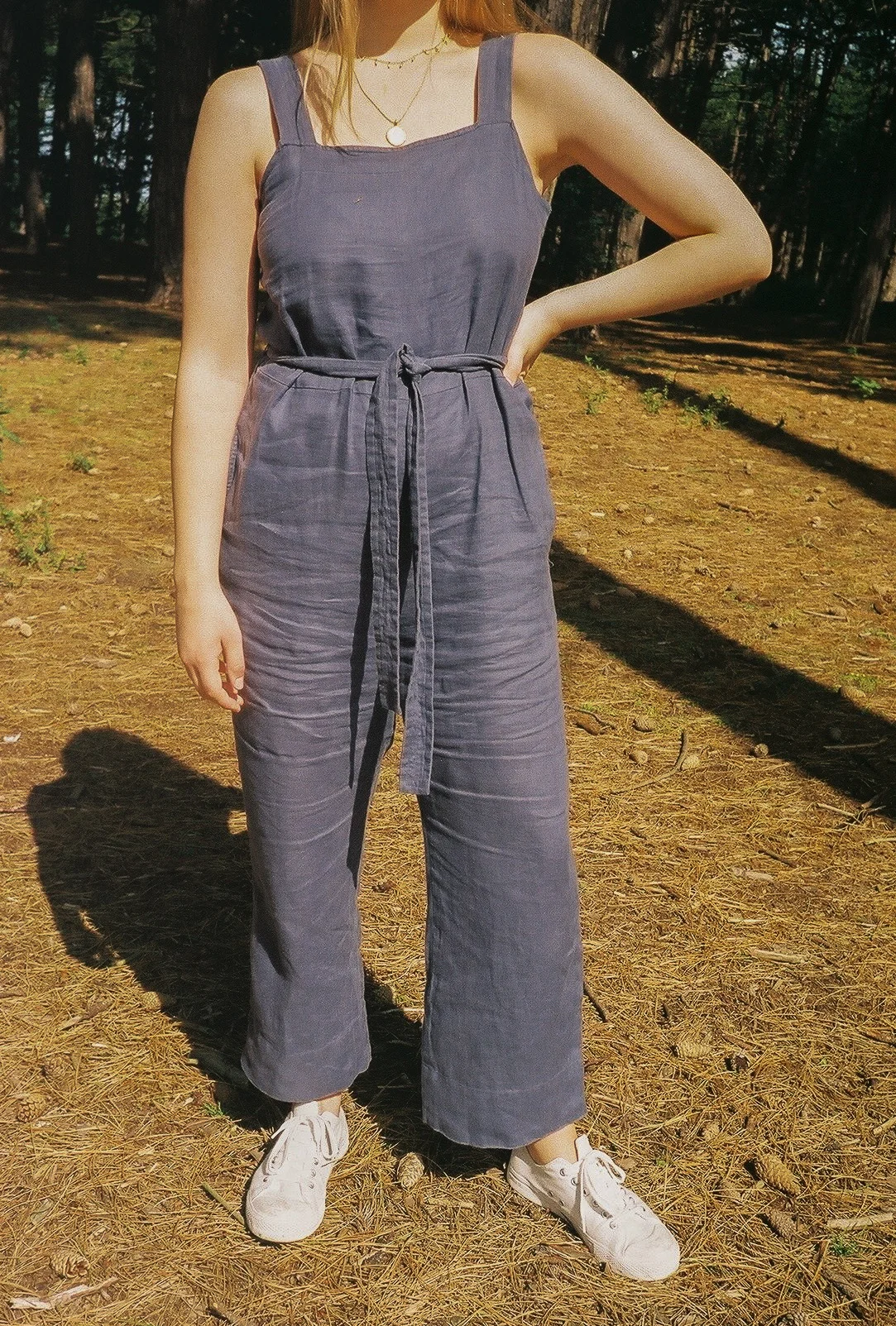

The Everlane jumpsuit I’m wearing in these photos is an example of a piece I was willing to spend a little more on, because of the brands sustainable and ethical credibilities, but also because I adored the fit and the quality. And I have probably got more wear out of it than any other piece in my wardrobe over the summer, because its price-tag meant I had to be sure I loved it and I think it’s a really timeless piece that will stand the test of time.
Sustainable fashion is expensive but maybe instead of dismissing it for this very reason, we should embrace the new perspective it can allow our wardrobes. We should love every single piece of clothing we own, and paying a little more for something will usually ensure we do, especially if your budget is as small as mine. Looking at the price tag of sustainable fashion this way might stop you, as it has with me, from being so quick to dismiss it, and consider how this type of clothing is not only beneficial for the planet and the people making your clothes but for your wardrobe too.
I’m not advocating a complete boycott of the high-street and I’m very aware that for some people on low incomes, especially those with children, genuinely cannot afford to support sustainable fashion. But if you’re spending £80 or more on your clothing each month, consider whether you really want that money to go towards lots of new high-street items, or a couple of sustainably made, incredible quality pieces, whose cost-per-wear will probably end up being smaller than the more ‘affordable’ high street pieces anyway. But most importantly, I think we should all be trying to change our perspectives on how much clothing truly costs and stop using fast-fashion pieces as a measure of this.


you might also like…


My Head Says Neutrals but My Heart Says Baby Blue | Conscious Styling Decisions vs. Impulse Purchases

Over the past few months, I’ve really been thinking more consciously about my shopping and styling decisions in order to protect both my bank balance and the planet. I’ve been curating my seasonal style inspiration Pinterest boards on a regular basis and have added a Wish List to my blog to keep track of the pieces I want to buy. And it’s been working! I think I could count on one hand the amount of new clothes I’ve bought (excluding charity shop buys) during the first 3 months of 2019 but, despite this, I haven’t been feeling bored or restricted by my wardrobe.
However, as the seasons are changing and the weather is warming up, I’m starting to see gaps in my wardrobe and I’m feeling the urge to shop. I’ve been religiously consulting my Pinterest boards and my Wish List before making any new purchases, thinking about if an item of clothing is really something that I want and am happy to spend my money on, as well as if it fits into what I want my style to be.
My Pinterest boards say that I’m very into neutrals (as do my ‘Saved’ images on Instagram) and neutral outfits are something that I think look really chic and would like to wear more. However, the pieces I gravitate towards and get really excited by don’t necessarily correspond with this. For example, I recently found my dream dress in the form of the Rixo Monet. It’s baby blue and leopard print with floral daisies printed all over it, I mean, far from my neutral aspirations.
I know I’d feel great wearing this dress. I know I’d give up a limb to own it. But it doesn’t fit into my ‘style vision’, so should I still be buying it? Of course, this is totally hypothetical; I don’t have a spare £300 to spend on a dress, or anything for that matter, and if I did, maybe these questions wouldn’t be quite so pressing for me and my wardrobe. But when my budget is limited, I want to make sure the clothes in my wardrobe are all pieces that I love and will get my wear out of. But I’m not sure which methods of purchasing are going to get me to that point.


Personal style is something that fascinates me, mostly because I don’t really think I’ve found my own. I know what clothes I like when I see them but do I dress in a way that is consistent? I don’t think so. And could I sum up my style in 3 words? Definitely not, apart from ‘I’m not sure’. I think people who have found their personal style will struggle less with these questions of conscious shopping decisions vs. impulse buys and can probably find pieces that they will love and wear through both methods. But for me, I’m not so sure that it works that way.
As the title of this post suggests, I am loving baby blue at the moment. Blue is always a colour that I’ve loved wearing; I have blue eyes and people often compliment them when I wear blue clothes so I think it’s become a subconscious liking of mine. So when I saw the satin midi skirt I’m wearing in this post, I knew it had to be mine! But I didn’t buy it straight away because a baby blue midi skirt wasn’t something that had made its way onto my Pinterest boards, or that I’d ever really felt the desire to own before. But I knew I loved this one, so when I saw that it was on sale for 25% off, I snapped it up.
I’ve only worn it once (I mean, that’s pretty good going as it only arrived 4 days ago) and I felt great wearing it but I’ve still found myself thinking a lot about whether it was a responsible purchase. It wasn’t even an impulse purchase as such, but just one that just didn’t fit into my ‘style vision’. Speaking of impulse purchases, I went into Topshop 20 minutes before closing time on Sunday and found a red and white satin mini skirt that I immediately fell for, as it reminded me of a Realisation Par piece that me and my pitiful bank balance have been admiring from afar. I bought it immediately, something I have not done in a while. Usually, I’ll try something on, go home and think about it and then purchase it (or not) a few days later. This was my first proper impulse buy in a while and I felt weirdly guilty about it. My immediate thoughts were ‘well, I can bring it back if I change my mind’. But no part of me wants to take it back. It’s a great piece with so many styling opportunities and it’s not like it broke the bank at £20.


This overthinking about these pieces has made me wonder how consciously I should be thinking about my shopping and styling decisions. I mean, isn’t the fun of fashion being able to wear whatever you like (as the name of my old blog ‘If You Like It Wear It’ would suggest) and whatever you feel represents you? Although my Pinterest boards can certainly be a place of great inspiration, I also worry that they can be a place of restriction too, moulding my style into whatever everyone else is wearing and whatever it is that I think I ‘should’ be wearing
So, to come to some sort of a conclusion, I really don’t know whether it’s best to follow your head or your heart when it comes to personal style. A combination of the two sounds about right, but it’s a tricky balance to perfect! There’s no doubt that thinking more consciously about shopping has improved my bank balance and helped me buy less fast fashion, which can only be a good thing. And using Pinterest really has made me more and more excited about getting dressed in the morning! But I also don’t think there’s anything wrong with buying a piece of clothing without having thought it through for hours and hours. Impulse purchases can be good for the soul and there’s no harm in them every once in a while. After all, there’s nothing quite like the excitement of buying something that you love on a whim and I wouldn’t want to lose that!
I’d love to hear your thoughts on this subject! Are you more of a planner and conscious thinker when it comes to buying new clothes or are you all about impulse purchases? Let me know in the comments!


you might also like…