
How to Be Vegan at Christmas | 7th Day of Christmas

Photography by Jenny Gavan.
Being vegan is trying at the best of times, and that’s generally not even because non-vegan food is tempting but because you’re constantly questioned on your choices and the food you choose to eat. So being vegan at Christmas, when the main event of the season for many is a turkey/chicken/pig, is even worse. From (often passive aggressive) jokes that you’ve heard a million times before at the dinner table, to the question that never ends of ‘but don’t you miss bacon?’ it takes a lot of will power not to get annoyed with people, and I think that’s where the label of ‘angry vegans’ has developed from (but I’ll save that for another blog post).
So I thought I’d write this blog post in order to provide some tips on how to stay sane as a vegan over Christmas as well as providing an extensive list of the best vegan food you can eat at Christmas (scroll to the bottom of the post if that’s what you’re interested in), because there’s absolutely no need for those with a plant-based diet to miss out on what is decisively the best season for food of the year. This is my third Christmas eating a vegan diet so I think I’ve really got both of these things down!
Here are my tips on how to stay sane:
1.Don’t Engage With The Age Old Vegan Comments, You’re Going To Get A Whole Lot Of Them!
As I started to discuss earlier, people LOVE to comment on the lifestyles’ of vegans, whether they’re making jokes or offering health advice. When I first went vegan around 2 and a half years ago, I would be asked/told on a daily basis questions like ‘Do you get enough protein? You need to be careful with that.’ Or, ‘But if we all went vegan, animals would overpopulate the earth, right?’ First of all, if anyone’s interested, yes I do and no they wouldn’t. But I’m going to stop there. During my first months of veganism, I would always engage with these questions, relaying facts and explaining to people why they were wrong, firstly because I was super passionate about it and also because I thought these were genuine questions and that I could actually help educate the people asking them. But the truth is, I couldn’t and you probably can’t either.
If people have these assumptions about you and your diet, they’re probably not even going to listen to what you have to say, so it’s just going to be frustrating for you to try and explain anything to them. I always give super simple answers (literally just yes or no) and if they push further, I keep my answers short (e.g. ‘It’s all good, I had blood tests last month and I’m fine, not to worry!’) Most people asking these questions really don’t want to know the actual answer and have their beliefs challenged, and this is especially true at the Christmas dinner table! So just answer the question simply and change the subject, unless you think they are genuinely interested.
With the jokes, just learn to laugh. They’re not funny and probably never will be but, again, the people telling them don’t want to hear that. So, again just laugh and move on. Whatever you do, don’t even bother trying to educate the joke-tellers, they’re even less interested than the question-askers, trust me!

2.Don’t Attempt to Convert People At The Christmas Dinner Table
This one is kind of similar to my previous tip, but don’t use Christmas dinner or any of the many formal eating situations of Christmas as a chance to tell people the facts about the meat on their plate. It can be tempting, especially if you’ve only recently learnt about how horrific the meat industry is, to become angry with all the meat consumption you’re seeing over Christmas. But telling people how bad their decisions are, especially when they’ve already bought the food and are in the midst of eating it, really isn’t going to be an effective way of turning people vegan and is going to leave you and the person you’re talking to feeling rubbish!
Just be content with the fact that by not eating animal products at Christmas, you’re making the right choice! I think being happy with your own decision and showing people just how much you’re thriving through eating a vegan diet is actually the most effective way of impacting other people’s decisions. My mum actually went vegan around 6 months after I did when she saw all the positive effects it was having on me, so trust me on this one!
3.Always Come/Go Prepared
There’s nothing I feel more uncomfortable with, in terms of veganism, than people fretting over me and feeling bad about there being a lack of vegan options. Obviously these people have the kindest of intentions and I always really appreciate that, but I don’t do well when being fretted over as I generally just don’t like the attention of lots of people, especially strangers, being focussed on me!
To avoid this, and to make sure you’re not left dipping carrots into hummus as your main meal of the night, take food with you to events if you’re not 100% sure whether they’ll be vegan options! I’m talking family events here, not a New Years Eve club night, BTW. This works especially well if it’s a family event with a buffet, as you can just add whatever meal you’ve made to the table and, if you’ve made enough for others too, your friends and family can taste just how good vegan food is! Easy meals to bulk make include veggie curries and chillies, but dessert always goes down well too (see below for a recipe for the best peanut butter filled dessert).
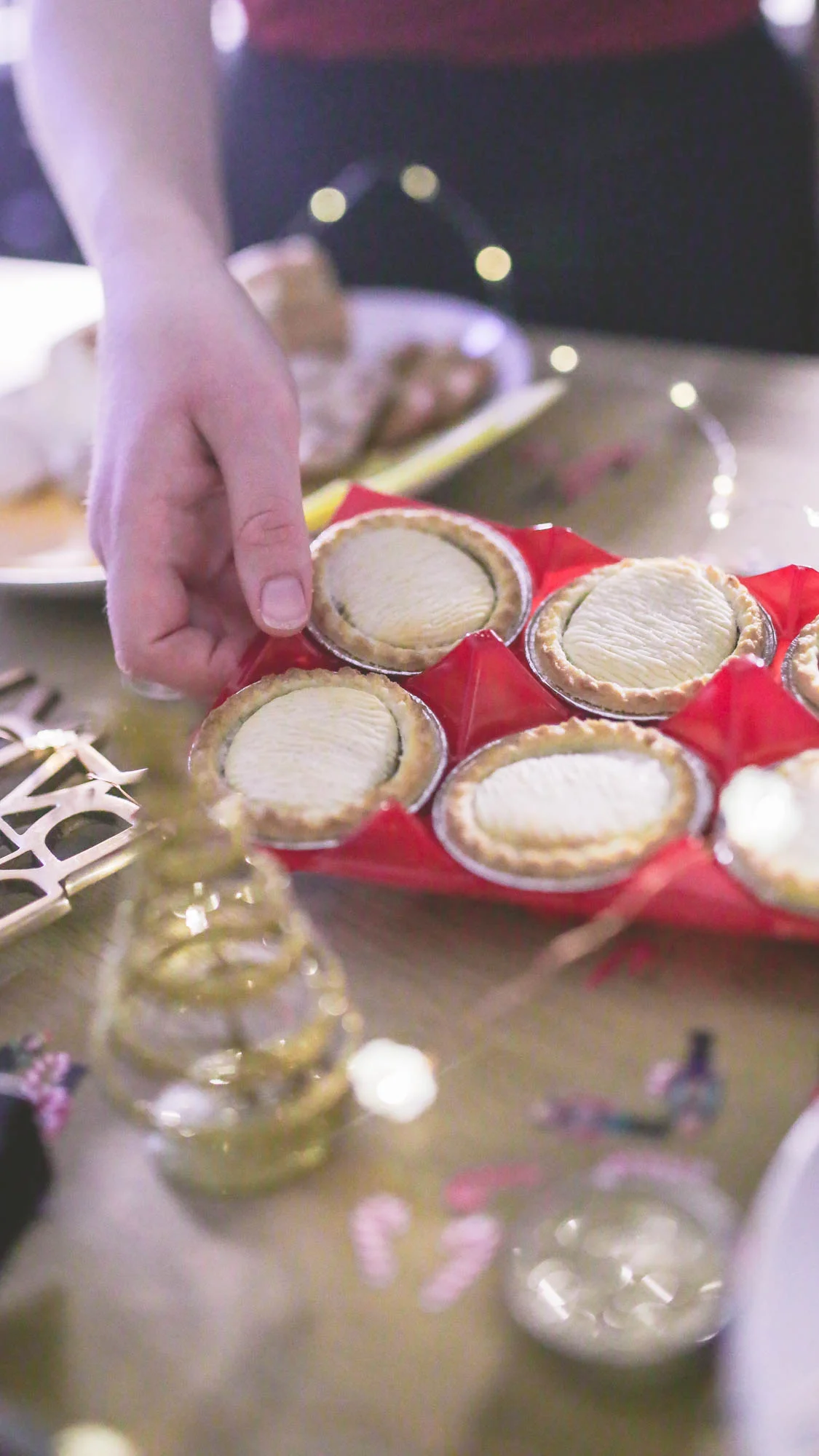
Waitrose Mince Pies

Linda McCartney sausages, Linda McCartney pork & apple sausage rolls, Tesco bubble and squeak
4. Stock Up On All The Vegan Alternatives/Treats
This one is especially for those of you who are newly turned vegan and are worried about the possibility of caving over the festive period. But it’s also relevant to all vegans, new and old, in because you don’t want to be left out of what is the best foodie time of the year. Stock up on all the fake meats, lots of vegan-friendly chocolate and anything else you’d usually eat over Christmas. I promise, your tastebuds won’t even know the difference if you do this effectively!
With that, here is a guide to all my favourite vegan-friendly food you can buy this Christmas:
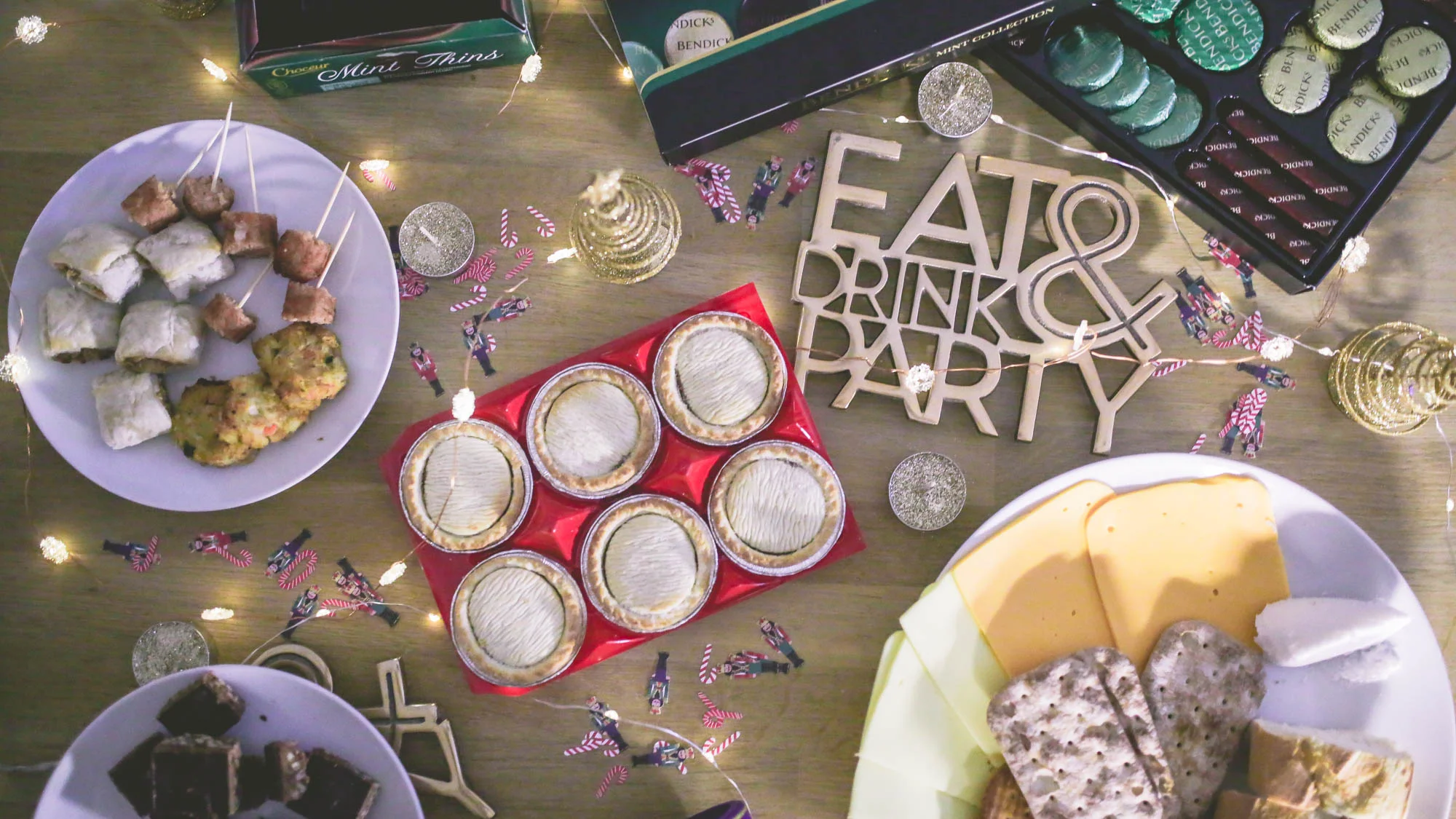
SAVOURY:
Linda McCartney Vegetarian Beef Roast with Red Wine and Shallot Glaze
Linda McCartney Cocktail Sausages
Linda McCartney Vegetarian Mini Pork & Apple Sausage Rolls
Ready salted Pringles
Paprika Pringles
Violife Cheese Spread (I couldn’t find this one in the supermarkets so I made my own one for these photos, but Violife cheese is unarguably the best)
The White Rabbit Pizza (it’s expensive but it’s a nice treat and a good one to take to parties)
Ritz Crackers
Bubble & Squeak (Tesco’s frozen one is vegan)

SWEET:
Mince Pies (Waitrose & Lidl’s are vegan)
Tesco Frozen Churros
Mint Thins (basically supermarkets own brands’ answer to After Eights and they’re SO good)
Cadburys Drinking Chocolate (to be made with oat milk)
MooFree chocolate is the best, plus they do a selection box. Make sure to try their Bunnycomb bar.
Lazy Day products (including millionaires shortbread- available in Waitrose)
Vegan Magnums
Bendicks Mint Collection Chocolate Box
Co-Op Custard/Jam Donuts
Fabulous Freefrom Factory Dairy Free Chocovered Crunchee Bites (tastes exactly like a Crunchie chocolate bar)
Fabulous Freefrom Factory Dairy Free FudgeeBites
Fabulous Freefrom Factory Dairy Free Sea-Salted Chocolate Covered Bites
Alpro Custard
If you’re wanting to do some baking, this BBC recipe for peanut butter chocolate squares is always a winner. It’s not vegan but if you replace the butter with vegan butter, and use dark chocolate (my favourite is Bournville), as well as vegan digestives (most supermarket’s own brand digestives are vegan but always check) then it is suitable for vegans and it’s SO easy to make!

Everything I Like Is Bad But Is Feeling Guilty About It Helpful?

EVERYTHING I LIKE IS BAD BUT IS FEELING GUILTY ABOUT IT HELPFUL?
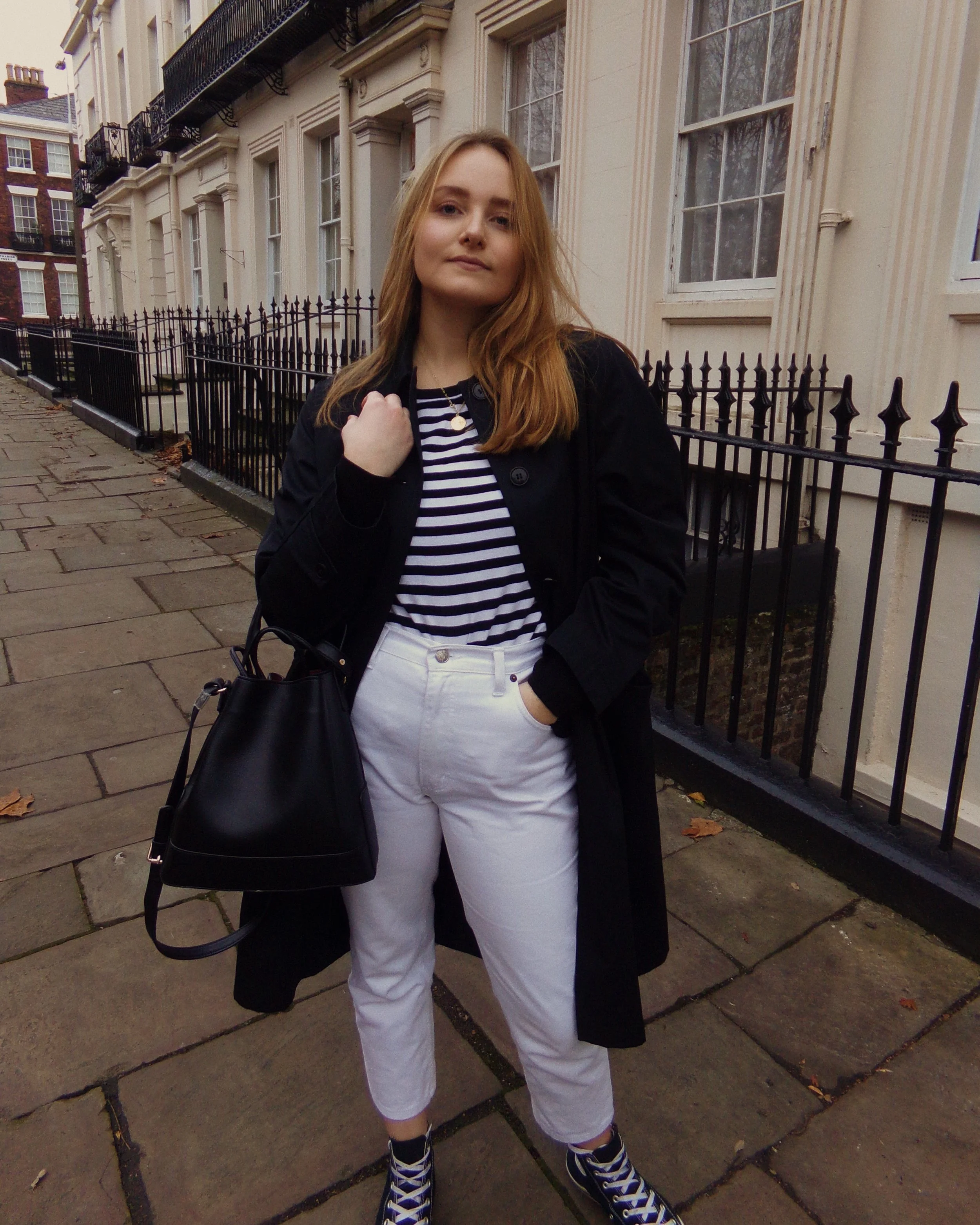
Top- Charity Shop, Second Hand (similar
)
Jeans- Vintage YSL, Armstrongs Edinburgh (similar
)
Coat- Charity Shop, Second Hand (similar
)
Shoes-
Bag- Zara (old, similar
)
Necklace-
As a society, and more specifically as a generation, we seem to be becoming more and more aware of how many aspects of our lives are harmful, whether that’s sustainably, ethically, psychologically- the list goes on. Every couple of months there seems to be a new realisation on how a fundamental part of many of our lives is not as innocent as we thought.
Fashion and buying clothes? That’s the second biggest polluter in the world. A mindless scroll through Instagram? The cause of all your insecurities. Reading a book, surely nothing wrong with that? Think again, do you know how many trees are killed to make one book? Eating anima... Oh wait, I’ve got this one down, I’m vegan so we’re all good there. Wait what? Palm oil is destroying rainforests and is in a whole lot of vegan products including... Oreos?? It all feels like too much.
I’m not saying that we should just be ignoring all these facts and statistics and that people are being ‘snowflakes’ (I hate that term) about these things- we shouldn’t and they’re not. Our consumption of fast fashion is excessive and is causing too much harm to our planet; social media can negatively affect people’s mental health (although this one isn’t as straightforward as others in my opinion, read my blog post discussing this here); kindles are much more environmentally friendly than a hard or paperback and palm oil is destroying rainforests. But I love buying and styling new clothes, social media is a HUGE part of my life, palm oil is in a lot of vegan products and is very difficult to avoid and well, to be honest, I just really don’t like kindles... perhaps I’m being a little stubborn with this one.

EVERYTHING I LIKE IS BAD BUT IS FEELING GUILTY ABOUT IT HELPFUL?

EVERYTHING I LIKE IS BAD BUT IS FEELING GUILTY ABOUT IT HELPFUL?
These justifications all sound a little trivial, I’m aware. But trivial or not, all of these things with negative impacts on our world are big parts of my life that I don’t know how, nor do I necessarily want to, be completely rid of.
(DISCLAIMER:Obviously there are countless more aspects of life that have negative impacts but these are the ones that I think are most relevant to my life, which is why I’ve used them as examples.)
So what I’m saying is, it’s impossible for me, and I’m hoping others too otherwise this post is pointless and I’m seriously weak-willed, to just cut anything with a potentially negative impact totally out of their lives. For me, even reducing my consumption/usage of these thing also proves difficult. So instead, lots of people, me being one of them, are talking about making a ‘conscious effort’ to reduce their intake of something/s that are harmful. But sometimes, at least for me and seemingly for some others, this just seems to be away of saying ‘I’m aware that this is bad and I know I should change my habits but I don’t know how to and therefore I probably won’t or at least not enough to make material change’.
Changing your mindset is one thing but changing your habits is another, much more difficult thing to do. So how do we do it? I honestly have no answer. In fact, I have many questions! And I think raising awareness of all of these things is great but what we really need is solutions that aren’t extreme but are practical, do-able steps that people can follow to try and change the way they live. I’m aware that in writing this blog post just to say this, I’m being a little hypocritical. But I don’t feel qualified to provide any answers and if anything this post is a cry for help and a call to arms to people who might be reading this who have managed to stop buying fast fashion or cut palm oil out of their diet to help us all and provide tips that don’t scare anyone, including me, off (I think I mentioned my weak will earlier?)

EVERYTHING I LIKE IS BAD BUT IS FEELING GUILTY ABOUT IT HELPFUL?
It’s also just a post to vocalise how I feel about the current climate being one in which we have to think about the ethical implications of everything we do, which can often make us feel a little bit helpless. And this is how I feel right now. I really want to find ways to deal with all of the problematic things I mentioned earlier and all of the other problematic elements of my life and habits that I haven't mentioned. But I also don’t feel like I can suddenly change pretty much every part of my life, big and small, which comes with a sense of guilt that isn’t really helpful or productive.
For example, I recently set myself a challenge of not buying any new clothes in November and failed a few weeks in (damn you Black Friday). But, for the most part anyway, telling myself I couldn't buy any clothes only made me want to shop more and left me with a list of things I was going to buy when this terrible month (I'm joking, kind of) was over, so it did anything but change this habit of mine and seemingly only made it worse.
I think manageable steps will work better for me and this is what I want to try and focus on but it still feels like I'm failing because I'm not doing enough in doing this. I feel like this despite the fact that manageable steps have proven to be more sustainable long-term for me. For example, every piece of clothing I'm wearing in this photo was bought second-hand, and I didn't even put these pieces together intentionally. So why do I feel guilty about not doing enough?

EVERYTHING I LIKE IS BAD BUT IS FEELING GUILTY ABOUT IT HELPFUL?
Changing our habits slowly doesn't bring the same sense of gratification as totally giving them up does, but I think sometimes the latter method is used only to prove yourself; for example, not buying any clothes for a month, posting about it all over social media, and then buying double the amount of clothes you'd usually buy the next month. I'm not writing this method of going cold turkey completely off as I'm sure it has worked for some people. But the narrative that the only way we can keep our conscience clear is by giving up things completely and the sense of guilt that comes with not doing this is unproductive and unsustainable.
Like I said, this post isn't providing answers. It's purely an attempt to vocalise how I feel about the societal guilt surrounding more and more things in our life and to consider how productive this is. Making a 'conscious effort' doesn't feel like enough but going cold turkey isn't a feasible option for many people, so how do we change our habits in a positive, sustainable way without feeling guilty about not doing enough? I'd love to hear your ideas on how we should deal with all the issues society is discovering with its ever-growing ethical, environmental , psychological (etc.) awareness without having to feel a sense of shame about everything we do. Let me know in the comments or on social media, and please share any links to resources you've found helpful on this topic!

EVERYTHING I LIKE IS BAD BUT IS FEELING GUILTY ABOUT IT HELPFUL?

EVERYTHING I LIKE IS BAD BUT IS FEELING GUILTY ABOUT IT HELPFUL?

EVERYTHING I LIKE IS BAD BUT IS FEELING GUILTY ABOUT IT HELPFUL?