
How Do We Navigate Social Media Now It's The Only Way to Socialize?

In December of last year I came back to my parents home for the weekend and decided to take this time off social media. For me, social media is not an inherently negative place. But it is time-consuming and sometimes brain-numbing and I spend far too much time on my phone when I could be doing things that are useful but more importantly, things that bring me genuine happiness and contentment.
I feel lucky in that I don’t find myself falling into the ‘comparison trap’ of social media, and specifically Instagram, like many do. On bad days, I feel envious of others whose lives look better than mine but most days, those types of thoughts don’t enter my head. Because of this, I’d never considered taking time off social media as something that would be useful for me, as this is the reason many others choose to do so.
The day I decided I would have a weekend off social media was Friday 13th December, the day after the General Election. The result of the General Election made me feel extremely emotional (angry, sad, despairing) and as my Twitter, Facebook and Instagram feeds demonstrated, the same was true for many other people. This emotion and the fact that social media was dominated by news of the general election, something that I wanted to escape, made it clear to me that I needed a few days off.
So I deleted all of my social media apps and wasn’t tempted to check them over this 3 day period because I knew that it was a particularly negative space that weekend. I spent my time doing uni work and also relaxing, trying to do some of the things the time I’d spent endlessly scrolling had stolen from me, namely, reading and writing. But at the end of the weekend, I felt worse. Or maybe not completely worse, but definitely more lonely than before.
It made me realise how much of my social life was coming from social media. I’m thankful for social media for this, as it’s allowed me to meet so many wonderful people and find communities I wouldn’t have in the physical world. And it’s certainly helped me to grow and change as a person. But I also came to the conclusion that, of course, it wasn’t healthy to be getting so much of my social contact from social media, as nothing can replace genuine face-to-face, physical contact.
Luckily, the first few months of 2020 were far less busy for me work-wise than the last months of 2019 were, so I was able to socialise for real a lot more. And I felt so much better for it. I also tried to lower my screen time, which I did, although I won’t be sharing numbers because, as numbers often are in so many different scenarios, I think they can be a source of comparison and shame.
We often laugh as we refuse to share our screen-time with others because we are embarrassed that ours is so high. But perhaps this is because we are uncomfortable with the reasons as to why we are unable to practice self-control when it comes to social media. For a lot of us, we lose control because we seek validation and connection from social media where we don’t have it in our own lives. For me, social media allowed me to subdue feelings of loneliness. For others it might be finding validation on social media in order to forget, for a while, crippling insecurity, or to be able to enter the more ideal world you’ve created yourself, in order to escape the unhappiness you’re genuinely feeling.
Since self-isolation has begun, I’ve been totally unable to control the time I spend on my phone and the same feeling of scrolling-induced claustrophobia that I was feeling in the last months of 2019 has returned. But a social media detox doesn’t feel like an option for me right now, as much as it might help in normal circumstances, because I am craving social contact in any form I can get it, given the current situation, and I’m not about to give that up in any shape or form.
When I listen to people speak, or write, about having breaks from social media or giving it up altogether all I can think is: you are so lucky. This is because the people who tend to do this, or at least those who I’ve heard discussing it, are those who live with their partners or lots of friends and are getting the social contact we all crave from inside their households. I am lucky enough to live with a friend in usual circumstances and I feel more than able to take time off social media when we’re staying in our flat at the same time and I’m going to uni or even the library every day surrounded by people. But when I come home for the weekend and it’s just me and my close family, a social media detox doesn’t feel like a healthy thing to do. Because as much as I love my family, I’m not getting the same social connection I get from my friends, partner and colleagues from them.
Having moved back in with my parents during lockdown, I feel at a loss as how to navigate social media at this time. Should I be policing my screen time, to ensure I’m leaving time to do the things that fulfil me and make me happy? Or should I stop putting pressure on myself to do anything as it’s supposed to be done and just go with how I feel?
The problem is: I often don’t have the choice to see how I feel when it comes to social media, because it’s so instinctive to me to pick up my phone and start scrolling that I lose hours and days to it without even realising. For example, when I’m reading a book and I google the definition of a word and suddenly, it’s 30 minutes later and I’m deep into a Twitter thread. Or, I’ve woken up in the morning and decided to quickly check my emails before getting out of bed, but suddenly, an hour has disappeared and I’ve reached my screen time limit for Instagram. Or, I’m on a walk, and I’ve checked my weather app to see what time the sun will set, to make sure I get home before it goes dark, but I have a message from a woman who likes my Instagram page, and I end up spending the whole walk messaging her about common interests. By the end of the walk, I haven’t appreciated the sea or the sand or the sky, but I’ve made a new friend.
The point is, social media brings both positivity and negativity into my life but a potentially destructive part of my personality, which I’m sure is true for others too, is that sometimes I crave that negativity or at least the mindlessness that social media breeds. This means using it instinctively might not necessarily mean only using it for positive interactions like the one mentioned above and also because, I truly believe I’m addicted to social media, so my instincts surrounding it might not necessarily be healthy.
If I deactivate my social media and put my phone in a drawer, I’d waste less time, I’d read more books, I’d probably be a better writer. I’d probably exercise more and be able to run a 10K, I’d probably keep my room tidy and I’d never feel stuck in a hole that I can’t get out of. But I’d also lose the friends I’ve found online and even some of the ones who I’ve found in the big wide world, at least for a short period, whilst social media is the best way to keep up with them. I’d also feel lonely and perhaps less creatively inspired and, definitely, like I’d lost a part of my identity (whether that’s a good part or bad, I’m not sure.)
There’s no easy way to navigate social media full stop, but even more so during a global pandemic. There’s no easy way to do anything during a global pandemic, really, but social media feels particularly difficult. Because we can look to survivors of previous pandemics for most other things, but not for this. This is the first ever global pandemic that society is trying to survive in the digital world and I don’t think we should underestimate the difficulty of that.
Today, I woke up and scrolled through social media for a straight hour. I then tried to get out of bed and into the shower but ended up scrolling for longer. By 12pm my screen time had hit three hours and I felt bad about it. I considered whether I felt bad about the number or just simply bad, from coming out of the scrolling hole and I came to the conclusion that it was both. I decided to leave my phone in my room and do a jigsaw and watch TV. I did this for four hours and my brain felt clearer. Tomorrow, I will partake in a weekly digital book club that is the highlight of my week by far during lockdown, and was only made possible because of social media. I might waste time scrolling, I might engage with some amazing people and feel more positive about my life and the world for it. Every time I enter the password to my phone and click on one of the infamous apps, it’s a gamble.
Social media makes me feel very bad but it also makes me feel very good. It exposes me to some of the world’s worst people and to some of the world’s best. I would even go as far to say that it exposes me to the best and worst versions of myself, to speak in the tongue of the digital age.
With every good comes a bad, with every friend comes a troll, with every hilarious meme comes a devastating news story, with every time-wasting scroll comes an opportunity that would otherwise never have presented itself to you.
“Social media:” opens the essay of an A-Level student in 3010, “It was the best of times; it was the worst of times.”
(Plot twist: the student is a robot. But at least he’s read Dickens.)
you might also like…


So You're Feeling Hopeless After The General Election...

Photo taken in Shakespeare & Co in Paris, 2018. A reminder that we all need going into 2020.
The General Election has happened. The Tories gained a huge majority. It’s shit. It’s disappointing. It’s scary. You’re probably feeling hopeless about the state of the country, of the world even. But wallowing in this hopelessness is not productive in any shape or form, for yourself or for the bettering of the world.
What is productive is fostering the hope you’ve been feeling over the last month in the run up to the General Election at the prospect of a better, more equal country and using it to creative positive change. The General Election may be over, but the world is not and there are so many things you can do to make the world a better place, even if the ruling party choose not to.
Hang on to the issues you care so deeply about, whatever has struck a chord for you during this election, whether that’s the NHS, the climate crisis, homelessness or whatever else. Find charities and campaigns that are championing these issues and become a part of them. Becoming a part of something you believe in, in which you can see clear change happening as a result of your actions is so rewarding and will turn at least some of your feelings of hopelessness into optimism. And although the prospect of the Tories being in power for another 5 years is daunting, this is 5 years in which you can campaign for whatever political party you believe in, rather than just doing so a couple of months before the election which is not as effective both because of the tension people are feeling and the limited time.
You can do this with your time or money, whatever works best for you but I would add that giving up your time is especially rewarding. However considering there’s only 12 days till Christmas (at least that was always going to be a silver lining after the election), consider giving charitable gifts this year, whether it’s donating to a charity of your choosing on someone else’s behalf, or buying a gift from the ChooseLove store for someone (I particularly love this idea).
What is key here is actually making change happen. Although social media seems like a great platform for activism at times, especially if you have a large follower count, it can be superficial and have little effect on the world, which can be frustrating. Whilst being out in the real world, making change through your actions has the opposite effect and is deeply fulfilling.
The connections you can make campaigning in real life are also often so much more sincere and impactful than those you can make through social media too. This is largely because social media is somewhat of an echo chamber for most of us, in which we only see our own left-wing views repeated back because, of course, we don’t want to follow people we disagree with.
I think the social media echo chamber is a significant reason why the General Election results might feel so devastating to many young people because it’s easy to be fooled by the 700 people you’re following that everyone thinks about the world in the same way you do, forgetting that there are over 66 million people living in the UK with incredibly diverse views.
This floored me during the past election and particularly during the EU referendum, as, although I was too young to vote in it, it initiated my interest in politics. But the politics I was interested in and thus surrounded myself with, were left-wing and pro-EU and thus, I was devastated by the result of the referendum. Whereas in this election, by staying informed as much as I could on what’s going on in the real world, the shock was minimised and my mental health has not been affected to such an extent.
Now I’m not advising be-friending Tories or filling your Twitter feed with opinions you disagree with. Instead, just gain an awareness. Read newspapers whose political leaning might be a little more right-leaning than your own, or at least be aware of what they’re saying. Talk to people who aren’t just your closest friendship group. Don’t immediately close off a conversation with someone just because their views are more right-wing than yours. By any means, you don’t need to be uber-polite to them. But at least engage in the conversation, if only to affirm that the politics you believe in are the ones you want to champion.
This awareness is not only necessary to advance any sort of left-wing politics (as the divisiveness we create in staying in our own bubble and shouting at anyone who might disagree with us is deeply harmful) but also to protect your personal mental health because being overly-optimistic unfortunately often leads to disappointment and despair. Although I am deeply saddened by the results of the General Election, by staying informed, it’s not far from what I expected. And for me, being able to prevent such despair is critical to my mental health.

Photo by @badasscrossstitch on Instagram
Finally, stay off social media as much as possible for the next few weeks. It’s going to be a site of tension, divisiveness and anger and it’s not a positive space in any sense, neither for your mental health or for creating a better world. Spend your time, instead, educating yourself, volunteering, becoming an activist, with your loved ones, with yourself and maybe even with your counsellor.
Because it’s absolutely okay if you do feel devastated by the result of the General Election. It’s okay if you think it’s triggered some of your mental health issues. Some might see it as ‘just politics’, but for many this General Election came with so much hope for the future and Thursday night’s exit poll probably felt like that broke down entirely. However, the world is not ending and there are so many ways we can make it a better place, but before you can do so, you have to ensure you’re in a good place. Although do consider doing both at the same time. Volunteering and activism can be an incredible way to feel fulfilled and improve your mental health, giving your able to do so, alongside whatever else you might need to stay healthy, including medication and counselling.
There is so much to be anxious about as we enter 2020 and this Tory government is certainly part of that, especially for vulnerable people in society. But lets channel our despair and fear into making a better country and a better world and lets use our time, money, voices- our privilege in whatever form it takes, to protect those who are truly vulnerable and to fight for what we care about.

On Being Alone & Balancing My Time as an Introvert

(some links used are affiliate links which means I earn a small amount of commission if an item is purchased)
Top- Topshop
I love being alone. I am a self-proclaimed introvert and, generally, time alone is something I always look forward to. I remember when I was younger, in my early teens, I would saviour weekend nights spent only with myself; I could stay up as late as I wanted to and do whatever I pleased with my time, which usually involved writing blog posts (on a blog that no longer exists), scrolling through Tumblr and reading. My time alone now is spent much in the same way, apart from that Instagram has replaced Tumblr (which is probably for the best because despite Instagram’s many issues, at least it isn’t trying to convince me that thigh gaps are cool.)
It seems then that time spent with myself is time to be creative. It’s also time to binge-watch my favourite Netflix shows, don’t get me wrong. But I definitely spend most of my alone time working on creative projects and if I do spend too much time with other people, I quickly develop an itch to be on my own, so I can re-charge and work on these things that I love and care about so much.
I find the ideas surrounding extroverts and introverts interesting and largely baffling. I often question how anyone could re-charge by spending time with others because it is so natural to me to restore my energy by being on my own. This isn’t necessarily because I relax in conventional ways when I’m on my own; most of my time spent doing ‘nothing’ (i.e. watching TV, chatting and generally chilling) is when I’m with my boyfriend and my friends and, as I just explained, most of my alone time is spent working, even if I am working on things I enjoy. It sounds kind of counterintuitive really: I relax when I’m with others but I re-charge when I’m on my own.
But I don’t think re-charging and relaxing are necessarily the same thing. It’s true that I feel exhausted after spending the entire day socialising or even just being around other people but collapsing into bed and binge-watching TV isn’t always the answer to that. More often than not, turning to my blog or other projects that I’m a part of feels like the ideal way to end my days. I think I crave this kind of ending to my day because I feel the most like myself when I’m doing something creative/something that I’m interested in. And I think that’s what this concept of ‘re-charging’ is all about- where it is that you feel most like yourself. Alone or with others? Watching TV or working? etc.


I don’t think there’s a right or wrong answer to the question of where you feel most yourself but I do think that my ways of re-charging can be problematic. Re-charging by working (even work that I enjoy) can definitely cause problems, namely me becoming completely over-worked (how many times can I say work in a sentence?) It’s pretty normal for me to leave my house at 9am and stay in university till 5pm, to come home, eat something and spend the rest of my night working on my blog with maybe an hour of Netflix when it gets to about 10pm. This isn’t me pushing myself because I feel like I have to, (I find it very frustrating when people force themselves to work more than they need to just to feel worthy), it’s because I want to, well when it comes to my blog anyway! I love my blog and I love working on it. It makes me feel good and if I didn’t do it in the evenings and on the weekend, I wouldn’t have time to do it at all.
But re-charging in this way certainly does blur some lines of what is work and what isn’t, and how far enforced relaxation (even if relaxing in the conventional way isn’t what I feel like doing) is necessary. Right now, it feels like this way of living works for me. But then again, I haven’t been to university in a week (it’s the Easter Break) and a couple of weeks ago when I had been enforcing this routine for 8 weeks straight and was feeling burnt out to say the least, I might have felt very differently.
I love being alone but maybe I don’t quite know how to yet in the ways that are best for me and my mental and physical health. I think as I grow older and learn more and more about myself (and I hopefully spend my days doing work that fulfils me creatively so I don’t have to spend my nights doing so), I’ll learn what is best for me though, and I hope Ii find a healthy balance between genuinely relaxing whilst also being able to re-charge, whatever that phrase really means.
Writing this post has made me realised that being alone is much more complicated than many people, including myself, like to think. Maybe I’m just thinking into it too much (I mean, I am an English Literature student so that’s a fair assumption) but considering much of my time is spent by myself, I think this is a worthy topic as any to spend my time thinking and writing about.
Let me know how you feel about being alone in the comments! Do you love it or hate it? Are you an introvert, an extrovert or somewhere in between? As you might be able to tell, I’m very interested in this topic so I’m keen to hear your thoughts!


you might also like…


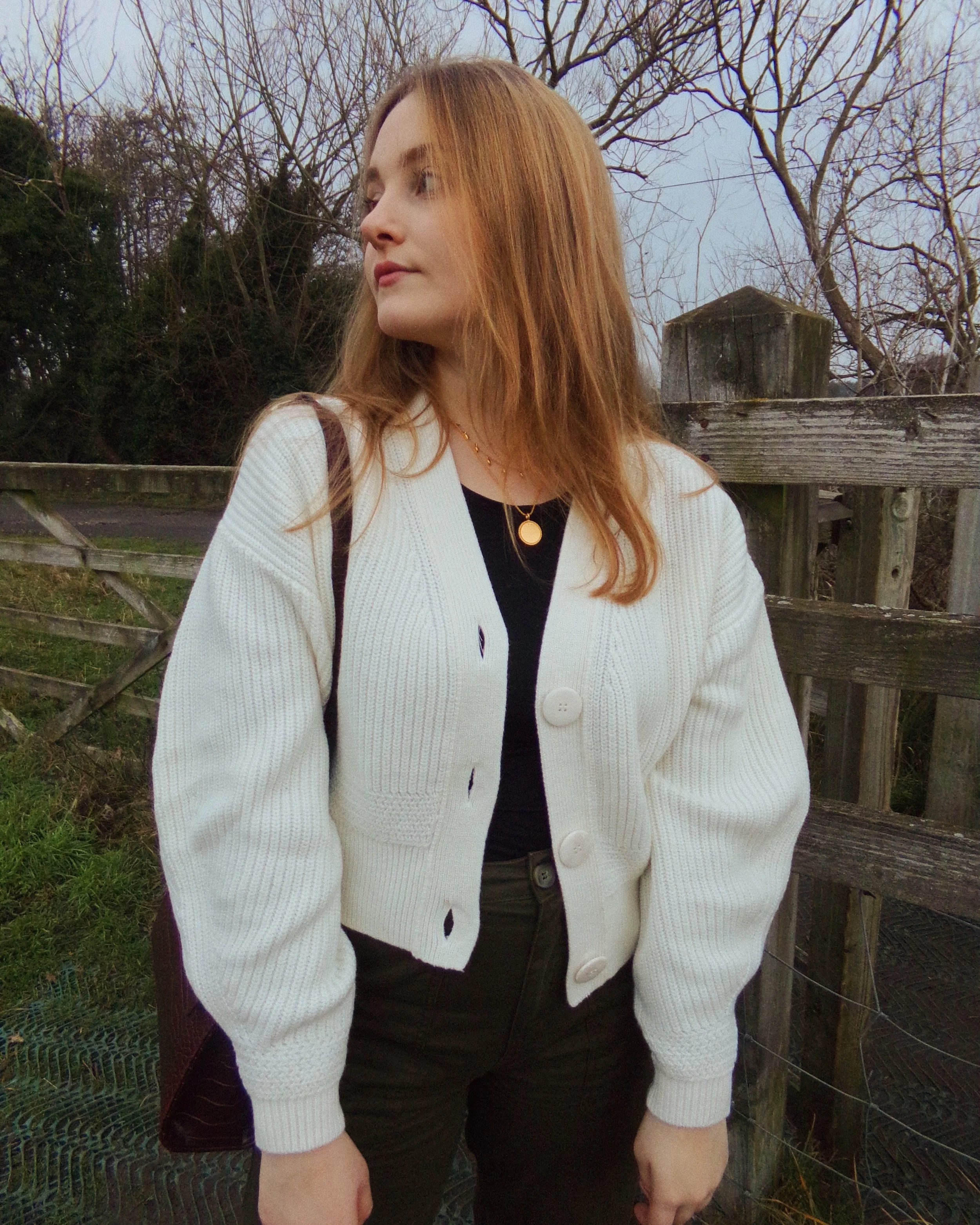
I Don't Feel Guilty About Unfollowing On Social Media and Neither Should You

Cardigan- & Other Stories
Trousers- New Look
Bag- ASOS (sold out, similar here)
Shoes- Converse
Necklaces- Missoma X Lucy Williams Mini Fang Necklace & Missoma Body Language ‘A’ Initial Necklace
I spend A LOT of time on social media, an embarrassing amount of time to be honest. The new iPhone feature that tells you your daily and weekly screen time has made me very aware of this. On average, I probably spend about 2 hours a day on Instagram, according to my phone. That’s 14 hours a week, 60 hours a month, 730 hours a year! I’ve tried SO much to cut down on my screen time but, mostly, it feels like a losing game. The truth is, we live in a society that is addicted to social media so breaking the habit of scrolling isn’t as easy as we might think.
So if I am inevitably going to be spending this much time on social media, I want it to be a positive space. I want it to add something to my life! I definitely don’t want it to make me feel bad about myself or my life. I recently watched Lucy Moon’s video about organising her life and putting mindful habits into place for the new year and one of the things she did was go through all of her Twitter and Instagram followers and unfollowed anyone who didn’t inspire her or wasn’t her friend. I thought taking the time out to do this was such a good idea as I’ve never gone through my followers in this way and I had been thinking a lot about how I wanted to make social media a more positive and productive space.
So I did just that! I started with Twitter because I’ve been using Twitter for a long time, probably about 8 years if not more, and I’d never really thought about who I’m following. Plus, Twitter had been one of the spaces I found to be stressful because of the sheer amount of words that were thrown at me, many of which were from people I’m not really in touch with anymore or accounts that I’m just no longer interested in, which meant I was consuming a lot of information that wasn’t really positive or productive for me.


Like Lucy, I wanted to continue following all of my friends, as well as accounts that I find inspiring, informative and/or positive. I didn’t actually check how many people I followed before my ‘cleanse’ but I think it was between 400-600 people and I now only follow 113 people on Twitter. My following now mostly includes my friends, bloggers/social media people whose lives I find interesting, authors and musicians and newspapers/online platforms that I enjoy (e.g. Man Repeller and The New York Times).
Even one day after my little unfollowing spree, I noticed how much more I was enjoying scrolling through my Twitter feed, and it’s actually meant that I’ve gone on Twitter less too because there isn’t as much to see so I don’t have an excuse to endlessly carry on scrolling.
I haven’t finished ‘cleansing’ my Instagram following yet, purely because it was taking a little longer as I have to look at everyone’s feeds and decide whether I think they’re adding something to my life (in the form of inspiration, positivity or information) rather than, like with Twitter, just knowing straight away whether this is the case. But I know when I do get the chance to finish clearing up my Instagram, it’s going to make scrolling there so much more positive for me too.
Despite the fact that I am doing all of this unfollowing to make social media a better space for me personally, there is still some guilt in unfollowing. Even if you haven’t spoken to someone for years, it can feel a little bitchy or arrogant to unfollow people. But it really isn’t! It’s a positive thing for you and your mental health. And after seeing how much my social media use changed for the better after doing my little ‘cleanse’, I really don’t feel guilty about it all.
I personally wouldn't be offended one bit if someone wanted to unfollow me, for whatever reason. Whether it’s because we’re not in touch anymore and they’re no longer interested in what I get up to or if it’s just that they just don’t find my content particularly interesting or inspiring! That’s fine! I feel like I’d have to be pretty vain to think that everyone is going to care about my life enough to hear about it pretty much every day.
Unfollowing people is an act of self-care, which means it’s absolutely nothing personal towards the people you’re unfollowing, in fact it’s the complete opposite, it’s all about you! And it’s okay to be selfish here. You can’t please everyone and you shouldn’t have to and if people are going to be offended that you’ve unfollowed them, it really is their own problem/issue, not yours.

So if you do have some free time over the next few days, take out an hour or two to go through your following lists on social media and cleanse it of anyone/anything that isn’t a positive influence on your life. If you spend as much time on social media as I do, it’s kind of necessary for it to be a source of positivity because if it isn’t, just think how that amount of time spent in a negative space will affect you, your mental health and your general mood. And please don’t feel guilty about it! You should never feel guilty for looking after yourself and if people are going to make you feel guilty about that, they’re not really people you want in your life anyway, so you know you’ve made the right decision in unfollowing them!
I’d love to hear how you feel about unfollowing on social media. Is ‘cleansing’ your following something you already do regularly or have you never thought about it before? Is your screen time as high as mine (please say yes)? Let me know in the comments or send me a message over on social media, speak of the devil!
Despite the fact that I’ve just referred to it as satanic, social media and a high screen time does not necessarily need to be a bad thing, as it’s often made out to be. If you can make your social media into a space that provides inspiration, positivity, information, or whatever else it is you want to get from it, it can be an amazing place to spend your time!

You might also like…
Should We Bare Our Souls Online?

Should We Bare Our Souls Online?
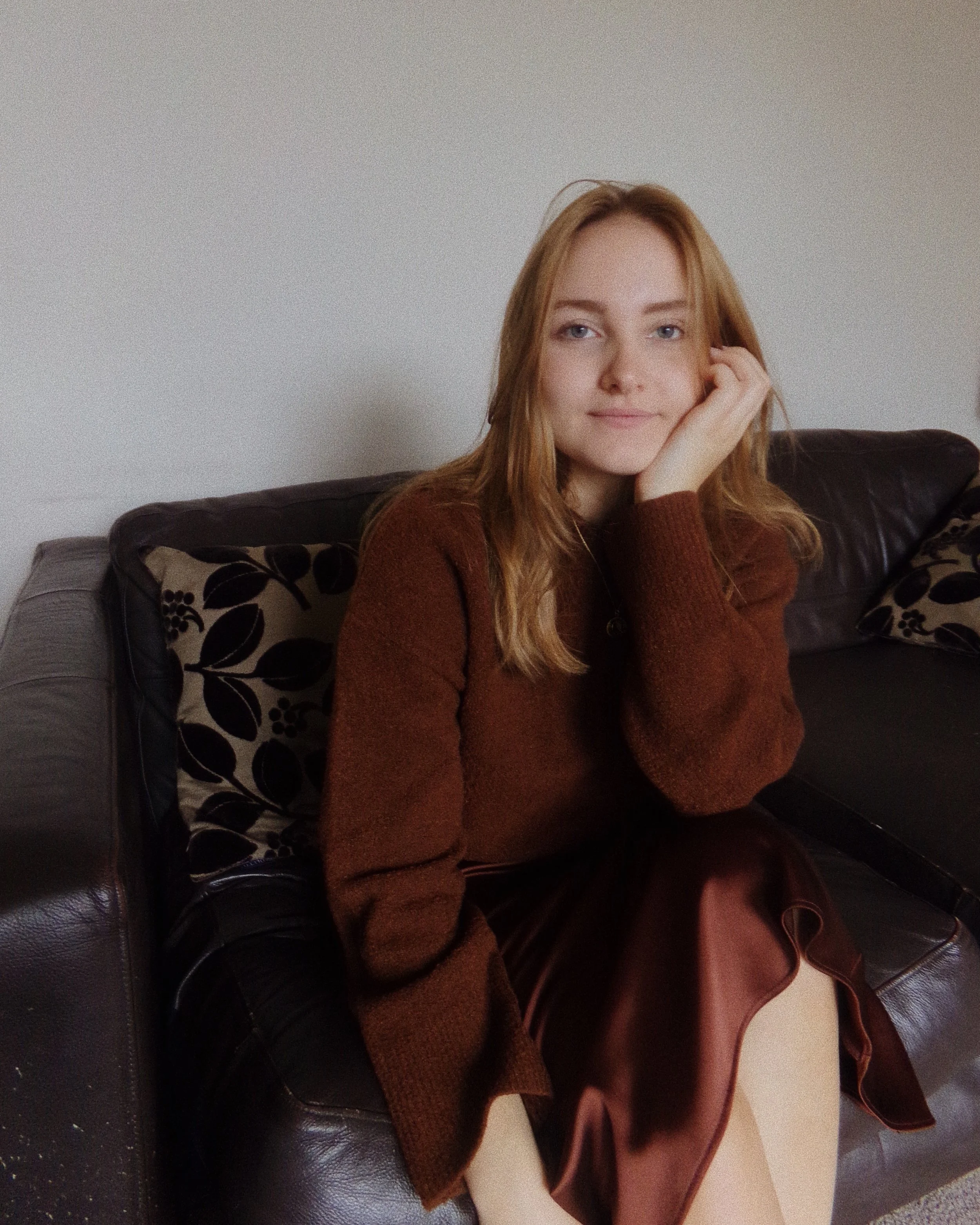
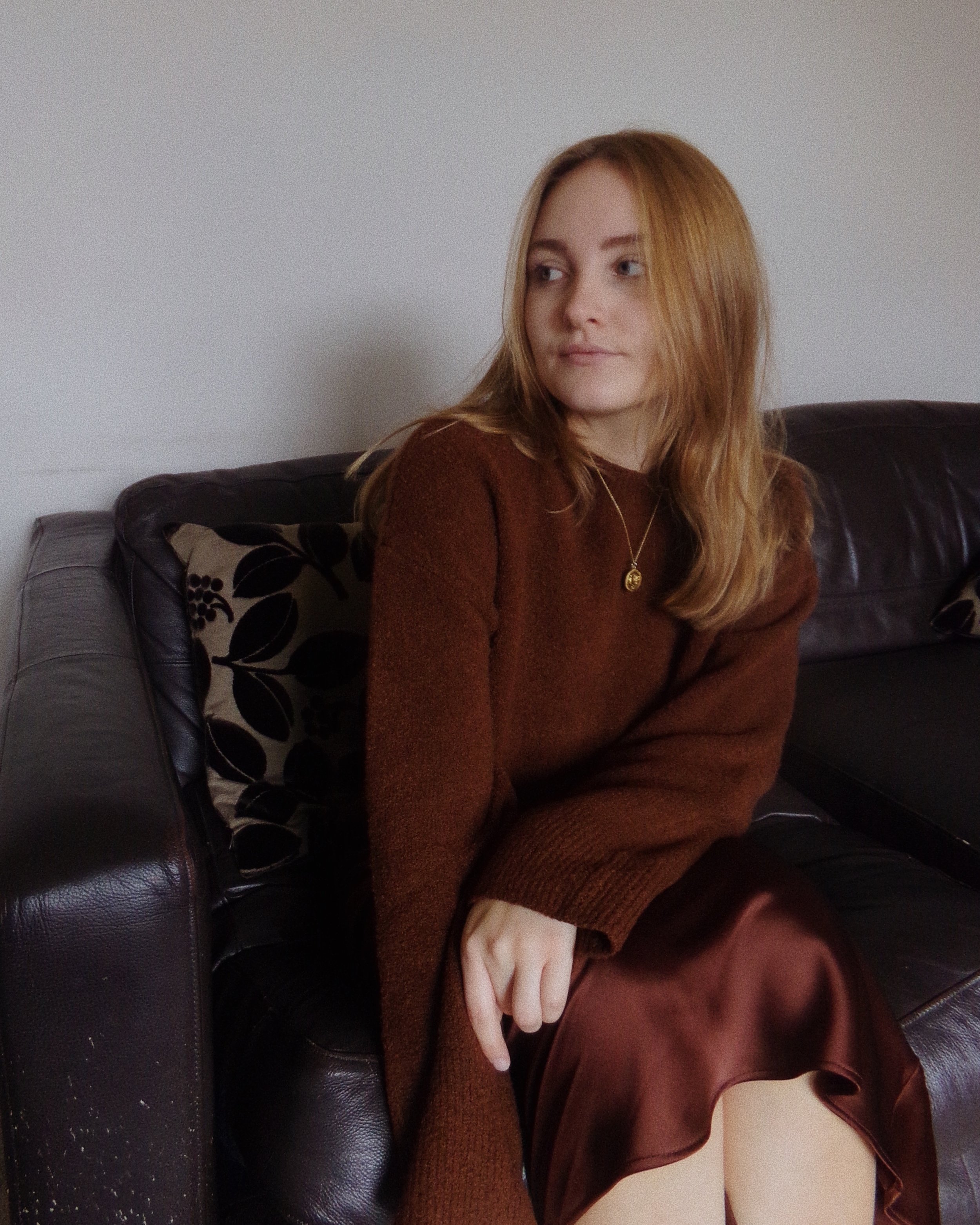
Jumper-
Skirt- Topshop (currently sold out but they're re-stocking it quite regularly at the moment- I will post a link to my Twitter when/if it is re-stocked again)
Necklace-
Today's post was going to be an update on how I've been dealing with my anxiety, something I've been planning on writing for a few weeks. When I realised it was International Mental Health Day on Wednesday I thought this post would be even more apt. But it was ironically that day that made me change my mind. Although it's a great way of helping raise awareness of mental health issues, it meant that a lot of people were sharing their own stories of their own mental health problems, which, again, is a good way of helping to add to the evergrowing conversation around mental health. However, for me, I found listening to other people's stories overwhelming and triggering. It was one of the first times I've really had to make myself to put my phone down and stay off social media for the day/night because it became quite a negative space for me.
This got me thinking about how much of my life I wanted to be sharing on social media. On my blog in the past, I've been happy to talk a lot about my personal experiences and, by doing so, I've been able to connect with people going through similar things, which has definitely been really positive. But after feeling so overwhelmed by hearing others' stories on Wednesday, I began to rethink whether sharing so much really is the best thing to do.
Should We Bare Our Souls Online?
The conversation around the ethics of sharing on social media has been growing so much over the past few months. From Katherine Ormerod's new book 'Why Social Media Is Ruining Your Life', and the corresponding Instagram hashtag, to Pandora Syke's recent article for Man Repeller, it's definitely a topic that's hot on people's tongues. Much of the conversation around this subject argues that we should be presenting more honest perceptions of ourselves on social media, better reflections of our 'real life'. I can definitely see how the facades of social media can be harmful for many people, seeing people live seemingly perfectly lives and feeling like yours just doesn't live up is definitely a negative thing. But, for me, this just isn't the case. I use social media as a form of escapism, just I use books, TV and other forms of media. I think this was why being faced with so many 'real-life' stories similar to mine felt so difficult for me. I like seeing a 'glossy' version of people's lives on social media and I'm very, very aware that everyone's Instagram feeds are a highlight reel of their life (although I do like seeing a bit of 'real life' over on Instagram stories). I like using social media as a way of pursuing my interests, from fashion to books to food and reading and seeing photos around these topics definitely helps me switch off and feel more positive. But as real people, should we be sharing our real lives on the internet all the time?
Most people at the moment, it seems to me, would probably answer yes. The word 'responsibility' comes up a lot when talking about how bloggers and 'influencers' should be using social media and obviously there is some sense of responsibility attached to the job title, like there is with any job. But should people really feel as though they have to share every single aspect of their lives with strangers online? Is it helpful if they do? I don't have any answers. I don't know how I feel about it. At the moment, I think maybe users of social media should take responsibility for their own usage, unfollowing people who make them feel negative and limiting their usage of social media if they know it's not good for them. Because, for me, Instagram, most of the time, feels like quite a positive space for me (even if I waste far too much of my time scrolling) and I can only see it becoming more negative and triggering, personally, if people were to start sharing the more negative aspects of their life on there, especially if they were only doing so because they felt they had to.

Should We Bare Our Souls Online?
I'm not advocating for social media, specifically Instagram, to be a completely honest or dishonest portrayal of 'real life', I think I'd like it to be somewhere in the middle, which, with most people I follow, is where I think it's at now. I think it all comes down to personal choices in terms of posting and following. Maybe for me it's positive to talk about some of my own negative experiences online but generally not helpful to read about other people's? Is this contradictory? Yes. But is this ok? I think probably yes. Because if other people, like me, don't feel good about reading other people's struggles or 'real life' issues, then they can unfollow me. Maybe I wouldn't even follow myself? Now this is really getting morally confusing. You can tell I don't know where my mind is at on this subject. But I thought I'd put my confused thoughts out on to the internet anyway because I think there is an interesting conversation to be had about this topic and I'd like to contribute to it, even if I'm doing so unhelpfully.
I'd absolutely love to hear your views on the topic of sharing online. Do you feel a responsibility to make sure your Instagram page is a completely honest version of you? How do you go about avoiding the bits of social media that you find negative? Let me know in the comments or send me a message over on Instagram or Twitter.

Should We Bare Our Souls Online?

Should We Bare Our Souls Online?

Should We Bare Our Souls Online?

Should We Bare Our Souls Online?

Should We Bare Our Souls Online?

Should We Bare Our Souls Online?

Should We Bare Our Souls Online?

Are Words Dying Out?

Are Words Dying Out?
Photography by Ell Field.
I'm back today with a more 'thoughtful' post (i.e writing about something that's been on my mind that has nothing/very little to do with the photos I share alongside it). These types of posts, as opposed to posts about fashion and style, tend to be my favourite ones to write and tend to be received the best upon sharing so you'll probably be seeing much more of them on my blog. I've even created a new category to my blog called 'Thoughts & Musings' to allow myself this space on my blog, so do head over there after reading this post to read more of these types of posts. Also, final sort-of disclaimer before starting the post, you may have noticed that I haven't been posting on my blog as much recently, which isn't down to lack of wanting to do so but a lack of time as I have been working A LOT. For now, my aim is to get up a blog post once a week on Sunday evenings but don't be surprised to see an extra post up (probably on Wednesdays or Fridays) on the weeks when I'm working a little bit less.
Anyway, let's move on to the discussion point of this post, something that's very close to my heart, words. I've always been a reader and a writer, both in and out of school. As an English Literature student, I spend most of my time doing these two things during the academic year and as an avid reader and someone with a blog, I spend most of my free time doing the same two things. I simply love words (hence the name of this blog), whether I'm reading them or writing them. But in an age where most of our communication and entertainment is in the format of photos, videos and even voice-notes, are words simply unnecessary? As you can probably guess, I'd argue against this and although I love Instagram, Netflix and Snapchat as much as the next person, I get the most satisfaction through reading something that is above the 140 character (or is it 280 characters now?) limit and writing something longer than an Instagram caption.

Are Words Dying Out?
This post isn't designed to be an insult to anyone who doesn't enjoy reading or writing because not everyone does, and I'm not going to act all high and mighty just because I do! To my shame, I'm really not interested in anything remotely science-y and I even find Blue Planet (maybe stop reading now if you're a big fan) pretty boring. Everyone has different interests and they're definitely not always as simple as preferring English to Maths or History to Science but sometimes people simply do not like reading or writing and that is fine. The problem today, in my opinion, is that many people don't know whether they do or not because today's fast-moving, visual-orientated society doesn't give them a chance to find out. When I was listening to The High-Low podcast the other day (10/10 would recommend), someone sent a question in asking about how to improve their attention span in order to be able to read for longer, worried that social media had essentially shrunken theirs. The discussion that ensued following this was so interesting. Pandora and Dolly discussed how social media essentially provides quick-fixes to everything, allowing you to consume so much varied information in one go, which is perhaps why the 'task' of reading one book that is on one topic sounds like too much and boring for many people. After this, they thankfully assured their readers that it is impossible for our attention spans to 'shrink' and that, with practice, almost anyone can become an attentive reader. Despite this, it is still interesting to think about how social media is changing our habits and our ways of thinking.
Even as someone who loves to read I still find myself reaching for my phone rather than a book 90% of the time, a habit that I'm trying to change, and skipping through articles to the 'important bit' and ignoring most of what has been written. I think this is part of the way modern life is becoming more and more fast-paced and social media is obviously becoming such a big part of it. Since starting my blog I've found that I'm on my phone even more now but, because I use social media to promote and go alongside my blog, I can kind of count it as being productive. And it is a lot more productive and positive than it used to be, but I know that turning to a book or an article would be much more beneficial for my brain and my mental health than scrolling through Instagram for the 20th time that day.

Are Words Dying Out?
Finally, I wanted to discuss how the gradual death of words is affecting blogging. I only started my blog a few months ago but it's already clear to me that people would rather scroll through my Instagram than scroll through my blog, which is fine because scrolling through my Instagram is less time-consuming and probably a quicker way to get to know me and see what I've been up to. Does this mean that blogs are going extinct? I don't think so. I think/hope that there will always be people who love to gobble up words as much as I do and therefore blogs will always be able to survive through them, if not on such a large scale as photos do on Instagram. I think there is an element of compromising as well because putting a blog post up without photos is pretty much a no-go, which is saying something in itself. This can sometimes be annoying for me because sometimes I want to discuss something and don't have the photos to go with it but I also understand this need for a visual aid and enjoy it myself. I compromise with this by just adding photos to a blog post that are, more often than not, unrelated to the topics that I'm discussing. And this seems to go down with readers of this blog just fine!
So until words truly do die a death, which I know the book-lovers of the world would never allow to happen anyway, I will continue writing on this blog, whether anyone reads it or not! And if you are someone who likes reading or writing but perhaps has fallen out of it, there's no time quite like the present to start again- you could even take a look at my blog post on the best holiday reads for some reading inspiration! I'd love to hear your thoughts on how social media is affecting our reading and writing habits and maybe even some ways to ensure that you still get your dose of words in the comments or on social media.

Are Words Dying Out?

Are Words Dying Out?
Are Words Dying Out?