
How Do We Navigate Social Media Now It's The Only Way to Socialize?

In December of last year I came back to my parents home for the weekend and decided to take this time off social media. For me, social media is not an inherently negative place. But it is time-consuming and sometimes brain-numbing and I spend far too much time on my phone when I could be doing things that are useful but more importantly, things that bring me genuine happiness and contentment.
I feel lucky in that I don’t find myself falling into the ‘comparison trap’ of social media, and specifically Instagram, like many do. On bad days, I feel envious of others whose lives look better than mine but most days, those types of thoughts don’t enter my head. Because of this, I’d never considered taking time off social media as something that would be useful for me, as this is the reason many others choose to do so.
The day I decided I would have a weekend off social media was Friday 13th December, the day after the General Election. The result of the General Election made me feel extremely emotional (angry, sad, despairing) and as my Twitter, Facebook and Instagram feeds demonstrated, the same was true for many other people. This emotion and the fact that social media was dominated by news of the general election, something that I wanted to escape, made it clear to me that I needed a few days off.
So I deleted all of my social media apps and wasn’t tempted to check them over this 3 day period because I knew that it was a particularly negative space that weekend. I spent my time doing uni work and also relaxing, trying to do some of the things the time I’d spent endlessly scrolling had stolen from me, namely, reading and writing. But at the end of the weekend, I felt worse. Or maybe not completely worse, but definitely more lonely than before.
It made me realise how much of my social life was coming from social media. I’m thankful for social media for this, as it’s allowed me to meet so many wonderful people and find communities I wouldn’t have in the physical world. And it’s certainly helped me to grow and change as a person. But I also came to the conclusion that, of course, it wasn’t healthy to be getting so much of my social contact from social media, as nothing can replace genuine face-to-face, physical contact.
Luckily, the first few months of 2020 were far less busy for me work-wise than the last months of 2019 were, so I was able to socialise for real a lot more. And I felt so much better for it. I also tried to lower my screen time, which I did, although I won’t be sharing numbers because, as numbers often are in so many different scenarios, I think they can be a source of comparison and shame.
We often laugh as we refuse to share our screen-time with others because we are embarrassed that ours is so high. But perhaps this is because we are uncomfortable with the reasons as to why we are unable to practice self-control when it comes to social media. For a lot of us, we lose control because we seek validation and connection from social media where we don’t have it in our own lives. For me, social media allowed me to subdue feelings of loneliness. For others it might be finding validation on social media in order to forget, for a while, crippling insecurity, or to be able to enter the more ideal world you’ve created yourself, in order to escape the unhappiness you’re genuinely feeling.
Since self-isolation has begun, I’ve been totally unable to control the time I spend on my phone and the same feeling of scrolling-induced claustrophobia that I was feeling in the last months of 2019 has returned. But a social media detox doesn’t feel like an option for me right now, as much as it might help in normal circumstances, because I am craving social contact in any form I can get it, given the current situation, and I’m not about to give that up in any shape or form.
When I listen to people speak, or write, about having breaks from social media or giving it up altogether all I can think is: you are so lucky. This is because the people who tend to do this, or at least those who I’ve heard discussing it, are those who live with their partners or lots of friends and are getting the social contact we all crave from inside their households. I am lucky enough to live with a friend in usual circumstances and I feel more than able to take time off social media when we’re staying in our flat at the same time and I’m going to uni or even the library every day surrounded by people. But when I come home for the weekend and it’s just me and my close family, a social media detox doesn’t feel like a healthy thing to do. Because as much as I love my family, I’m not getting the same social connection I get from my friends, partner and colleagues from them.
Having moved back in with my parents during lockdown, I feel at a loss as how to navigate social media at this time. Should I be policing my screen time, to ensure I’m leaving time to do the things that fulfil me and make me happy? Or should I stop putting pressure on myself to do anything as it’s supposed to be done and just go with how I feel?
The problem is: I often don’t have the choice to see how I feel when it comes to social media, because it’s so instinctive to me to pick up my phone and start scrolling that I lose hours and days to it without even realising. For example, when I’m reading a book and I google the definition of a word and suddenly, it’s 30 minutes later and I’m deep into a Twitter thread. Or, I’ve woken up in the morning and decided to quickly check my emails before getting out of bed, but suddenly, an hour has disappeared and I’ve reached my screen time limit for Instagram. Or, I’m on a walk, and I’ve checked my weather app to see what time the sun will set, to make sure I get home before it goes dark, but I have a message from a woman who likes my Instagram page, and I end up spending the whole walk messaging her about common interests. By the end of the walk, I haven’t appreciated the sea or the sand or the sky, but I’ve made a new friend.
The point is, social media brings both positivity and negativity into my life but a potentially destructive part of my personality, which I’m sure is true for others too, is that sometimes I crave that negativity or at least the mindlessness that social media breeds. This means using it instinctively might not necessarily mean only using it for positive interactions like the one mentioned above and also because, I truly believe I’m addicted to social media, so my instincts surrounding it might not necessarily be healthy.
If I deactivate my social media and put my phone in a drawer, I’d waste less time, I’d read more books, I’d probably be a better writer. I’d probably exercise more and be able to run a 10K, I’d probably keep my room tidy and I’d never feel stuck in a hole that I can’t get out of. But I’d also lose the friends I’ve found online and even some of the ones who I’ve found in the big wide world, at least for a short period, whilst social media is the best way to keep up with them. I’d also feel lonely and perhaps less creatively inspired and, definitely, like I’d lost a part of my identity (whether that’s a good part or bad, I’m not sure.)
There’s no easy way to navigate social media full stop, but even more so during a global pandemic. There’s no easy way to do anything during a global pandemic, really, but social media feels particularly difficult. Because we can look to survivors of previous pandemics for most other things, but not for this. This is the first ever global pandemic that society is trying to survive in the digital world and I don’t think we should underestimate the difficulty of that.
Today, I woke up and scrolled through social media for a straight hour. I then tried to get out of bed and into the shower but ended up scrolling for longer. By 12pm my screen time had hit three hours and I felt bad about it. I considered whether I felt bad about the number or just simply bad, from coming out of the scrolling hole and I came to the conclusion that it was both. I decided to leave my phone in my room and do a jigsaw and watch TV. I did this for four hours and my brain felt clearer. Tomorrow, I will partake in a weekly digital book club that is the highlight of my week by far during lockdown, and was only made possible because of social media. I might waste time scrolling, I might engage with some amazing people and feel more positive about my life and the world for it. Every time I enter the password to my phone and click on one of the infamous apps, it’s a gamble.
Social media makes me feel very bad but it also makes me feel very good. It exposes me to some of the world’s worst people and to some of the world’s best. I would even go as far to say that it exposes me to the best and worst versions of myself, to speak in the tongue of the digital age.
With every good comes a bad, with every friend comes a troll, with every hilarious meme comes a devastating news story, with every time-wasting scroll comes an opportunity that would otherwise never have presented itself to you.
“Social media:” opens the essay of an A-Level student in 3010, “It was the best of times; it was the worst of times.”
(Plot twist: the student is a robot. But at least he’s read Dickens.)
you might also like…


So You're Feeling Hopeless After The General Election...

Photo taken in Shakespeare & Co in Paris, 2018. A reminder that we all need going into 2020.
The General Election has happened. The Tories gained a huge majority. It’s shit. It’s disappointing. It’s scary. You’re probably feeling hopeless about the state of the country, of the world even. But wallowing in this hopelessness is not productive in any shape or form, for yourself or for the bettering of the world.
What is productive is fostering the hope you’ve been feeling over the last month in the run up to the General Election at the prospect of a better, more equal country and using it to creative positive change. The General Election may be over, but the world is not and there are so many things you can do to make the world a better place, even if the ruling party choose not to.
Hang on to the issues you care so deeply about, whatever has struck a chord for you during this election, whether that’s the NHS, the climate crisis, homelessness or whatever else. Find charities and campaigns that are championing these issues and become a part of them. Becoming a part of something you believe in, in which you can see clear change happening as a result of your actions is so rewarding and will turn at least some of your feelings of hopelessness into optimism. And although the prospect of the Tories being in power for another 5 years is daunting, this is 5 years in which you can campaign for whatever political party you believe in, rather than just doing so a couple of months before the election which is not as effective both because of the tension people are feeling and the limited time.
You can do this with your time or money, whatever works best for you but I would add that giving up your time is especially rewarding. However considering there’s only 12 days till Christmas (at least that was always going to be a silver lining after the election), consider giving charitable gifts this year, whether it’s donating to a charity of your choosing on someone else’s behalf, or buying a gift from the ChooseLove store for someone (I particularly love this idea).
What is key here is actually making change happen. Although social media seems like a great platform for activism at times, especially if you have a large follower count, it can be superficial and have little effect on the world, which can be frustrating. Whilst being out in the real world, making change through your actions has the opposite effect and is deeply fulfilling.
The connections you can make campaigning in real life are also often so much more sincere and impactful than those you can make through social media too. This is largely because social media is somewhat of an echo chamber for most of us, in which we only see our own left-wing views repeated back because, of course, we don’t want to follow people we disagree with.
I think the social media echo chamber is a significant reason why the General Election results might feel so devastating to many young people because it’s easy to be fooled by the 700 people you’re following that everyone thinks about the world in the same way you do, forgetting that there are over 66 million people living in the UK with incredibly diverse views.
This floored me during the past election and particularly during the EU referendum, as, although I was too young to vote in it, it initiated my interest in politics. But the politics I was interested in and thus surrounded myself with, were left-wing and pro-EU and thus, I was devastated by the result of the referendum. Whereas in this election, by staying informed as much as I could on what’s going on in the real world, the shock was minimised and my mental health has not been affected to such an extent.
Now I’m not advising be-friending Tories or filling your Twitter feed with opinions you disagree with. Instead, just gain an awareness. Read newspapers whose political leaning might be a little more right-leaning than your own, or at least be aware of what they’re saying. Talk to people who aren’t just your closest friendship group. Don’t immediately close off a conversation with someone just because their views are more right-wing than yours. By any means, you don’t need to be uber-polite to them. But at least engage in the conversation, if only to affirm that the politics you believe in are the ones you want to champion.
This awareness is not only necessary to advance any sort of left-wing politics (as the divisiveness we create in staying in our own bubble and shouting at anyone who might disagree with us is deeply harmful) but also to protect your personal mental health because being overly-optimistic unfortunately often leads to disappointment and despair. Although I am deeply saddened by the results of the General Election, by staying informed, it’s not far from what I expected. And for me, being able to prevent such despair is critical to my mental health.

Photo by @badasscrossstitch on Instagram
Finally, stay off social media as much as possible for the next few weeks. It’s going to be a site of tension, divisiveness and anger and it’s not a positive space in any sense, neither for your mental health or for creating a better world. Spend your time, instead, educating yourself, volunteering, becoming an activist, with your loved ones, with yourself and maybe even with your counsellor.
Because it’s absolutely okay if you do feel devastated by the result of the General Election. It’s okay if you think it’s triggered some of your mental health issues. Some might see it as ‘just politics’, but for many this General Election came with so much hope for the future and Thursday night’s exit poll probably felt like that broke down entirely. However, the world is not ending and there are so many ways we can make it a better place, but before you can do so, you have to ensure you’re in a good place. Although do consider doing both at the same time. Volunteering and activism can be an incredible way to feel fulfilled and improve your mental health, giving your able to do so, alongside whatever else you might need to stay healthy, including medication and counselling.
There is so much to be anxious about as we enter 2020 and this Tory government is certainly part of that, especially for vulnerable people in society. But lets channel our despair and fear into making a better country and a better world and lets use our time, money, voices- our privilege in whatever form it takes, to protect those who are truly vulnerable and to fight for what we care about.

I Want To Be Politically Engaged But I Also Want To Breathe| How I’m Approaching Politics in 2019

I am a naturally inquisitive and empathetic person. I feel most excited and fulfilled when learning new things and discussing important and progressive ideas. Politics energises me, but it also exhausts me.
I’m writing this on the eve of the 2019 General Election, of which I have become consumed with. It’s the first time I’ve felt exhilarated by British politics in years. But I’m also anxious. I’m angry. I’m overwhelmed. I can’t sleep because I’ve spent the entirety of all my days over the past month, especially the parts in which I’m supposed to be relaxing, reading and watching videos about the upcoming election. I’ve even been out posting leaflets for my local Labour party in an effort to do something that isn’t just shouting into the echo chamber that is social media. And I want to do this! I am choosing to do this!
But to understand what is going on in the world and to attempt to do something about it, for me, is all-consuming. I can’t draw the line between being involved in politics and maintaining my mental health. The injustice that I witness in staying so insistently informed stays with me, after closing tabs and deleting apps and turning the lights off to go to bed. It permeates my thoughts and my speech, as I struggle to partake in a conversation without slipping into talking about politics and the current state of the world. It even permeates my body, as my anxiety is so intrinsically linked to my physical health, and can often render me physically sick.
But I’m not writing this post in an attempt to gain sympathy. I imagine a great deal of people feel this way and that is why so many people remain apolitical. But as Grace Beverley put, a woman who is using her platform for so many fantastic causes, and as many have reiterated: ‘being apolitical in itself is a political act, and in fact an inherently selfish one.’ And to be able to be apolitical is a privilege, as that means that you’re lucky enough to be in a position where politics doesn’t directly negatively impact your life, as it does for so many POC, the LGBTQ+ community, people living in austerity and an endless amount of other groups of people.
So for me, to remove politics out of my life is not an option, and I think the guilt this would cause would be unbearable. Over the past couple of years to try and balance the overwhelm politics has caused me, I’ve tried to stay less informed. Whilst I’ve still generally understood what’s going on in the world, mostly the Western world, I’m embarrassed to admit, and in politics, I’ve attempted to distance myself from it. But as I mentioned earlier, I’m an inquisitive and empathetic person who wants to feel connected. To read a short BBC summary of an event in order to ensure I’m basically informed is so unfulfilling and frustrating for me, even if it does mean I can fall asleep within an hour of putting my head on the pillow. I want to stay informed and I want to fight injustice and this general election has reminded me of that.
To be able to do so without it affecting my mental and physical health quite so negatively will be a challenge. But it’s a challenge that I really believe in. And as someone who lives with a huge amount of privilege and is lucky enough to have the option to remain apolitical, I think it would be unbelievably selfish and individualistic for me to do so. And politics that advantage the individual over society are not the types of politics I believe in.


I am painfully cynical about the result of today’s General Election because cynicism is most definitely a coping mechanism I use to shield myself from disappointment, which I fear so much, especially for an election which is as critical as this one.
But I am also hopeful and when I cross the Labour box at my polling station today, I will do so with a hopefulness that there are people who want the same world that I do and who are fighting tirelessly in order for it to materialise.
Politics can make you feel hopeless and isolated but know that your democratic right to vote today is an opportunity for agency and one that we must all take. It’s empowering and even if everything else about the current state of politics makes you despair, this is your chance make your claim on how you want the world to be, and you MUST use it!


I’ve told myself that I won’t be staying up to watch the election results be counted but it’s very likely that I’ll still be up at 3am tonight, probably having bitten off my entire fingernails with anxiety. It’s not good for my health (or my Christmas manicure) but it’s good for my mind and my soul and frankly, it’s non-negotiable, because I naturally care and I am hopeful that caring can make the world a better place.


Why Academic Failure was One Of The Best Things That Ever Happened To Me
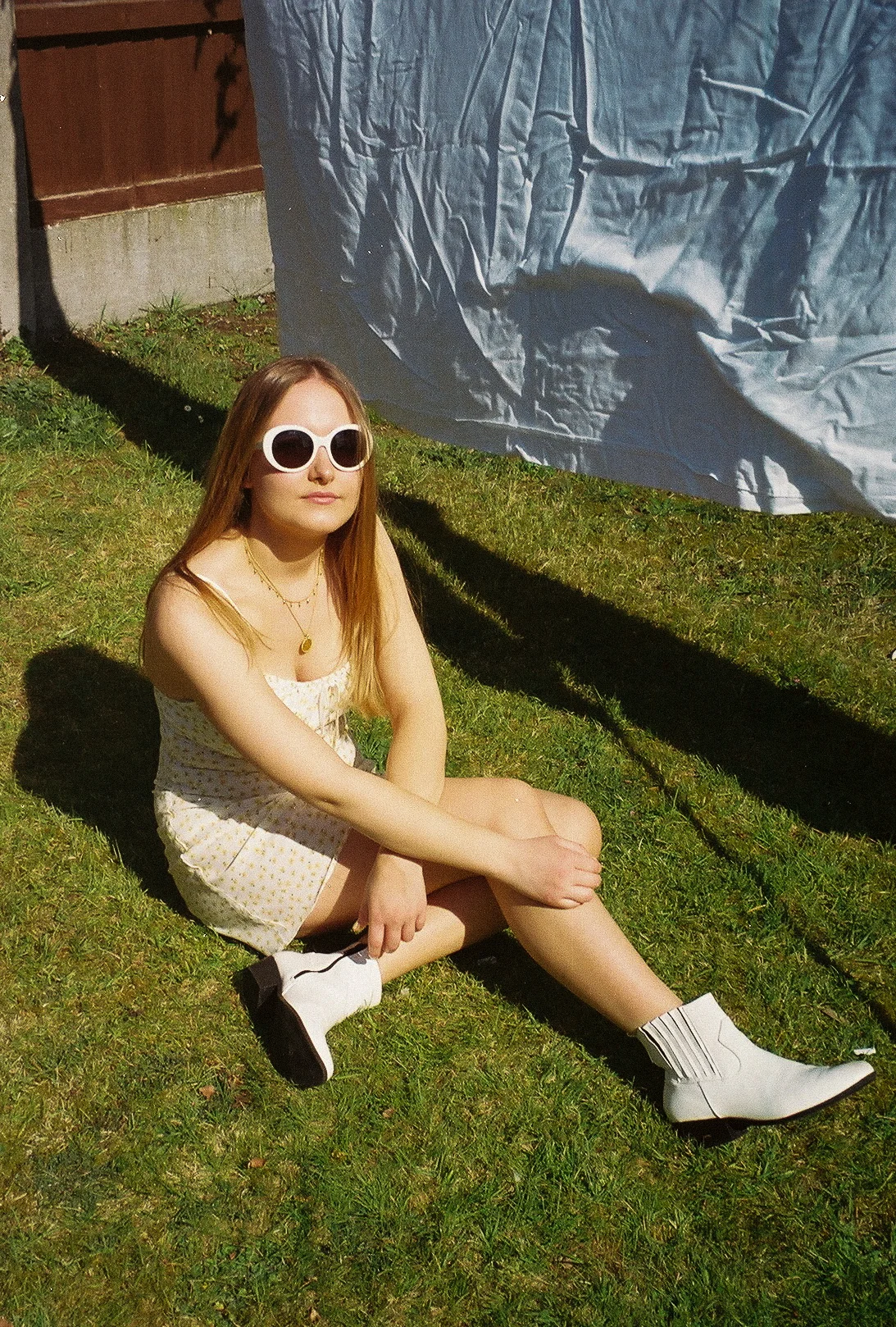
(some links used are affiliate which means I earn a small amount of commission if you purchase an item)
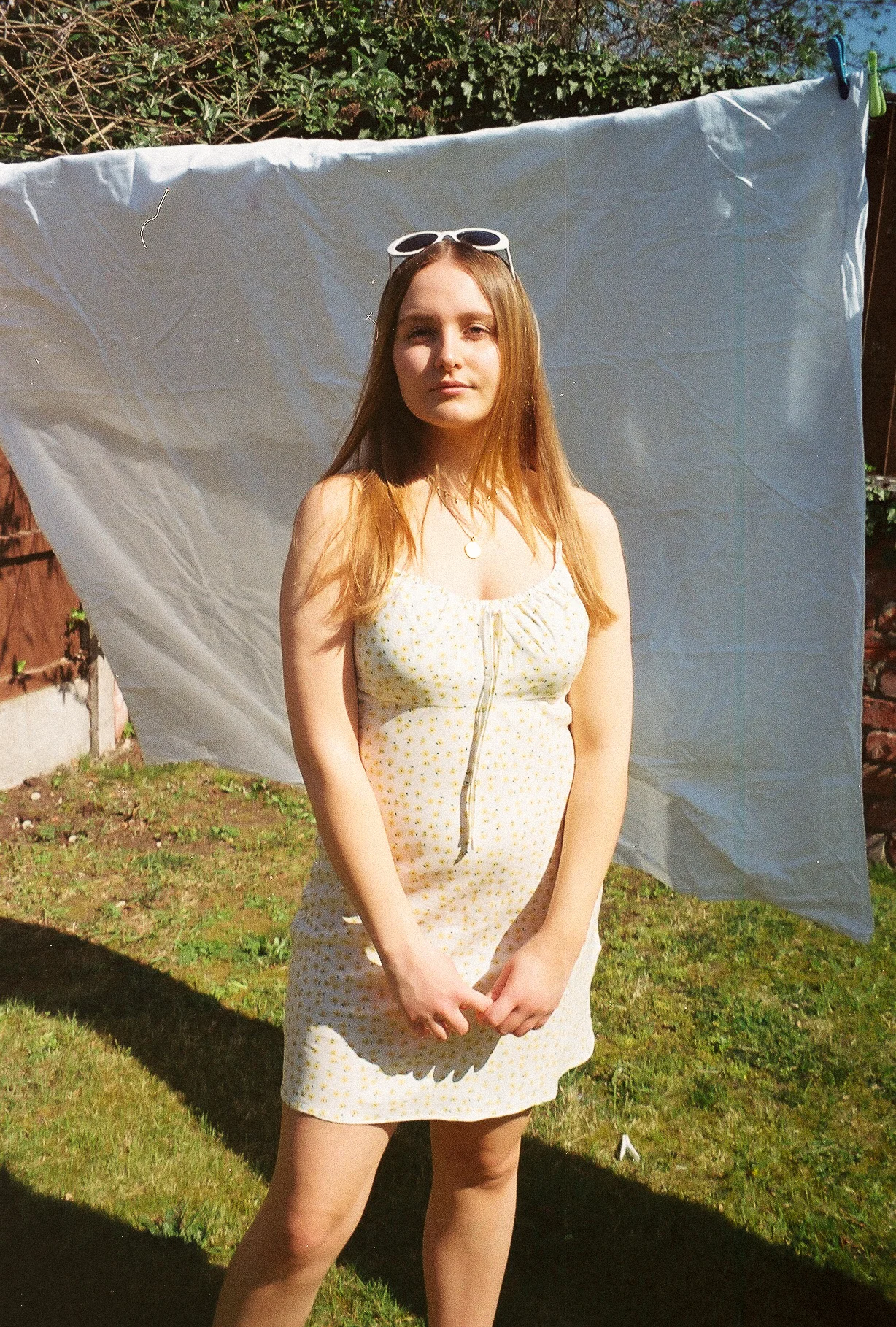
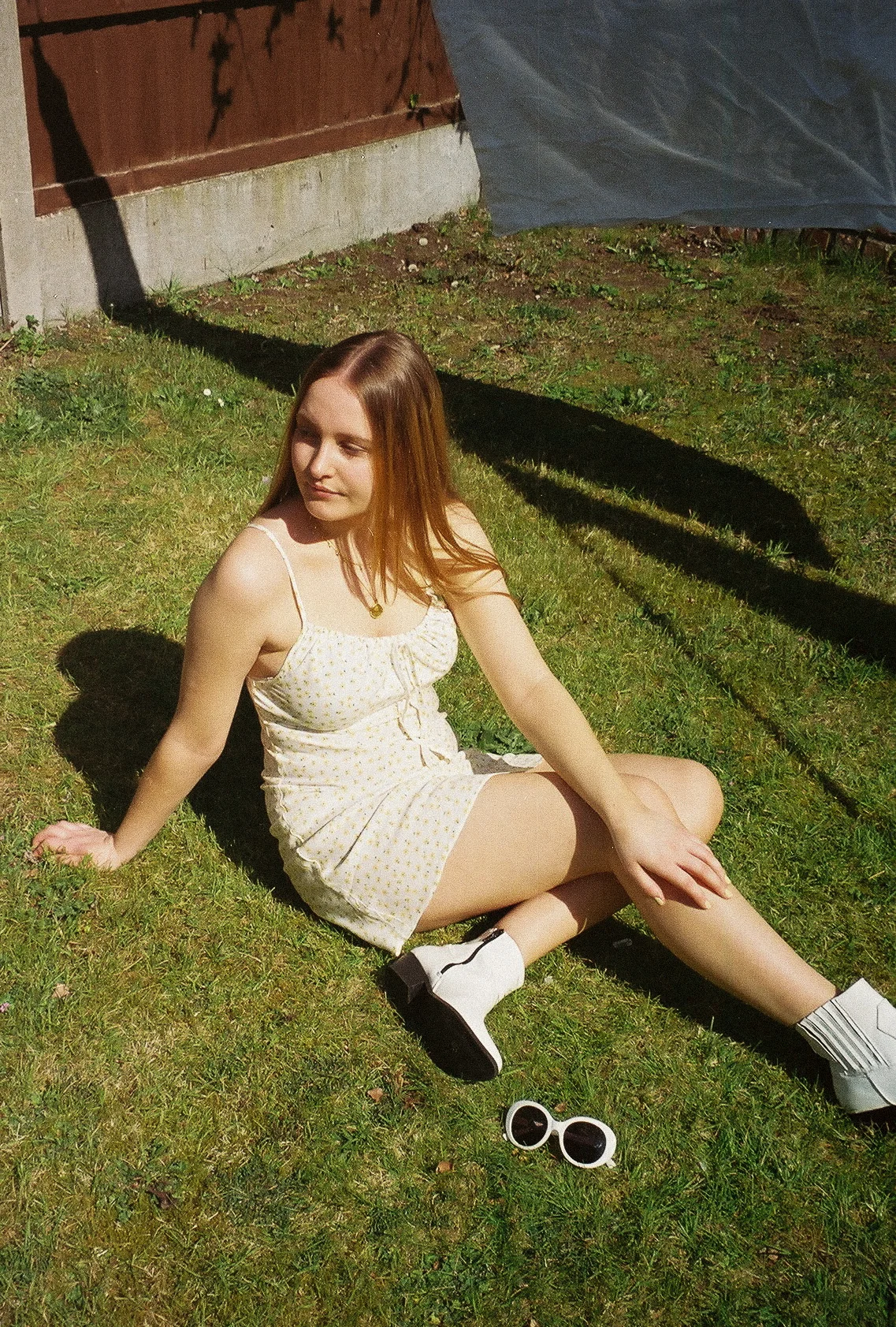
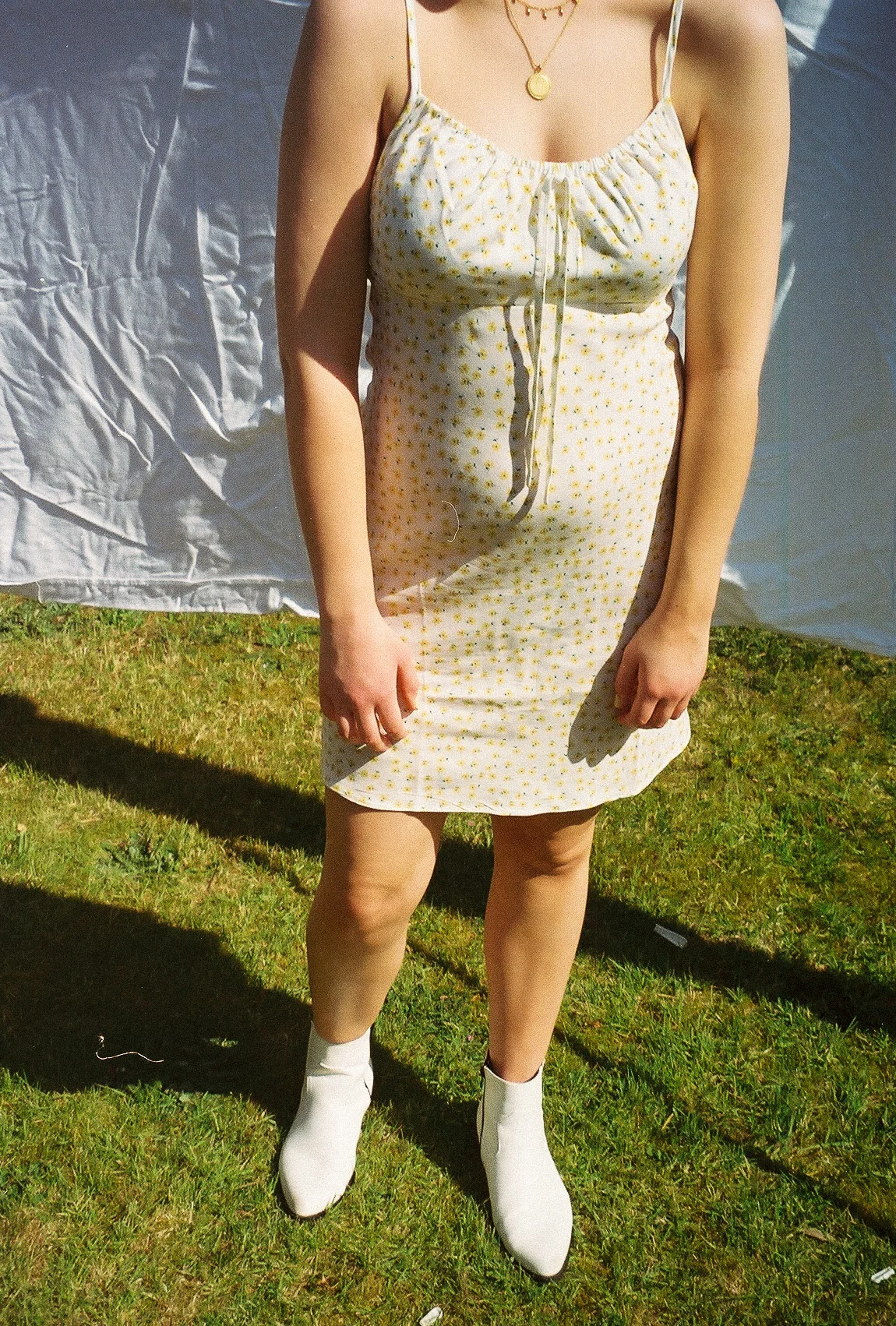
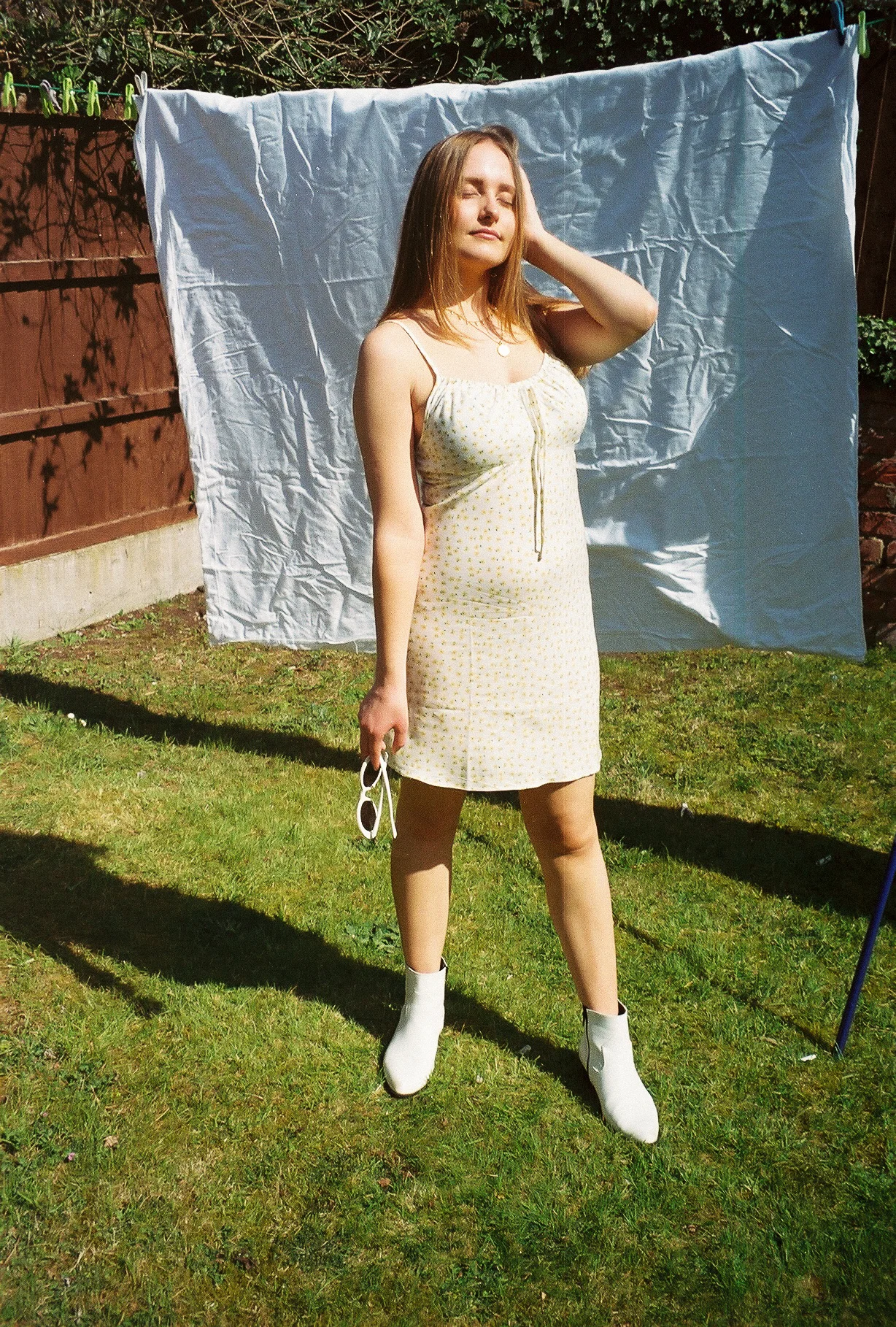
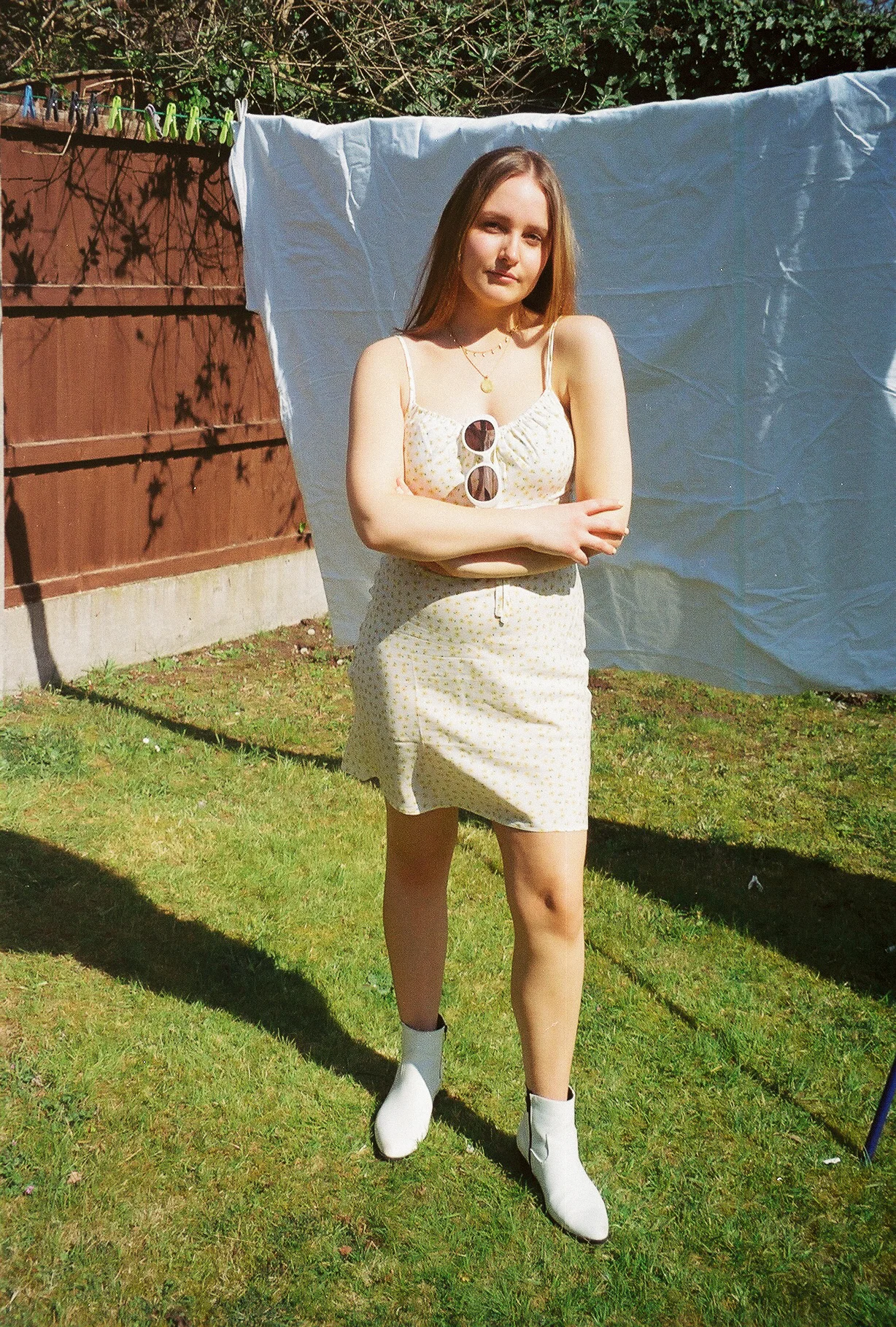
Dress- Nobody’s Child
Shoes- Primark (similar here)
For as long as I can remember, grades have been very important to me. I mean, I’ve literally spent my entire life that I can remember in education. I’m lucky because I generally did well at school. I was never top of my class but I never struggled to get by. But when it got to serious exams and I started putting a little bit more work in than normal and my grades rapidly improved, I realised that if I worked a little bit harder than most people I could do pretty well!
And that’s great, right? I learnt that hard work paid off at an early age and the people around me were quite impressed that I was willing to work so hard. But the gratification I got from seeing my hard work pay off was maybe a little bit too much and gradually, I started to become obsessed with my grades. Giving up on other hobbies I enjoyed and neglecting friendships and my social life in order to see just how far hard work could get me.
And to a point, it did get me far. I climbed my way to the the top of my classes! I was on track to get into a great university on a course I was excited about! But none of that really mattered to me anyway because all I cared about was seeing my hard work pay off and achieving the ultimate gratification: my A-Level results.
Everyone around me (teachers, family etc.) were pretty confident that I was going to get the grades I wanted. I mean, I’d been getting them consistently for around two years and I worked harder than ever for my final exams. I wasn’t majorly worried either. ‘If I drop one grade, that’s ok. I didn’t like that class anyway.’ But that was all the reassurance I gave to myself, dropping one grade is ok. Any more? Unspeakable.
I mean, this story is becoming pretty predictable. Of course, I didn’t get the grades I wanted. I got good grades, but they were nowhere near what I wanted and I’ve truly never felt heartbreak like reading the letters printed on that A4 piece of paper.
I cried for about 6 hours straight. And then I cried some more, for weeks. I stopped crying eventually but I didn’t really get over it. I still haven’t really got over it, knowing that hard work doesn’t always pay off and that sometimes people are just unlucky. It’s kind of a hard pill to swallow.
Everyone was telling me that I shouldn’t be upset because I did really well and I had got into my first choice university and many people hadn’t achieved either of these things, which is true, and I did feel unjustified in being so upset. But dedicating two years of my life to these exams and knowing there was nothing more I could have done to get better grades yet still not getting the results I wanted completely knocked my self-confidence and everything I thought I knew about hard work.

But now I look at it differently. What felt like the biggest failure of my life was actually one of the best things that ever happened to me because it allowed me to let go of academic perfectionism. Knowing that hard work doesn’t always pay off means that I’ve learned to live a little and enjoy the other parts of my life that are always gratifying, like holidays and day trips and talking to my best friend on the phone for 2 hours; days out that I’ll remember forever and days in bed that will almost definitely be forgotten, but that doesn’t make them any less pleasurable or important.
My academic failure and what felt like the worst day of my life was actually one of the best things that has ever happened to me, because days and weeks of crying into my cereal and doubting my ability to do anything turned into me letting go of my perfectionist ways and learning to enjoy life again. And now I look at my grades as a very small part of my life, rather than something that defines me and I consider so many things, including the people around me, my mental and physical health and the things that I enjoy doing, as so much more important than numbers on a piece of paper.
you might also like…


The Pressure to be Productive is Making us Less Productive

Being busy is a seen as a badge of honour in the modern world, or at least the one I’m living in. Did you really stay up till 2 am working if you didn’t tell everyone you saw about it the next day? It’s something I’ve definitely fallen victim to, working myself too hard mostly just to create the impression that I’m working myself too hard. Of course, everyone has busy times in their lives and this blog post isn’t saying that we should’t complain about them or that we should keep our stress to ourselves. What I’m trying to say, instead, is that there’s more to life than work, whatever form it comes in, and the pressure to be constantly productive isn’t letting us embrace that which means we are failing to ‘be the best version of ourselves’, as the cliché goes, in work and in life.
Something I realised when I set myself the new years resolution to take more time off from work is that taking time off actually makes the time I spend working far more productive. For example, I mostly take Sundays off university work now, which means the work I do during the rest of the week, especially on Fridays and Saturdays, is much more focussed, as I’m determined to get it done so I can have a guilt free Sunday off. Taking Sundays off also largely means that I feel much less exhausted and depressed about starting work on a Monday because I know it’s only 6 days until a day off, meaning the quality of my work is usually better.
Of course, taking a day off isn’t some brand new thing that I’ve discovered. Most people in ‘normal’ 9-5 jobs always have weekends off! But, since starting my A-Levels almost 4 years ago, I have never had a proper day off and would spend my days feeling lethargic and not doing the best work that I could because I was so exhausted and bored by its never ending nature. I truly believe that, for most people, spending less time working doesn’t mean that you’re going to get less work done.
That belief is the main reason why I think the pressure to be productive is making us less productive. So many of the people who are bragging about staying up till 2am working have probably spent hours of that procrastinating, which is fine. We all procrastinate and no one is 100% focussed all the time! But often the only reason, I’ve found, that people work, for example, till 2am is for the gratification of doing so, not because their work really requires that amount of time.


If you’re reading this and thinking ‘But I really DO have that much work!’ Fair enough, maybe you do! I know I did last month when I had 3 essays due in the space of a week (humble productivity brag, I’m just THAT used to it). I’m not trying to tell you that you’re not as busy as you think because a lot of us are busy. But just stop and consider if you’re only spending so much time working because you think you should be, when your work could realistically be done in a smaller time frame by, maybe, cutting down on unnecessary routines/habits.
For example, I used to make notes on my laptop on all the books I was reading for uni whilst I was reading them, which was very time-consuming and largely useless as I only ever ended up writing essays or exams on a 3 or 4 books and I had notes on 10 on them. It felt very good to have all my notes there though. I love being organised and preparing for all outcomes so this way of studying felt like, well, the only way for me. But as part of cutting down my working hours, I realised that this time-consuming method wasn’t really necessary. So now I just do it for the books I’m particularly interested in or the ones I decide to write my essay/exam on after reading the book.
That example is very specific to my English Literature degree but I’m sure everyone has similar things they do as part of their working routine that aren't really necessary and that they could cut out or spend less of their time on. I’ve cut down the time I spend on university work by about 30% and I was honestly very worried that it was going to affect my grades negatively, but it hasn’t so far because cutting down in this way has improved my mental health so much which, in turn, has allowed me to do things faster and, often, better.


I still sometimes feel the pressure to tell everyone how busy I am, especially when others tell me the same thing. And I definitely feel guilty about taking time off. Because I do feel busy and I feel like taking time off suggests I’m not as busy as I am. But you know what, who really cares? It’s not healthy to be productive ALL the time - I should know as living that way has been so detrimental to my mental health - and we need to stop treating an overly busy and ‘productive’ life as a positive thing as this only encourages overworking.
This post feels a little bit all over the place but changing the way I think about productivity really has been life-changing for me so I just wanted to get my thoughts out there. I think the best thing we can all do to dismantle this complex many of us have around being busy and productive is to stop bragging about it; next time there’s empty space in a conversation, try not to fill it by talking about how much work you have or how much work you’ve done. It’s such a bad habit of mine and it’s so hard not to do but leaving it out of the conversation can generally only be a positive thing.
I’m just talking about this productivity complex from my perspective but if you really are feeling completely overwhelmed and stressed by your work please do talk to those around you about it and maybe think about talking to a mental health professional too.
Otherwise, if you’re going to take anything away from this blog post let it be that:
Spending lots of time working doesn’t equate to doing productive work.
Time off is necessary and can actually make you more productive and, more importantly, can benefit your mental health in so many ways.
Constantly talking about how busy you are will only make you and those around you more stressed and feeds into many of our productivity complexes.
Enjoy your week, take some time off, and try not use how busy you are with work as a conversation filler!


you might also like…


On Being Alone & Balancing My Time as an Introvert

(some links used are affiliate links which means I earn a small amount of commission if an item is purchased)
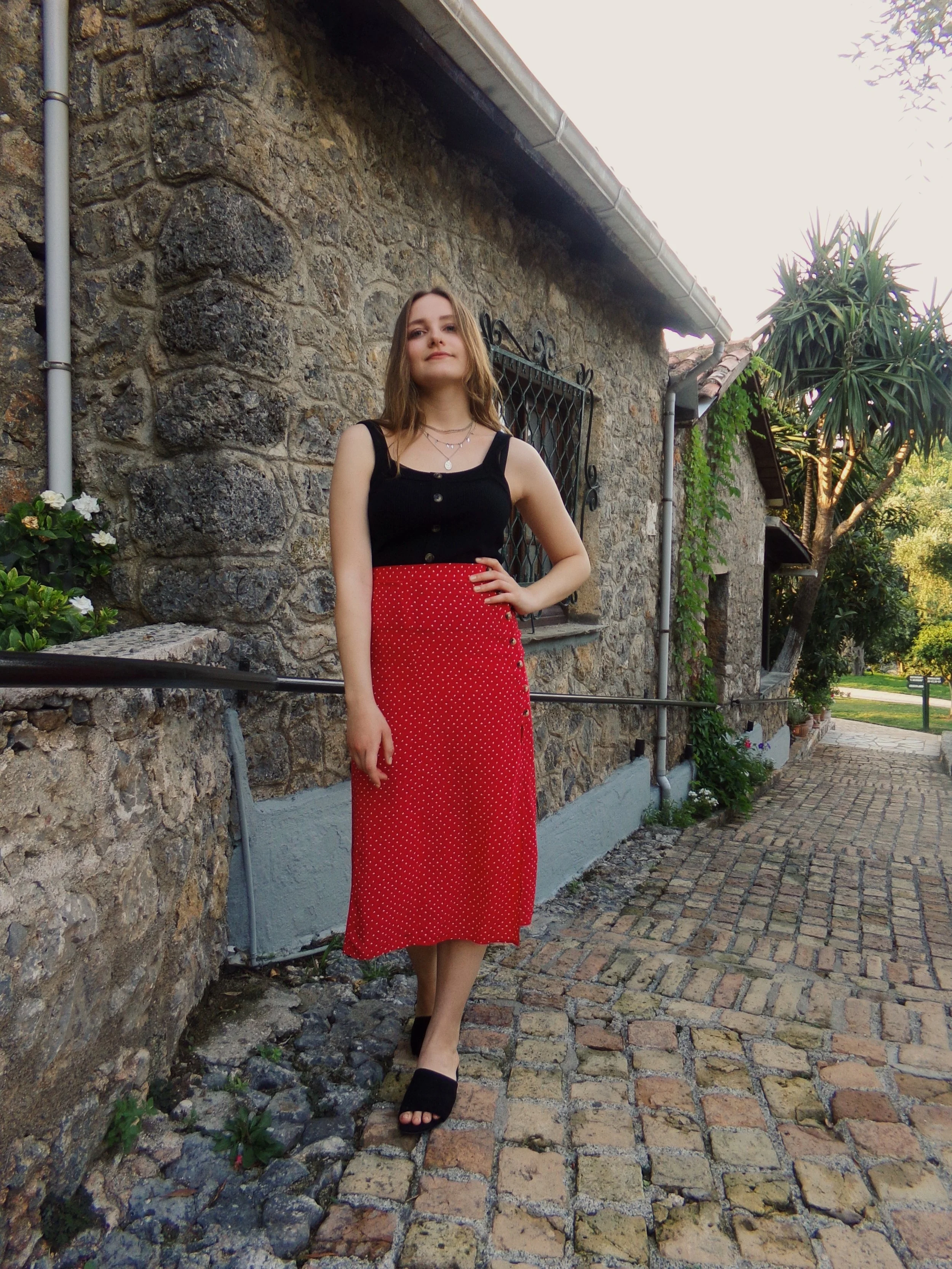
Top- Topshop
I love being alone. I am a self-proclaimed introvert and, generally, time alone is something I always look forward to. I remember when I was younger, in my early teens, I would saviour weekend nights spent only with myself; I could stay up as late as I wanted to and do whatever I pleased with my time, which usually involved writing blog posts (on a blog that no longer exists), scrolling through Tumblr and reading. My time alone now is spent much in the same way, apart from that Instagram has replaced Tumblr (which is probably for the best because despite Instagram’s many issues, at least it isn’t trying to convince me that thigh gaps are cool.)
It seems then that time spent with myself is time to be creative. It’s also time to binge-watch my favourite Netflix shows, don’t get me wrong. But I definitely spend most of my alone time working on creative projects and if I do spend too much time with other people, I quickly develop an itch to be on my own, so I can re-charge and work on these things that I love and care about so much.
I find the ideas surrounding extroverts and introverts interesting and largely baffling. I often question how anyone could re-charge by spending time with others because it is so natural to me to restore my energy by being on my own. This isn’t necessarily because I relax in conventional ways when I’m on my own; most of my time spent doing ‘nothing’ (i.e. watching TV, chatting and generally chilling) is when I’m with my boyfriend and my friends and, as I just explained, most of my alone time is spent working, even if I am working on things I enjoy. It sounds kind of counterintuitive really: I relax when I’m with others but I re-charge when I’m on my own.
But I don’t think re-charging and relaxing are necessarily the same thing. It’s true that I feel exhausted after spending the entire day socialising or even just being around other people but collapsing into bed and binge-watching TV isn’t always the answer to that. More often than not, turning to my blog or other projects that I’m a part of feels like the ideal way to end my days. I think I crave this kind of ending to my day because I feel the most like myself when I’m doing something creative/something that I’m interested in. And I think that’s what this concept of ‘re-charging’ is all about- where it is that you feel most like yourself. Alone or with others? Watching TV or working? etc.


I don’t think there’s a right or wrong answer to the question of where you feel most yourself but I do think that my ways of re-charging can be problematic. Re-charging by working (even work that I enjoy) can definitely cause problems, namely me becoming completely over-worked (how many times can I say work in a sentence?) It’s pretty normal for me to leave my house at 9am and stay in university till 5pm, to come home, eat something and spend the rest of my night working on my blog with maybe an hour of Netflix when it gets to about 10pm. This isn’t me pushing myself because I feel like I have to, (I find it very frustrating when people force themselves to work more than they need to just to feel worthy), it’s because I want to, well when it comes to my blog anyway! I love my blog and I love working on it. It makes me feel good and if I didn’t do it in the evenings and on the weekend, I wouldn’t have time to do it at all.
But re-charging in this way certainly does blur some lines of what is work and what isn’t, and how far enforced relaxation (even if relaxing in the conventional way isn’t what I feel like doing) is necessary. Right now, it feels like this way of living works for me. But then again, I haven’t been to university in a week (it’s the Easter Break) and a couple of weeks ago when I had been enforcing this routine for 8 weeks straight and was feeling burnt out to say the least, I might have felt very differently.
I love being alone but maybe I don’t quite know how to yet in the ways that are best for me and my mental and physical health. I think as I grow older and learn more and more about myself (and I hopefully spend my days doing work that fulfils me creatively so I don’t have to spend my nights doing so), I’ll learn what is best for me though, and I hope Ii find a healthy balance between genuinely relaxing whilst also being able to re-charge, whatever that phrase really means.
Writing this post has made me realised that being alone is much more complicated than many people, including myself, like to think. Maybe I’m just thinking into it too much (I mean, I am an English Literature student so that’s a fair assumption) but considering much of my time is spent by myself, I think this is a worthy topic as any to spend my time thinking and writing about.
Let me know how you feel about being alone in the comments! Do you love it or hate it? Are you an introvert, an extrovert or somewhere in between? As you might be able to tell, I’m very interested in this topic so I’m keen to hear your thoughts!


you might also like…


I Don't Feel Guilty About Unfollowing On Social Media and Neither Should You

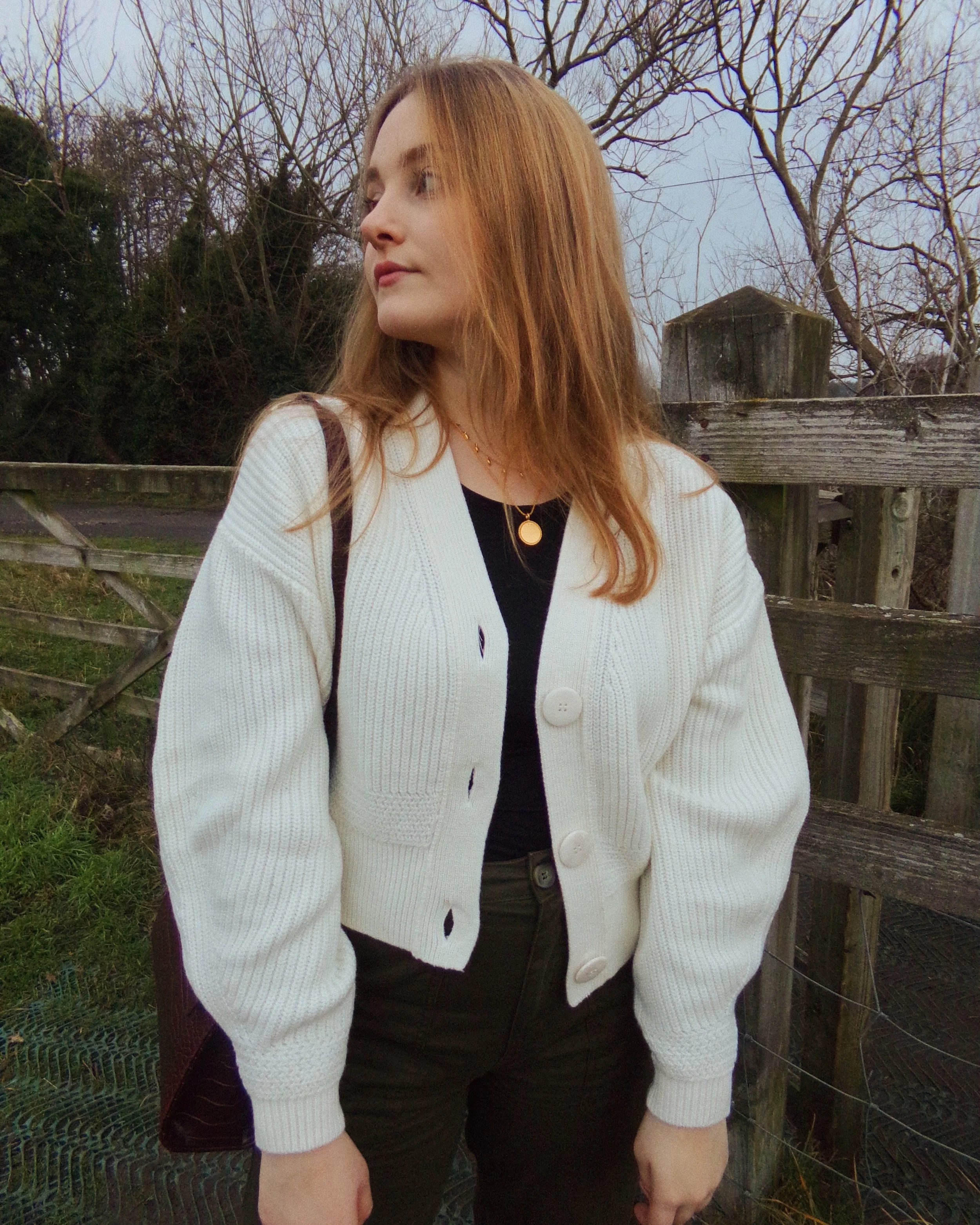
Cardigan- & Other Stories
Trousers- New Look
Bag- ASOS (sold out, similar here)
Shoes- Converse
Necklaces- Missoma X Lucy Williams Mini Fang Necklace & Missoma Body Language ‘A’ Initial Necklace
I spend A LOT of time on social media, an embarrassing amount of time to be honest. The new iPhone feature that tells you your daily and weekly screen time has made me very aware of this. On average, I probably spend about 2 hours a day on Instagram, according to my phone. That’s 14 hours a week, 60 hours a month, 730 hours a year! I’ve tried SO much to cut down on my screen time but, mostly, it feels like a losing game. The truth is, we live in a society that is addicted to social media so breaking the habit of scrolling isn’t as easy as we might think.
So if I am inevitably going to be spending this much time on social media, I want it to be a positive space. I want it to add something to my life! I definitely don’t want it to make me feel bad about myself or my life. I recently watched Lucy Moon’s video about organising her life and putting mindful habits into place for the new year and one of the things she did was go through all of her Twitter and Instagram followers and unfollowed anyone who didn’t inspire her or wasn’t her friend. I thought taking the time out to do this was such a good idea as I’ve never gone through my followers in this way and I had been thinking a lot about how I wanted to make social media a more positive and productive space.
So I did just that! I started with Twitter because I’ve been using Twitter for a long time, probably about 8 years if not more, and I’d never really thought about who I’m following. Plus, Twitter had been one of the spaces I found to be stressful because of the sheer amount of words that were thrown at me, many of which were from people I’m not really in touch with anymore or accounts that I’m just no longer interested in, which meant I was consuming a lot of information that wasn’t really positive or productive for me.


Like Lucy, I wanted to continue following all of my friends, as well as accounts that I find inspiring, informative and/or positive. I didn’t actually check how many people I followed before my ‘cleanse’ but I think it was between 400-600 people and I now only follow 113 people on Twitter. My following now mostly includes my friends, bloggers/social media people whose lives I find interesting, authors and musicians and newspapers/online platforms that I enjoy (e.g. Man Repeller and The New York Times).
Even one day after my little unfollowing spree, I noticed how much more I was enjoying scrolling through my Twitter feed, and it’s actually meant that I’ve gone on Twitter less too because there isn’t as much to see so I don’t have an excuse to endlessly carry on scrolling.
I haven’t finished ‘cleansing’ my Instagram following yet, purely because it was taking a little longer as I have to look at everyone’s feeds and decide whether I think they’re adding something to my life (in the form of inspiration, positivity or information) rather than, like with Twitter, just knowing straight away whether this is the case. But I know when I do get the chance to finish clearing up my Instagram, it’s going to make scrolling there so much more positive for me too.
Despite the fact that I am doing all of this unfollowing to make social media a better space for me personally, there is still some guilt in unfollowing. Even if you haven’t spoken to someone for years, it can feel a little bitchy or arrogant to unfollow people. But it really isn’t! It’s a positive thing for you and your mental health. And after seeing how much my social media use changed for the better after doing my little ‘cleanse’, I really don’t feel guilty about it all.
I personally wouldn't be offended one bit if someone wanted to unfollow me, for whatever reason. Whether it’s because we’re not in touch anymore and they’re no longer interested in what I get up to or if it’s just that they just don’t find my content particularly interesting or inspiring! That’s fine! I feel like I’d have to be pretty vain to think that everyone is going to care about my life enough to hear about it pretty much every day.
Unfollowing people is an act of self-care, which means it’s absolutely nothing personal towards the people you’re unfollowing, in fact it’s the complete opposite, it’s all about you! And it’s okay to be selfish here. You can’t please everyone and you shouldn’t have to and if people are going to be offended that you’ve unfollowed them, it really is their own problem/issue, not yours.

So if you do have some free time over the next few days, take out an hour or two to go through your following lists on social media and cleanse it of anyone/anything that isn’t a positive influence on your life. If you spend as much time on social media as I do, it’s kind of necessary for it to be a source of positivity because if it isn’t, just think how that amount of time spent in a negative space will affect you, your mental health and your general mood. And please don’t feel guilty about it! You should never feel guilty for looking after yourself and if people are going to make you feel guilty about that, they’re not really people you want in your life anyway, so you know you’ve made the right decision in unfollowing them!
I’d love to hear how you feel about unfollowing on social media. Is ‘cleansing’ your following something you already do regularly or have you never thought about it before? Is your screen time as high as mine (please say yes)? Let me know in the comments or send me a message over on social media, speak of the devil!
Despite the fact that I’ve just referred to it as satanic, social media and a high screen time does not necessarily need to be a bad thing, as it’s often made out to be. If you can make your social media into a space that provides inspiration, positivity, information, or whatever else it is you want to get from it, it can be an amazing place to spend your time!

You might also like…
How I Wind Down & Relax Before Bed | Dealing with Anxiety at Night

As you may know if you’ve read my blog before (or if you know me in real life), I’m a bit of a worrier. I mean, that’s the understatement of the year to be honest, and we’re only 20 days in!
I’ve suffered with anxiety for a few years now and it’s always at its worse in the evenings. On a good day, my anxiety will start to materialise bit by bit (usually in the from of a stomach ache, feeling sick and/or jittery) as as it starts to get dark, on a bad day I often feel totally unable to cope with the amount of time I’m allowed to be left alone with my own thoughts during the evening.
This is why it has been essential for me to create a relaxing evening routine. I see my evening routine as a ritual, something I do every day to tell my brain that it’s time to settle down and to stop thinking about anything that might be stressing me out. And, so far, having a routine has really helped me.
Some days I do the bare minimum of this routine and sometimes I go all out, depending on how much time I have and how I feel that day. But I thought I’d go through the extended version of it with you step by step, in the hope that it might encourage or inspire you to find ways that you can wind down in the evening, especially if you struggle with them like I do.
I’d also like to point out that skincare is a really big part of how I wind down in the evening and I was actually going to include my skincare routine in this post. But, it’s fairly long and I wanted to go through it in detail so I’ve given it it’s own post, which you can read here if you’d like!
But here are the other ways in which I wind down in the evenings that I’d really recommend to everyone, whether you struggle with nights or not …

RE chocolate on the bedside table: if all else fails resort to something sweet and comforting i.e. your favourite chocolate
1. Relaxing Yoga and/or Meditation
I hope the suggestion of exercise before bed hasn't put you off already! The type of yoga I do before bed isn’t really exercise at all anyway. It’s mostly just lying down, usually with a pillow or blanket and focussing on my breathing, with a bit of easy stretching thrown in there. This is probably the step in my bedtime routine I skip the most due to laziness. But if I’m feeling really stressed or anxious before bed, I’ll always roll out my mat and take this time to myself. The only at home yoga practice I follow is Yoga With Adriene, who creates weekly yoga videos and is just brilliant. She has yoga for every mood but her bedtime yoga practices are particularly great.
Instead, or as well, as yoga, sometimes I do a little bit of meditation. It’s not something I’m totally convinced on as I often just sit there mentally-planning tomorrow’s to do list. But sometimes it does help me take some time for myself when I’ve had a busy/stressful day.
I’ve never done a meditation practice longer than 5 minutes because I’m almost sure I wouldn’t be able to get through a practice longer than that and I don’t want to make myself feel bad, so I stick to the 3-5 minute sessions. I use the app Headspace, although I don’t pay for it so I am very limited on my choice of practices. I would really recommend their beginners series though!
2. A Little Bit of Netflix
This is probably the one that I do manage every night! I’m not a big movie watcher but I LOVE a series. I think I like them because of the familiarity and comfort they provide and also because they’re usually only 30-60 minutes which is a lot more do-able and less intimidating than a 2 and a half hour film.
Anyway, I don’t need to tell you how good Netflix and TV is, you already know. I know the blue lights are supposed to be bad for sleep but, personally, I love the escapism TV provides before bed and it really allows me to get out of my own head and concentrate on something other than my own life. Some of my favourite escapist, easy-to-watch TV shows include Jane The Virgin, Crazy Ex Girlfriend and The Good Place, but there are many more.

3. Sleepy Candles
I was given a lavender candle just over a year ago as a Christmas present and since then, I will never go back. Burning a lavender (or any ‘sleepy’ smelling) candle before bed is so relaxing, not only because of the smell but because lighting a candle really feels like a ritual and a sensory reminder to your body that this is the time to relax.
I’m currently using this candle that I got for Christmas and I also have a This Works one ready and waiting to go, which is very exciting!
4. Some One on One Time with My Current Book of Choice
Even for people who don’t particularly like reading, I think reading before bed is something everyone should try! It might work, similarly to Netflix, in that it allows you to escape your own world, or it might work that you’re so bored you fall asleep. I choose to read before bed because of the former reason but whatever works for you is good!
Sometimes I read 2 pages before bed, sometimes I give myself an hour and read 40- it just depends how I’m feeling and how much university-related reading I’ve already done that day. The book I’m reading in these photos is Refinery29’s Money Diaries, which is all about how to sort your finances out. It’s not exactly the most relaxing book to read before bed, but sometimes because it’s slower it helps me to fall asleep. Plus, I only really like reading one book (for fun) at a time so I just read whatever I’m currently reading before bed. If you’re really struggling with reading, I have a blog post all about how to get back into it.

5. Pillow Spray the Day Away
Finally, we have my ultimate nightly ritual, the pillow spray! I’ve been skeptical of the humble pillow spray before, but after trying it, I don’t think I could ever go back. I use the This Works Deep Sleep Pillow Spray, which smells like a dream. It’s not really the smell that helps me relax though, it’s the ritual of spraying it and telling my body ‘it’s time to relax and sleep now’, much like the candles.
I sometimes use a de-stressing roller ball too if I feel like I need it. I like the This Works one and the Liberty one that they created in partnership with Aromatherapy. I also like doing a face mask before bed. They don’t even have to have a ‘sleepy smell’, I just find them super relaxing, even if it is a cliche. I talk a little bit more about this in my evening skincare routine blog post.

I hope you’re feeling inspired to have a relaxing evening tonight! If you’re reading this on a Sunday, which is when it’s going up, tonight is such a good time to carve out some time to relax and set yourself up for a great week. The time is so worth it as it will do wonders for your mental health, your quality of your sleep and therefore your happiness and productivity levels! If it’s not Sunday, start tonight anyway, I really hope an evening routine helps you as much as it has helped me!

you might also like…


A Very Sober Christmas | 10th Day of Christmas

Dress- Urban Outfitters
In October of this year, I was advised by a doctor to stop drinking alcohol for 6 months, or maybe even forever. I’m not going to go into the details of why here because it’s just not that interesting but, very basically, I become very ill (think food poisoning symptoms) after a minimal amount of alcohol (I have been known to throw up for 2 days after 2 ciders, it’s extremely inconvenient). So 6 months off is either going to let my body re-build it’s tolerance up so I am OK to drink forever, or I am just going to have no tolerance to alcohol ever and never be able to drink alcohol again. Basically- I’ve become the biggest lightweight known to man.
When I’ve told people that I can’t drink at the moment, many of the responses are ‘But what about Christmas? Are you actually not going to drink all Christmas?’ People are generally baffled by the fact that I’m going to spend the festive period sober. This is probably because for about 4 years of my life I used to get very drunk every weekend without question, which is potentially the reason why I can’t drink now but like I said, it’s a long story.
But I also think it’s also because Christmas is a time of the year that is very much associated with alcohol. Last night was supposedly the biggest night out of the year, prosecco on Christmas day is near enough mandatory and also part of the festive season is New Year’s Eve, another night which is very much alcohol-focused.
However, I’m not nearly as intimidated as other people are at the prospect of not drinking alcohol this Christmas. I mean, I’d rather not spend the holiday period with my head over the toilet so there’s a lot of incentive not to drink. Plus, Christmas is also the time of year where nights in watching Christmas films and having an early night are encouraged maybe just as much as going out, so there’s that.
I’ve also managed to (kind of) get through 2 months of being a student and living in one of the most highly-populated student areas in the UK without drinking alcohol and perhaps the only thing that is associated with alcohol more than Christmas is student life. So if I’ve done that, I think I can stay sober through anything!


I don’t really know how I feel about not being able to drink alcohol at the moment. I haven’t hated it but I haven’t loved it. In all honesty, I haven’t noticed much of a difference to my life. I’ve had a lot of nights in but nights out haven’t really been an option over the last 2 months anyway because I’ve been so busy during the days that the only way I want to spend my evenings is passed out on the couch. The worst thing about not drinking alcohol isn’t actually the not being drunk part anyway, it’s all the unwanted attention I get from people who are interested in why I’m not drinking which never fails to make me uncomfortable.
I’m not even particularly looking forward to March when I can ‘officially’ try to start drinking again. I think this is partly because I’m skeptical as to whether anything will have changed in the way that my body reacts to alcohol but also because I no longer enjoy nights out like I used to (here I go again…19 going on 90).
I think I enjoy quieter nights, going out for food, to the cinema or just nights with friends that end with me in bed by 1am much more nowadays. It’d still be nice to be able to have a few drinks every now and then without being horribly ill but I don’t have a huge desire to get really drunk.
This has nothing to do with why I’ve stopped drinking but being drunk, and especially having a hangover, really does trigger my anxiety. Many of my worst panic attacks have happened when I’ve been drunk or the morning after, so I think this is another reason as to why I’m not overly nostalgic about drinking alcohol.
Overall, I feel fine about having a sober Christmas. I have a new found love for Coca Cola (hence me holding a can of it in all these photos as if I’m sponsored by the brand) which, believe it or not, I didn’t really used to like! Plus, not drinking leaves more room for food, so hopefully I can beat my own record of how much chocolate and crisps I can inhale over the period between Christmas Eve and New Years Day.
Let me know if you’d like more content on how I’m finding not drinking, particularly on how I find it as a university student. I’d also be super interested to hear about your relationship with alcohol, especially over the festive period. Let me know in the comments or on social media! I’ll see you back here tomorrow for a post on my favourite Christmas traditions.


The Christmas Blues | 8th Day of Christmas

When I was planning my 12 Days of Christmas blog posts, I was obviously trying to think of festive themes to include. But I also really wanted to include a post talking about how Christmas isn’t a happy, festive time for everyone, despite what the media (and especially social media) presents. I’m definitely contributing to this festive facade of every day of December being one full of cheer with this series of blog posts and with my other content on social media this month and that’s why I was adamant about including a post such as this one, to remind anyone who might be reading my blog and who feels like they’re not feeing as Christmassy as they should be that they really don’t have to be!
Christmas can be difficult for people for a number of reasons; grief, loss, mental health issues, work, family problems… the list goes on. The holiday season isn’t this perfect month of happiness for anyone really, everyone has something going on in their life and it doesn’t disappear just because Michael Buble is back on the radio 24/7 (although a bit of Buble can definitely help, I have to admit!)
For me, Christmas generally is a happy time of the year and one that I always look forward to. But it still never lives up to my expectations of it being totally stress-free. I’m still thinking about Uni work and my anxiety hasn’t magically disappeared, if anything it’s escalated a little because this is such a busy time of year!
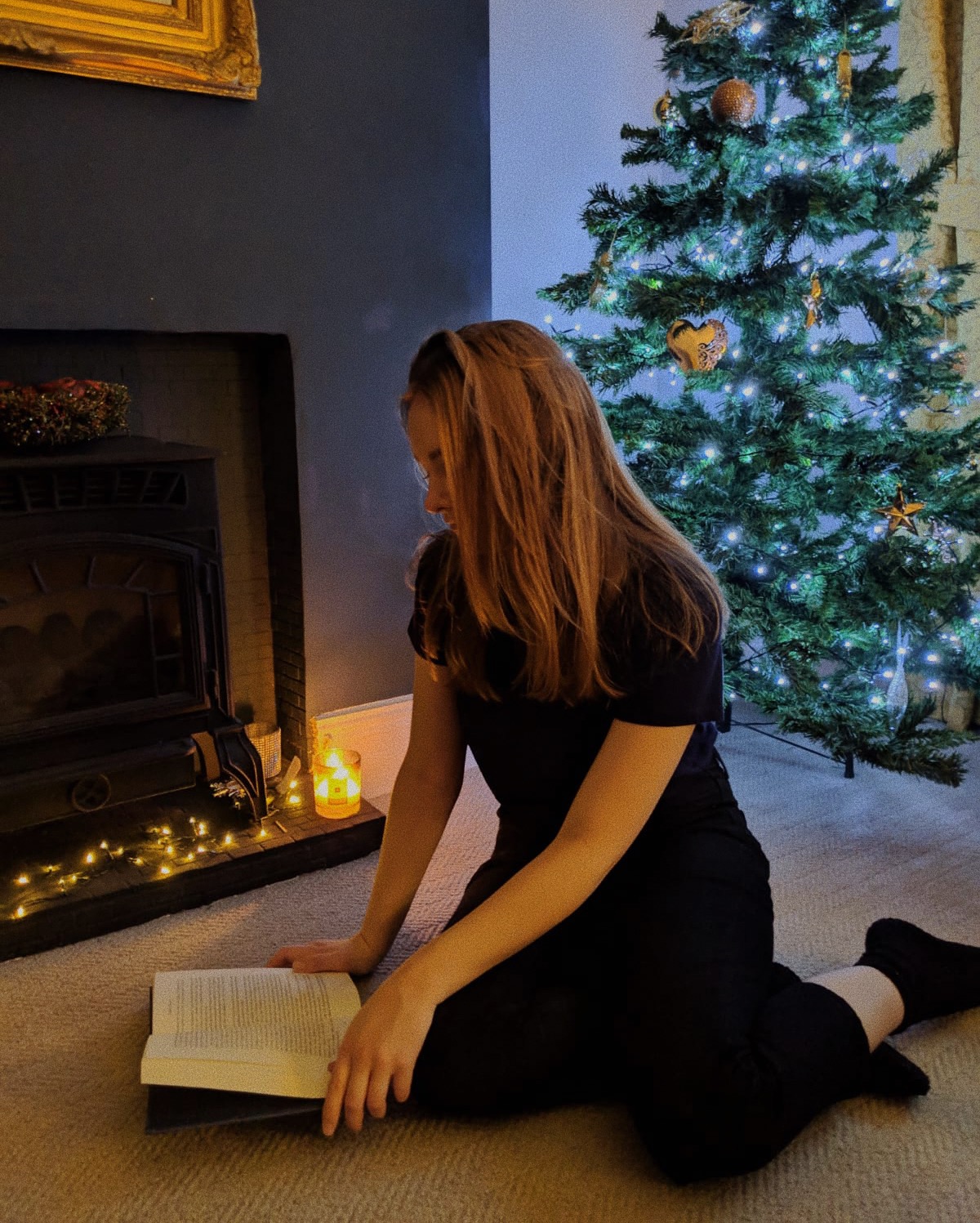
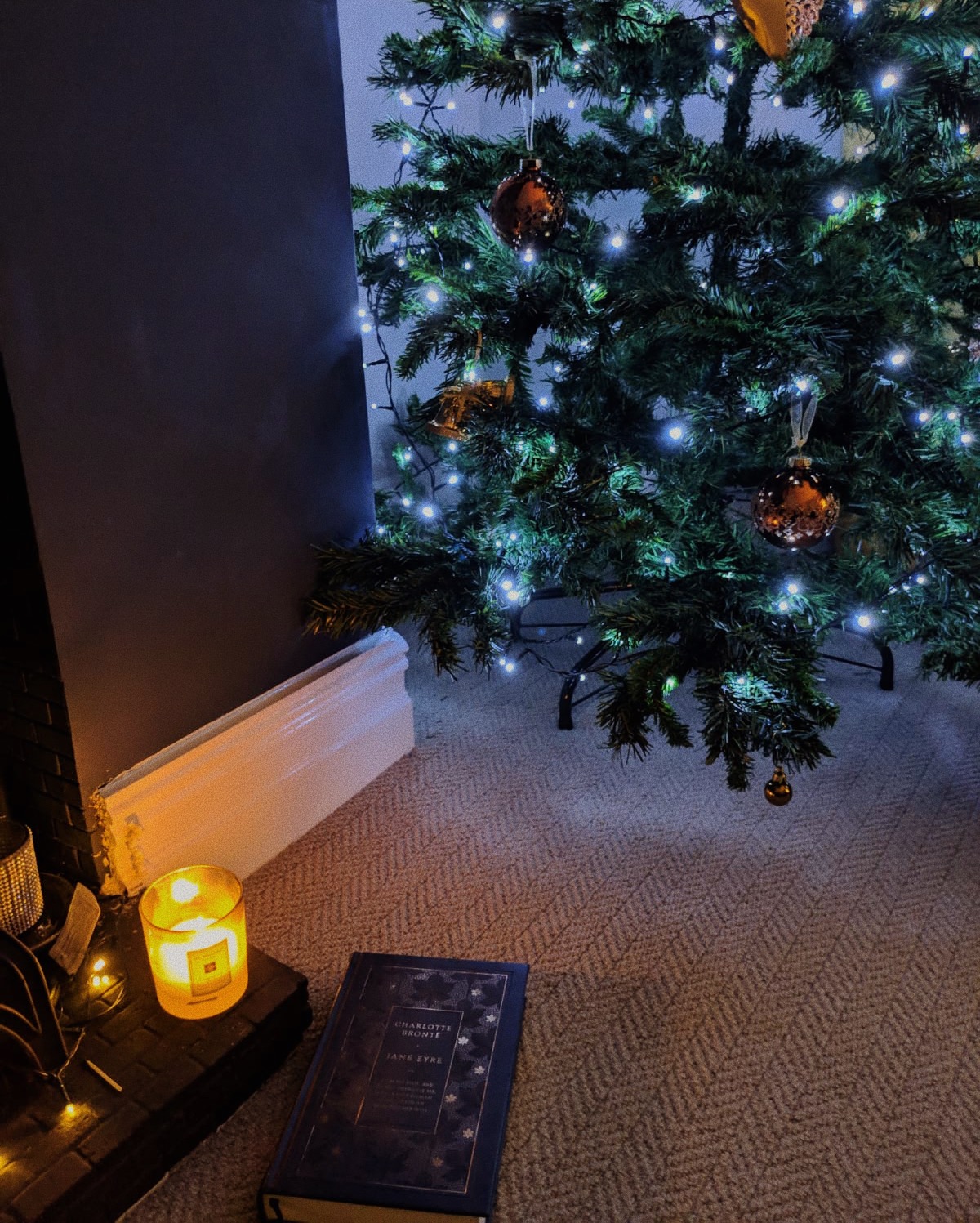

If you’re really not into Christmas this year, just try and treat it as an opportunity to rest. Hopefully you have some time off work and can treat the holiday season instead of the season of festive fun, as the season of self-care. Read a book you love or have wanted to read forever (a distinctly non-festive one would work well), watch your favourite films that have nothing to do with Christmas, take advantage of the huge selection of chocolate in your local supermarket at the moment and bury yourself in your duvet with it. Or do whatever else makes you happy, whether it’s festive or not!
I understand that it’s definitely not as simple as this though. Dealing with loss, grief or mental health issues isn’t just as simple as doing self-care and I can imagine it’s harder than I’m implying to remove yourself from the festivities of Christmas. That’s why this isn’t really an advice post. I don’t think I’m qualified to give advice on this subject and I don’t want to just hand out basic self-care advice like ‘try a face mask’ as I think that’s a little bit reductive and insulting.
Instead, this post is an acknowledgment and a reminder that Christmas doesn’t have to be the most wonderful time of the year for you and there’s no need to feel guilty if it isn’t. I also wanted to link to some other blog posts written on this same subject which I think could be really comforting if you are struggling with Christmas this year:
Some Thoughts on Christmas by Lizzy Hadfield (Shot From the Street)
A Different Perspective on Christmas by Isabelle Hardy (Fashion et Moi)
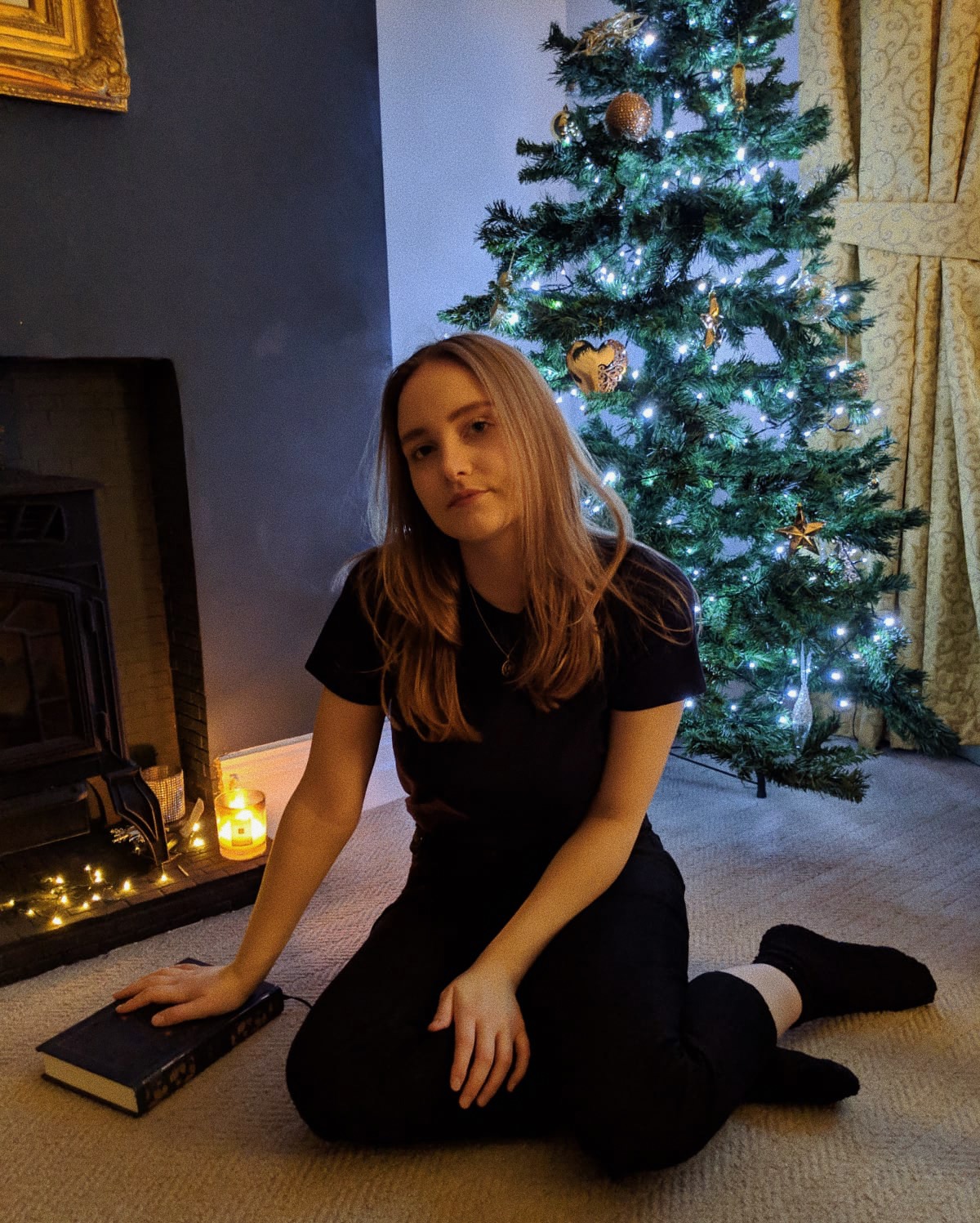
I hope you’ve benefitted from this post in some way and if anything I hope you’ve taken away from it that if you are feeling a little bit crap this Christmas, that’s ok! It’ll be over in 2 weeks time anyway and there’s really no obligation to get involved if you don’t want to- take it from Chloe in her blog post! I’d be really interested to know how you’re feeling about Christmas this year, whether it’s good or bad. And as always, my direct messages on social media are always open so you’re welcome to talk to me about it privately if you’d like to!


Should We Bare Our Souls Online?

Should We Bare Our Souls Online?
Jumper-
Skirt- Topshop (currently sold out but they're re-stocking it quite regularly at the moment- I will post a link to my Twitter when/if it is re-stocked again)
Necklace-
Today's post was going to be an update on how I've been dealing with my anxiety, something I've been planning on writing for a few weeks. When I realised it was International Mental Health Day on Wednesday I thought this post would be even more apt. But it was ironically that day that made me change my mind. Although it's a great way of helping raise awareness of mental health issues, it meant that a lot of people were sharing their own stories of their own mental health problems, which, again, is a good way of helping to add to the evergrowing conversation around mental health. However, for me, I found listening to other people's stories overwhelming and triggering. It was one of the first times I've really had to make myself to put my phone down and stay off social media for the day/night because it became quite a negative space for me.
This got me thinking about how much of my life I wanted to be sharing on social media. On my blog in the past, I've been happy to talk a lot about my personal experiences and, by doing so, I've been able to connect with people going through similar things, which has definitely been really positive. But after feeling so overwhelmed by hearing others' stories on Wednesday, I began to rethink whether sharing so much really is the best thing to do.
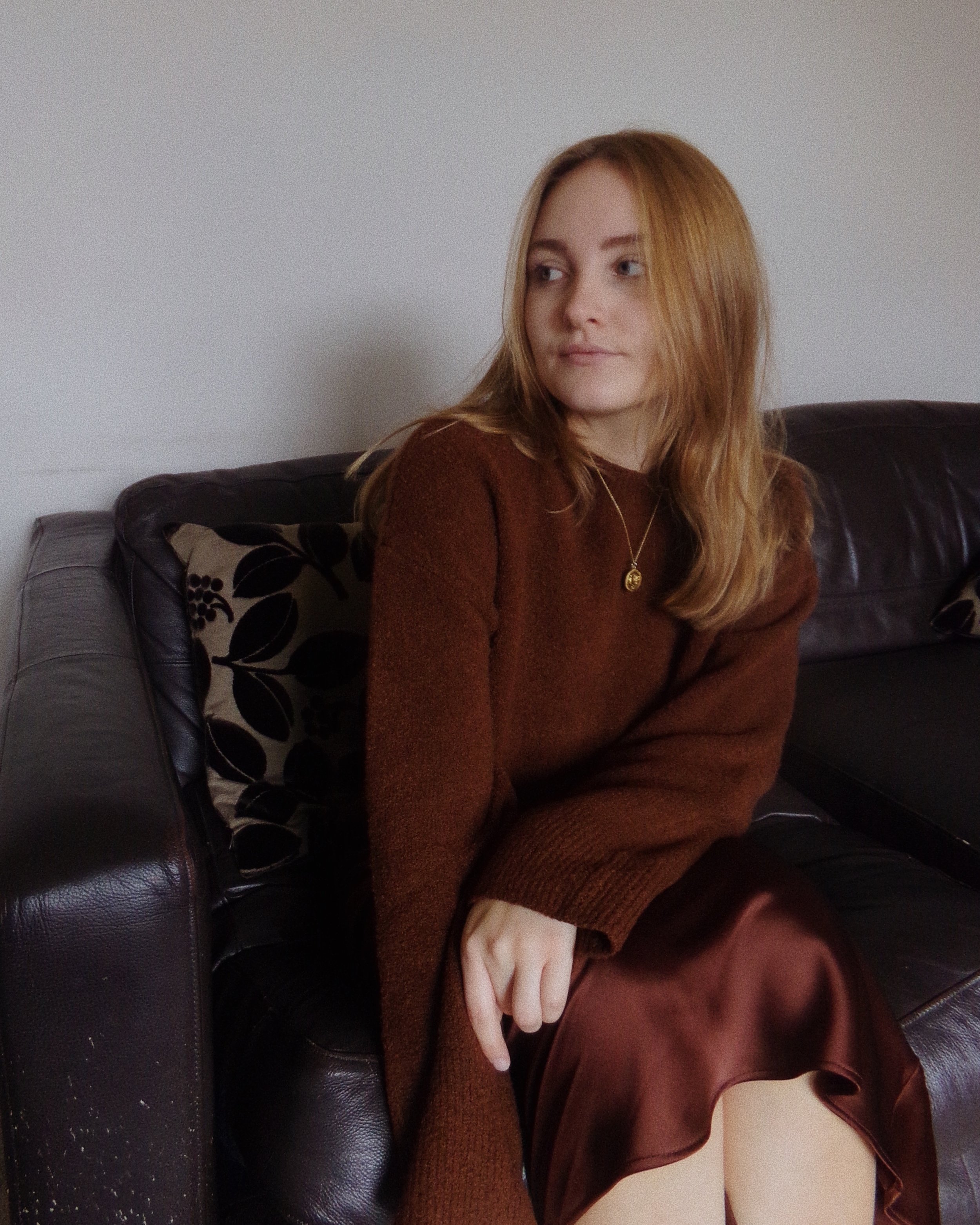
Should We Bare Our Souls Online?
The conversation around the ethics of sharing on social media has been growing so much over the past few months. From Katherine Ormerod's new book 'Why Social Media Is Ruining Your Life', and the corresponding Instagram hashtag, to Pandora Syke's recent article for Man Repeller, it's definitely a topic that's hot on people's tongues. Much of the conversation around this subject argues that we should be presenting more honest perceptions of ourselves on social media, better reflections of our 'real life'. I can definitely see how the facades of social media can be harmful for many people, seeing people live seemingly perfectly lives and feeling like yours just doesn't live up is definitely a negative thing. But, for me, this just isn't the case. I use social media as a form of escapism, just I use books, TV and other forms of media. I think this was why being faced with so many 'real-life' stories similar to mine felt so difficult for me. I like seeing a 'glossy' version of people's lives on social media and I'm very, very aware that everyone's Instagram feeds are a highlight reel of their life (although I do like seeing a bit of 'real life' over on Instagram stories). I like using social media as a way of pursuing my interests, from fashion to books to food and reading and seeing photos around these topics definitely helps me switch off and feel more positive. But as real people, should we be sharing our real lives on the internet all the time?
Most people at the moment, it seems to me, would probably answer yes. The word 'responsibility' comes up a lot when talking about how bloggers and 'influencers' should be using social media and obviously there is some sense of responsibility attached to the job title, like there is with any job. But should people really feel as though they have to share every single aspect of their lives with strangers online? Is it helpful if they do? I don't have any answers. I don't know how I feel about it. At the moment, I think maybe users of social media should take responsibility for their own usage, unfollowing people who make them feel negative and limiting their usage of social media if they know it's not good for them. Because, for me, Instagram, most of the time, feels like quite a positive space for me (even if I waste far too much of my time scrolling) and I can only see it becoming more negative and triggering, personally, if people were to start sharing the more negative aspects of their life on there, especially if they were only doing so because they felt they had to.

Should We Bare Our Souls Online?
I'm not advocating for social media, specifically Instagram, to be a completely honest or dishonest portrayal of 'real life', I think I'd like it to be somewhere in the middle, which, with most people I follow, is where I think it's at now. I think it all comes down to personal choices in terms of posting and following. Maybe for me it's positive to talk about some of my own negative experiences online but generally not helpful to read about other people's? Is this contradictory? Yes. But is this ok? I think probably yes. Because if other people, like me, don't feel good about reading other people's struggles or 'real life' issues, then they can unfollow me. Maybe I wouldn't even follow myself? Now this is really getting morally confusing. You can tell I don't know where my mind is at on this subject. But I thought I'd put my confused thoughts out on to the internet anyway because I think there is an interesting conversation to be had about this topic and I'd like to contribute to it, even if I'm doing so unhelpfully.
I'd absolutely love to hear your views on the topic of sharing online. Do you feel a responsibility to make sure your Instagram page is a completely honest version of you? How do you go about avoiding the bits of social media that you find negative? Let me know in the comments or send me a message over on Instagram or Twitter.

Should We Bare Our Souls Online?

Should We Bare Our Souls Online?

Should We Bare Our Souls Online?

Should We Bare Our Souls Online?

Should We Bare Our Souls Online?

Should We Bare Our Souls Online?

Should We Bare Our Souls Online?
Having Confidence in Doing Your Own Thing

Having Confidence in Doing Your Own Thing
Photography by Ami Ford.
I'm finally back with a new blog post after a brief hiatus due to a busy couple of weeks and some personal struggles, which I will go into more later in the post. But I've been wanting to write on this topic and share these photos for what feels like forever now and I'm finally getting round to it today. These photos were taken by the incredible Ami Ford, whose work I had admired from afar for some time and so was delighted to be able to shoot with her, and I'm so happy with the outcome! You can find her on Instagram here, Twitter here or visit her website here.
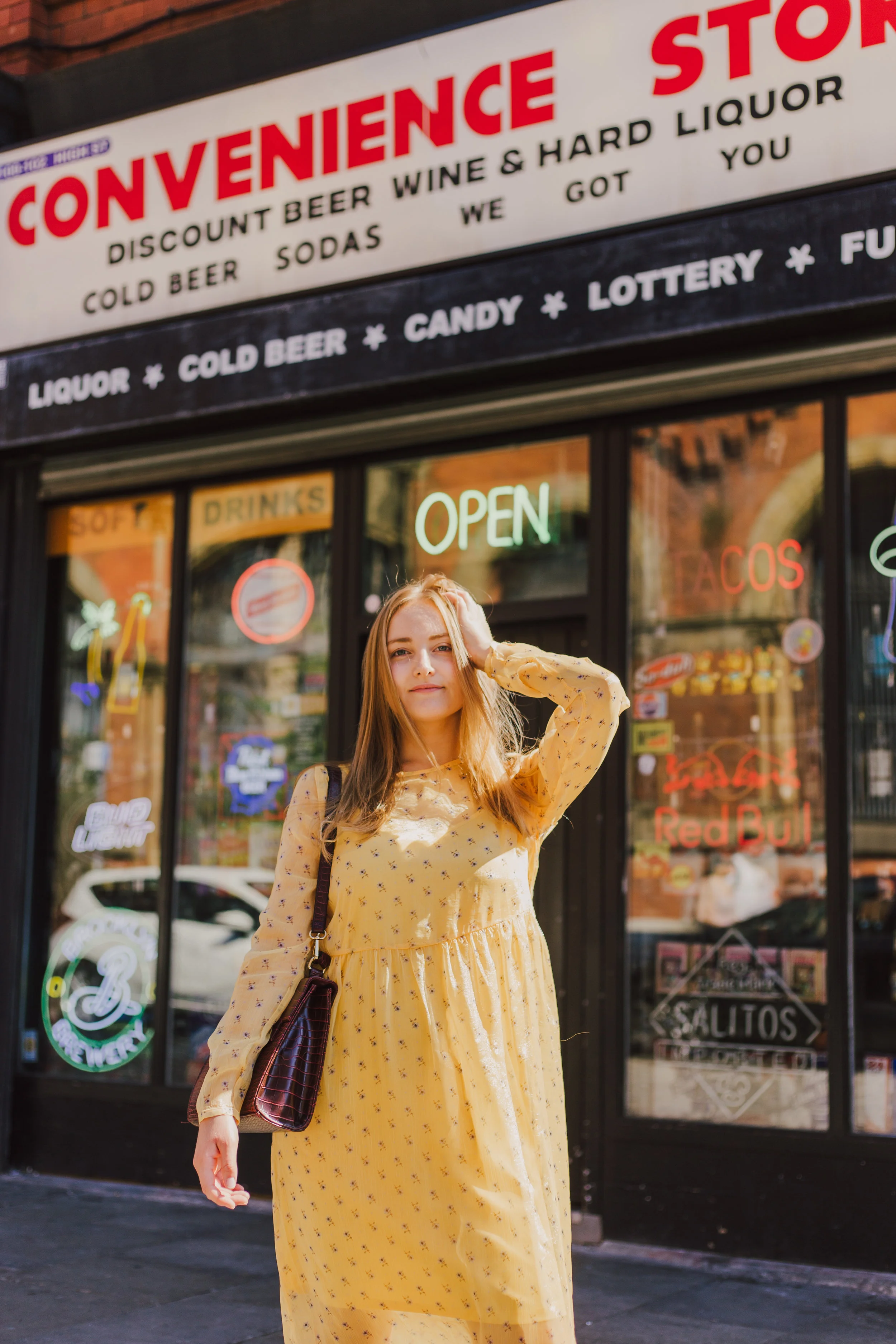
Today's post is inspired by these photos and specifically, the location that these photos were taken in. This was perhaps one of the busiest road in Manchester on the Sunday afternoon we were shooting on, meaning I really had to have confidence in what I was doing as posing in the middle of a very busy road in a bright yellow midi dress with every passerby staring at you with confused/baffled looks can/could have been an uncomfortable situation. In fact, posing for photos in any situation, even if there are only one or two confused onlookers, and sharing them on social media is quite a daunting concept generally and something I'm still trying to become totally comfortable in.

Having Confidence in Doing Your Own Thing
Anything that you do that is a little bit different, especially if it involves self-promotion, is probably going to be scary and weird. Since becoming more confident in doing my own thing, my life has only improved however I'm still not 100% there yet at all. So much so that, after a little (read: huge) wobble after moving to UNI last week, I considered not writing this post as I didn't think I was qualified to discuss this topic. But then I realised that if I wait till I feel totally comfortable in myself and my interests and habits, I'm probably never going to get round to writing it as I don't even know if it's possible to feel that way to such an extent. So I thought I would use this post to discuss the areas of my life in which I'm trying to become more comfortable in doing my own thing whilst also providing some tips to help others do the same.
INTERESTS AND IDEAS: STARTING MY BLOG
The first area in which I've really had to push myself out of my comfort zone is, as you might have guessed from the first part of this post and from previous posts, starting and running this blog. Having a blog, especially one that is fashion/style-based, means you’re constantly having to promote yourself and, at times, bare your soul to the internet, not knowing who's going to see it or what reaction it's going to get. These are the reasons why it took me so long to properly commit to having a blog but, as with most things, now I have it these two things, and everything else that comes along with it, are not so scary at all.

Having Confidence in Doing Your Own Thing
I do still feel a little bit uncomfortable with the self-promotion thing and it's definitely not my favourite part about having a blog, especially in person, but it's something that I've got used to and definitely don't feel scared or embarrassed about anymore. The only advice I really have for starting something you want to do whether it's a blog, a YouTube channel, a music career etc. is just start it. Everyone says this but it's so true. You're going to have to get over being embarrassed about it and, if it's something you feel passionately about and enjoy, you'll get over it so much quicker than you think. Plus, if you're surrounded by good people then they'll support you and if you aren't, at least it will help you realise that there are some shitty people in your life who don't need to be there.
SOCIAL AND PERSONAL LIFE: GOING OUT AND DRINKING ALCOHOL
The next part of my life where I've had to try and do my own thing, and probably the most difficult part for me, is learning how I like to spend my time and realising that this is not how most people my age, in my situation like to do so. Yep, this is the part where I reveal that I'm 19 going on 90, far more inclined to spend my Saturday night watching Strictly Come Dancing then getting drunk and staying up till 5am. I've not always been like this, I used to love a good night out and a drink, admittedly before it was legal/acceptable for me to do so, and I think that's part of the reason why it's mostly not for me anymore.

Having Confidence in Doing Your Own Thing
Some people don't ever grow out of getting drunk and partying but a lot of people do and I think because I started out so early I am just a little bit bored by it now and definitely not excited by it. The other reasons why I've retired from being a party type of girl are much more difficult to navigate as they're purely health related. I've struggled with IBS and anxiety, as you'll probably know if you've read my blog before, for over 2 years now and they are both extremely negatively affected by drinking alcohol and a lack of sleep. I'm not going to go into it too much, because you really don't want to know about my digestive issues, trust me, but after drinking 3-4 ciders on Thursday night, I was not only fairly drunk (I've always been a lightweight but my lack of drinking has only accentuated that) but I spent the entirety of Friday with horrendous stomach pains, meaning I struggled to stand up by the end of the day, plus any feelings of anxiety are multiplied by 100.
This has been quite difficult for me because, as a student, the main activity that my friends engage in is drinking alcohol (FYI: I don't judge them for this at all, everyone enjoys different things and they're just as entitled to enjoy drinking as I am to not enjoy it). However, in my experience, the best thing you can do in these types of situations is be open with people. No one is going to get annoyed with you if you tell them how negatively you feel about doing something (even if your reasons for this aren't health-related) but they might if you cancel on plans last minute with an obviously-fake excuse or constantly decline their plans with no explanations. My friends are always so kind to me about not drinking or not going out and try to make effort with me to organise different types of things to do, meaning I rarely have to force myself through awkward and anxious nights and even worse morning-afters, something that was a weekly affair for me during my first year of UNI when I refused to be honest with anyone about it.

Having Confidence in Doing Your Own Thing
MENTAL HEALTH ISSUES: DEALING WITH ANXIETY
The final thing I want to discuss is dealing with mental health issues and I know this sounds weird because 'doing your own thing' does not usually equate to having anxiety. But I think the most important thing in dealing with a mental health problem is accepting it and being confident that you know what the best things to do for you are and doing them, no matter what anyone else thinks. If you want to eat a pack of biscuits for tea because that's the only thing you feel hungry for and you don't have the energy to make anything else, do it (this is a case study from my life, specifically during the last week). If you feel like you need an extension on an essay or any sort of mitigating circumstances, talk to someone at your school/college/UNI about it.
You're the only person who knows exactly how you feel and you can't be embarrassed about your needs or the way you're feeling and avoid them because no one else is going to be able to guess what you want to do and help you. Something I found difficult last year and over the past week since moving back to UNI is feeling like I need/want to come home because being at UNI makes me anxious. There is such a stigma around going home from UNI, in my experience, because people feel as though they need to 'stick it out' to prove their independence and that UNI is the best years of their life. I felt the same way last year and forced myself to stay for UNI for weeks even though I knew a weekend at home would do me the world of good and I was very much in a position to go home. Now, mostly because of the incredible support of my friends and family, I feel absolutely no shame in coming home for a weekend or even every weekend, because if that's what I need to do to get through the days without a panic attack then that's what I'll do.
I realise this post has been a little bit of a ramble but it's something that I've wanted to speak about for a while and, clearly, have a lot to say about. I hope it's inspired you to do something this week that you want to do for you, whether that's starting a blog, saying no to something you don't want to do or booking an appointment with a counsellor. Be sure to leave me a comment or message me on social media if you want to discuss this topic further or talk about my experiences or your experiences. My DM's on Twitter and Instagram are always open!

Having Confidence in Doing Your Own Thing

Having Confidence in Doing Your Own Thing

Having Confidence in Doing Your Own Thing

Having Confidence in Doing Your Own Thing

Having Confidence in Doing Your Own Thing

Having Confidence in Doing Your Own Thing

Having Confidence in Doing Your Own Thing

Having Confidence in Doing Your Own Thing

Having Confidence in Doing Your Own Thing

Having Confidence in Doing Your Own Thing
Finding A 'Work-Life Balance'

'Work-Life Balance' is a phrase that I've heard used lots since I've started following the lives of bloggers through their blogs themselves, YouTube, Instagram etc. It's something that they often talk about struggling with as because documenting their life is essentially their career, it's difficult to draw a line. Obviously, I am by no means a full-time blogger and I, for the most part, don't really see my blog as work at all- it's a hobby that I enjoy. However, taking pictures, editing HTML (which mostly consists of me watching endless YouTube tutorials) and actually writing blog posts is time-consuming and so adding my blog to the things that I do has made it difficult for me to relax over the past couple of months. It hasn't made me feel crazily stressed but I could feel the amount of time I was spending working taking it's toll on me so I'm trying to take some steps to change that. With studying for a full-time degree, working as an English tutor part-time (which involves lots of planning), having a significant role within the campaign Girls Against, plus running my blog, I often work from 8am-10pm on weekdays with minimal breaks, which is really unhealthy and bad for my mental health. I discussed how work took over my life during my A-Levels in a recent post about my experience with anxiety and I'm determined not to let that happen again this year, even if I do enjoy all of the things I class as 'work' now. So here are some of the things I'm doing to try and ensure I make time for myself:
1. Scheduling in 'holidays'.
People who work a 9-5 job obviously have a given amount of time for their holidays but, although with UNI we are given lots of time off for Christmas, Easter and summer, all of the other things I do continue throughout the year. So I'm trying to give myself official weeks off where I can just totally relax. I can't say I've managed one of these so far but I am planning on scheduling some in over summer and I definitely took a few days off everything during Christmas and Easter, if not a full break, which felt really nice in itself. However, I am currently on holiday in Corfu (as you might be able to tell by these photos), the week before my only UNI exam this semester, which is an attempt to try and force myself not to go overboard with revision. I am also in Corfu because I am not going to turn down a week of sun. I'm doing 2 hours of revision a day (ish) whilst I'm here, one in the afternoon and one in the evening and trying to relax for the rest of the day. I'm also writing blog posts (currently sat on my balcony writing this one) and taking photos for my blog because, as mentioned, I enjoy this and don't find it stressful whatsoever. Although I'm pretty sure this might be the only blog post for this week because I want to make the most of my time here.
2. Taking Weekends Off
This is something I've been trying to do since the beginning of university. I decided that I'd much rather work really hard throughout the week so I can have my weekends to myself. This is in part due to the fact that I mostly see my boyfriend on the weekends and I wanted to make sure I had time to see him but also because I struggle to take evenings off if I know I haven't got everything done that I wanted to do that day and don't enjoy the scheduled 'relaxing time'. Whereas with weekends, once it gets to Friday evening I know that I'm done for that week and anything else will have to wait till Monday. This is, of course, something I won't do during my second and third years of university as my workload grows, and something I don't do 100% of time now, so I will have to find another method of relaxation then, but it works great for now.
3. Making Plans and Sticking To Them
This is a really important one for me because I struggle to relax on my own because I'm always thinking that there's something more productive that I could be doing. However, when I'm with someone else, I know that there's no way I could be doing work at that moment and want to make the most of the time I have with whoever I'm with, so I'm really able to fully relax.
4. Planning My Time
Something I've started doing recently is realistically planning my days hour by hour. This means that usually I really have got everything I wanted to do done by 8pm and can relax for the rest of the night. I'm still a bit rubbish at switching off in the evenings though and often find something else productive to do without even thinking about it. But telling yourself that you're going to stop working at a certain time can be really helpful.
I'm going to leave this post here for today because I am hungry and I can smell the food from the restaurant of my hotel but I hope it helped you think about whether your work-life balance is truly balanced and gave you some tips to help it get there. I'm wearing this skirt from & Other Stories again because I just can't get enough of it along with this top also from & Other Stories, both of which I featured in my last post about what's new in my wardrobe. You've seen the shoes and the bag before but this bag is now back in stock on Zara (linked below)! I'm off to relax and enjoy the rest of the time I have in beautiful Corfu now but keep an eye on my Instagram to see what I'm up to.


