The Monthly Media Catchup: Everything I Read, Watched and Listened To | September and October 2020

September and October always tend to be months when I consume less media than usual and probably the months when I read the least. I don’t know why it is but things tend to pick up as we near Christmas and they certainly will this year with lockdown. Nevertheless, there’s some great recommendations in this combined MMC and great is definitely the word, given that I’ve rated almost everything 4 stars. I’m also doing something absolutely no-one asked for: listing my top 10 Glee performances. Enjoy!
books
I wanted to shout about a new initiative, Bookshop.org, that allows you to buy books online simply and affordably from local bookshops. I’ve set up my own page on there, which I’ll be updating with lists of books and the affiliate links I use on my blog will be linked to there from now on. I really recommend you buy your books from there, especially in lockdown and on the run up to Christmas as indie bookshops need your support more than ever.
Rodham by curtis sittenfeld | ★★★★*
The premise of the book hugely appealed to me. It’s a fictional re-telling of Hilary Clinton’s life, imagining what would have happened if she never married Bill Clinton. It’s fast-paced, educational and compassionate and there are a lot of sex scenes, which are incredibly well-written and surprisingly enjoyable. If you’re still feeling feverish post-election and want to remain immersed within the world of US politics, this book is the perfect choice.
The appointment by Katharina volckmer | ★★★★*
This is a sub-100 page novel, something I always enjoy, especially when it’s done as well as this one. It’s a monologue by a young German woman living in the UK directed towards a doctor. It requires a certain level of dark humour as well as the ability to enjoy books with genuinely unlikeable protagonists, but I have both of these things and I loved it. If you enjoy Vladimir Nabokov and/or Ottessa Moshfegh, I think you’d love this novella.
ghosts by dolly alderton | ★★★★*
I’ve had this novel on pre-order for so long I honestly thought the day would never arrive when it landed on my door stop. But it did and it was glorious! I’m such a fan of Dolly’s writing and this book did not disappoint. It’s about a woman in her early 30s who tentatively downloads a dating app, only to enter a serious relationship with the first man she goes out with who subsequently ghosts her. It reads like a thriller in a way I’ve never experienced for a book that deals with relatively light-hearted subject-matter and if you’re a woman whose been on a date in the last 10 years, particularly if you’ve used dating apps, I’m sure you’ll find it painfully and hilariously relatable.
validate me by charly cox | ★★★★*
I rarely read poetry because I tend to perceive it as heavy and a commitment, but whenever I read it I find it to be exactly the opposite. This is certainly the case for Charly Cox’s second poetry collection. I love Charly’s poetry, as well as her prose, as not only is the subject matter relevant and relatable, but so is the style of the writing as it has a beat that feels distinctly modern. I didn’t enjoy this collection as much as her first but I still gobbled it up in a matter of days and I look forward to reading more of her work.
TV
Glee | ★★★★
Like most teens who were secretly into musical theatre, I became obsessed with Glee when I was around 12. I watched the first season religiously over and over again but for some reason I never got round to the rest (I think because I maybe only had the DVD of Season 1 and didn’t know where else to watch it - simpler times). Somehow, in the past year, Glee became the thing I watched when I was hungover or unwell. It’s perhaps the worst choice of programme for when you’re not feeling yourself, as the fucked up characters, odd remixes that never needed to happen and the writers unbelievable ability to get being politically correct so wrong is disconcerting to say the least. But there is something comforting about it and I decided to commit the last few months to finishing it.
The first three seasons were great and then it went downhill from there but I still enjoyed the New York years (less so, when they tried and failed to introduce a new cast). It already feels ridiculously outdated but that’s part of its appeal and as much as I hate to admit it, some of the songs are good.
On that note, here are my 10 favourite glee songs (I’d like to note that these are my personal favourites rather than an objective ranking which I’d do very differently):
I knew Don’t Rain on My Parade would be my number one glee song but I just couldn’t decide whether to go with the original or not. I’ve decided on Santana’s version because 1. it’s objectively better 2. Santana is the best Glee character and 3. this was such an iconic moment in Glee. I genuinely gasped when the director called Santana’s name and I heard the opening of the famous Streisand song and the superzoom onto Rachel’s face is the kind of humour Glee actually does very well. You’ll notice that Santana’s performances make up a lot of my favourites because she’s the best singer and she has the best storyline. I still feel so upset by Naya Riveria’s death but I’m so glad we have all of her incredible performances to look back on.
2. Don’t Rain on My Parade (Rachel)
Rachel’s version has to be my number two because much like Rachel herself, love or hate her, it is the essence of glee. It’s dramatic and sincere and a genuinely brilliant performance.
Whilst many would choose Don’t Stop Believing as their favourite group performance on Glee, this is by far mine. That’s definitely in part down to my soft spot for Quinn, who had the best storyline until everyone went to college and she was largely forgotten (all I can remember about Glee post-MicKinley is that she dated Chase Crawford, which I did enjoy). I think this performance shows the entire cast in their purest states and watching it knowing that so many of them have now passed away makes me cry every time.
Brittany calls this performance ‘simply the greatest moment in show business history’ and I’m inclined to agree. This performance is the best example of Santana’s incredible energy as well as her dancing (see also: River Deep, Mountain High). Also: THE COSTUMES. I’d die for this outfit.
My three favourite characters auditioning for the Glee Club together is of course going to be in my top 10. I love everything about this: the song choice, the simple dancing. If you can ignore Mr Schuster’s weird creepiness during this performance, you’ll love it (you could say that about the whole show, really). The unholy trinity 4eva <3
Not much to say about this one apart from it’s another wholesome group performance from Season 1. Also, those are Kurt’s real vocals at the beginning!!!
7. I Feel The Earth Move/One Hand in My Pocket
I’m a big Carole King fan and I adored this mashup. Plus (SPOLIER ALERT) Santana uses it to propose to Brittany which is the only Glee relationship I can really get behind.
My favourite Britney song and Glee did it so much justice ( I really like Brittany and Santana).
Kurt isn’t my favourite character but I really enjoyed his character growth and this audition was such a great moment for that. It’s actually ridiculous that he wasn’t accepted to NYADA with this audition but he was with Being Alive, which Carmen specifically says she hears a lot here (have some consistency, Glee!)
10. Faithfully/Anyway You Want It/Lovin’, Touchin’, Squeezin’
I’m kind of cheating with this one as this is technically two songs but it was one performance and it’s definitely my favourite competition piece they did on Glee. It’s also one of the best Glee episodes.
If you’re wondering what my least favourite Glee performance is, it’s this fucking monstrosity that Matthew Morrison should be jailed for.
the hook up plan | ★★★★
This French TV series follows 3 women living in Paris navigating their various relationships. It’s a fairly simple premise but it works and it’s one of the few shows I binge-watch. Season two wasn’t as enjoyable as the first series and the lockdown episode was a bit odd but, all in all, I enjoyed it.
film
west side story | ★★★★★
The best film version of a musical ever. That’s all.
old boy | ★★★★
This film was recommended to me based on the fact I enjoyed Parasite and I would say that’s a fairly good reason to watch it if you feel the same way. It’s a Korean revenge film and although it doesn’t have the same quick humour and social commentary as Parasite, it definitely had me on the edge of my seat for the entire film, even if I had to skip one of the last scenes because I’m overly squeamish.
animals | ★★★★
This is a film based on a book I’ve never read about two women living together in Manchester and the struggle one of them experiences when the other enters a serious relationship. The film is set in Ireland and although I would have liked to have seen the familiar streets of Manchester on screen, I’ll never complain about an Irish accent. It’s really well-made, funny, with a great script and some sobering moments. This was my favourite of them between the two female leads and a man one of them is sleeping with:
M: What’s an animal’s primary need?
L: Food?
T: Sex?
M: Safety.
500 days of summer | ★★
I do this thing where I like to ruin all of the films I liked when I was younger by re-watching them at my current age and cringing about all the things enjoyed about them when I was a teen. BOY, did I do it with this film. I never loved this film when I was younger but I certainly enjoyed it. Now, watching it, the ‘protagonist’ was totally unlikeable to me as he acted like a complete psychopath in the name of love. I’ve added a star because the soundtrack is good (especially at the Karaoke bar) but it isn’t enough to save it.
podcasts
diary she wrote | ★★★★★
This podcast involves a 30-something woman who has kept a diary since she was 9 reading out various entries in order to piece together the story of her life. It’s relatable, funny and sad at times and it’s curated and narrated so cleverly. Fans of Dolly Alderton will enjoy it, for sure.
Individual episodes:
Dating with an online presence | Starting The Conversation
Greta Gerwig on choosing not to be on social media | Ctrl Alt Delete
Audiobooks | Literary Friction
Phoebe Hurst, managing editor, Vice UK | Diary, She Wrote
Dolly Alderton| Off Menu
Claudia Winkleman | Off Menu
articles
Every Glee character ranked from worst to best | The Idiot Box
Found in translation: how brilliant writing from around the world makes it into English | Penguin
Patti Smith: When I Got to 70 I Thought, ‘Wow, that’s a real number’ | Sunday Times Style
Buying Myself Back: When does a model own her own image? | The Cut
The Lagos urban ballet school that won over the world | Guardian Weekly
Liverpool is tired, angry and ready for a fight with Boris Johnson | The Guardian
music

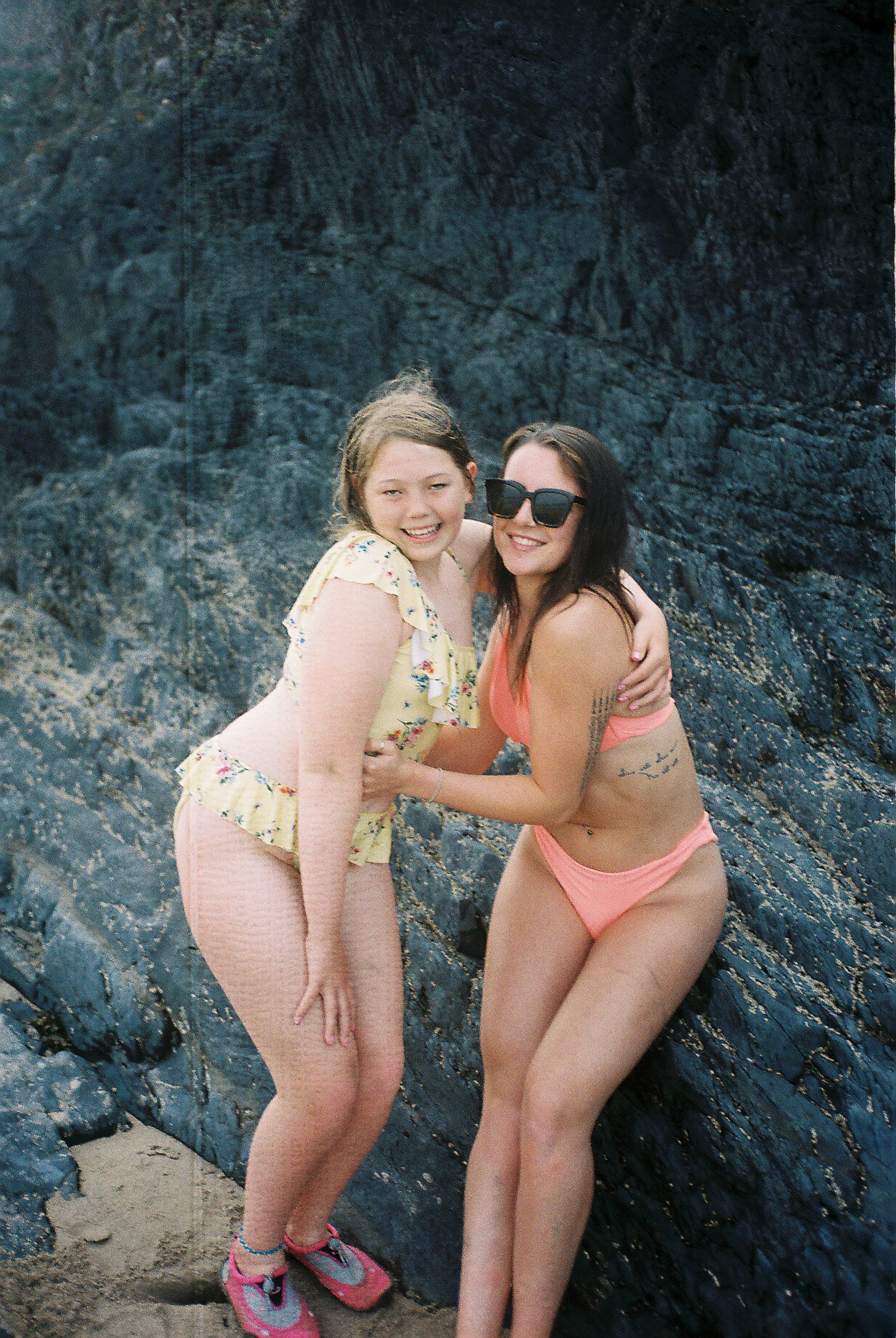
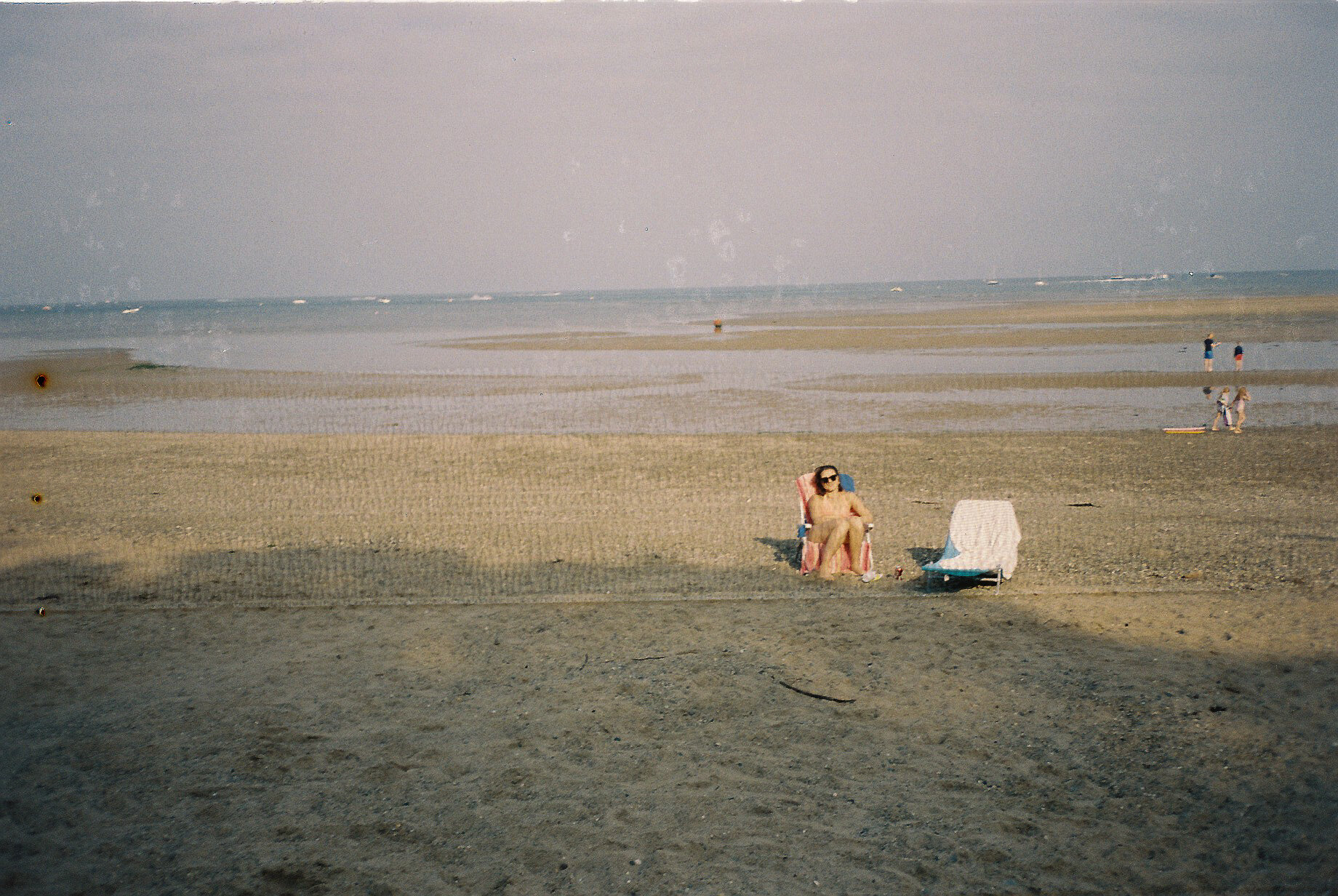
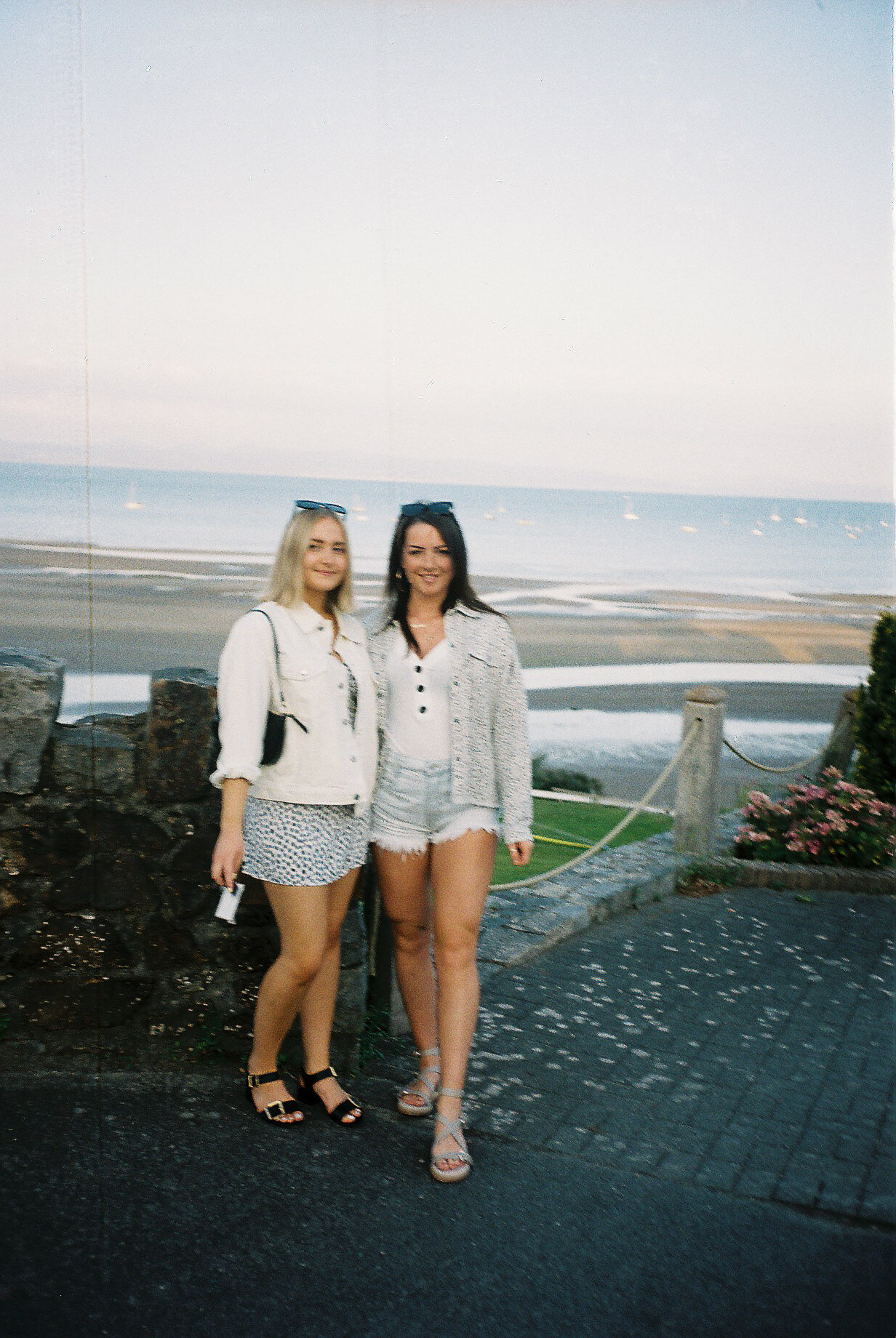
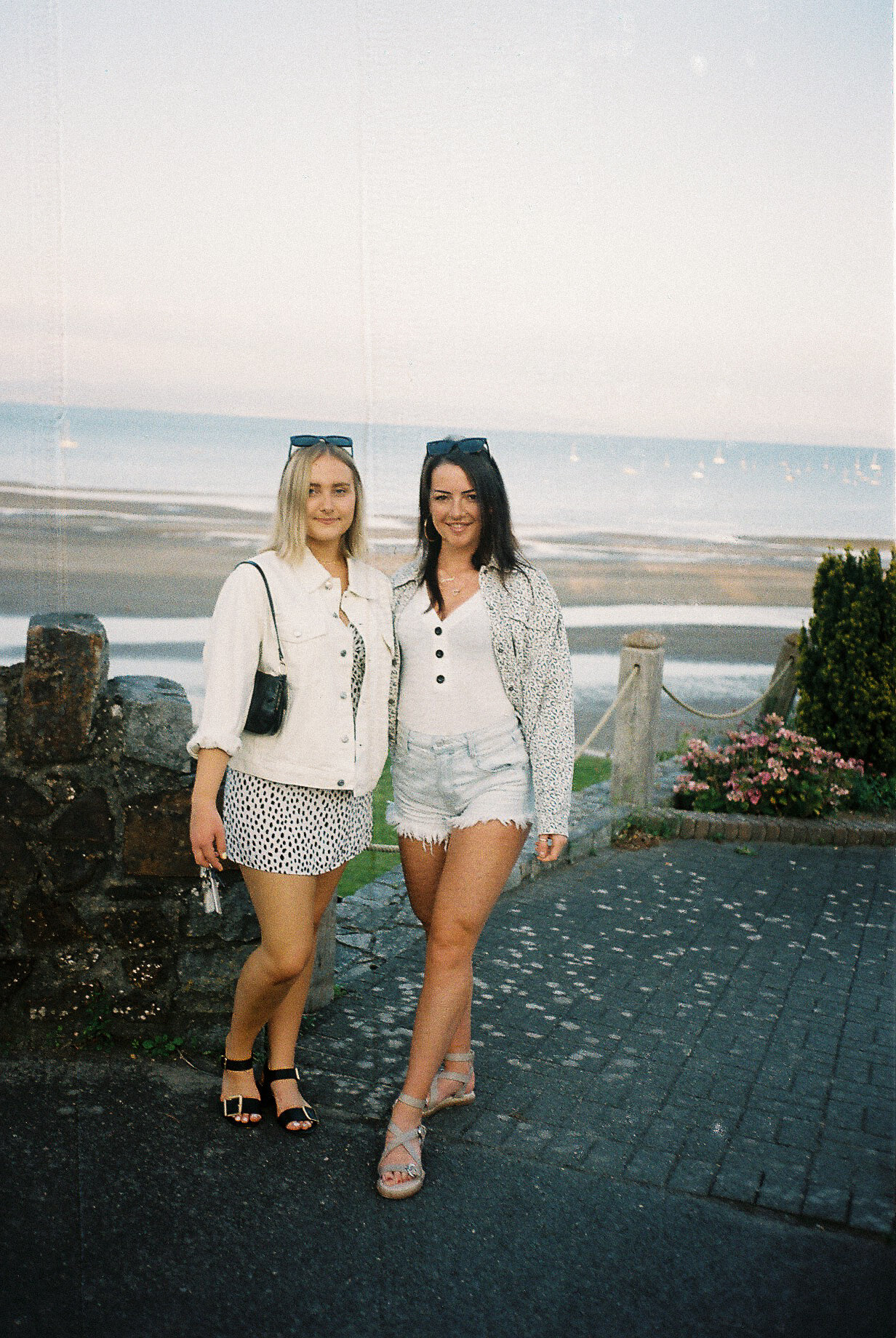
August 2020 on 35mm Film
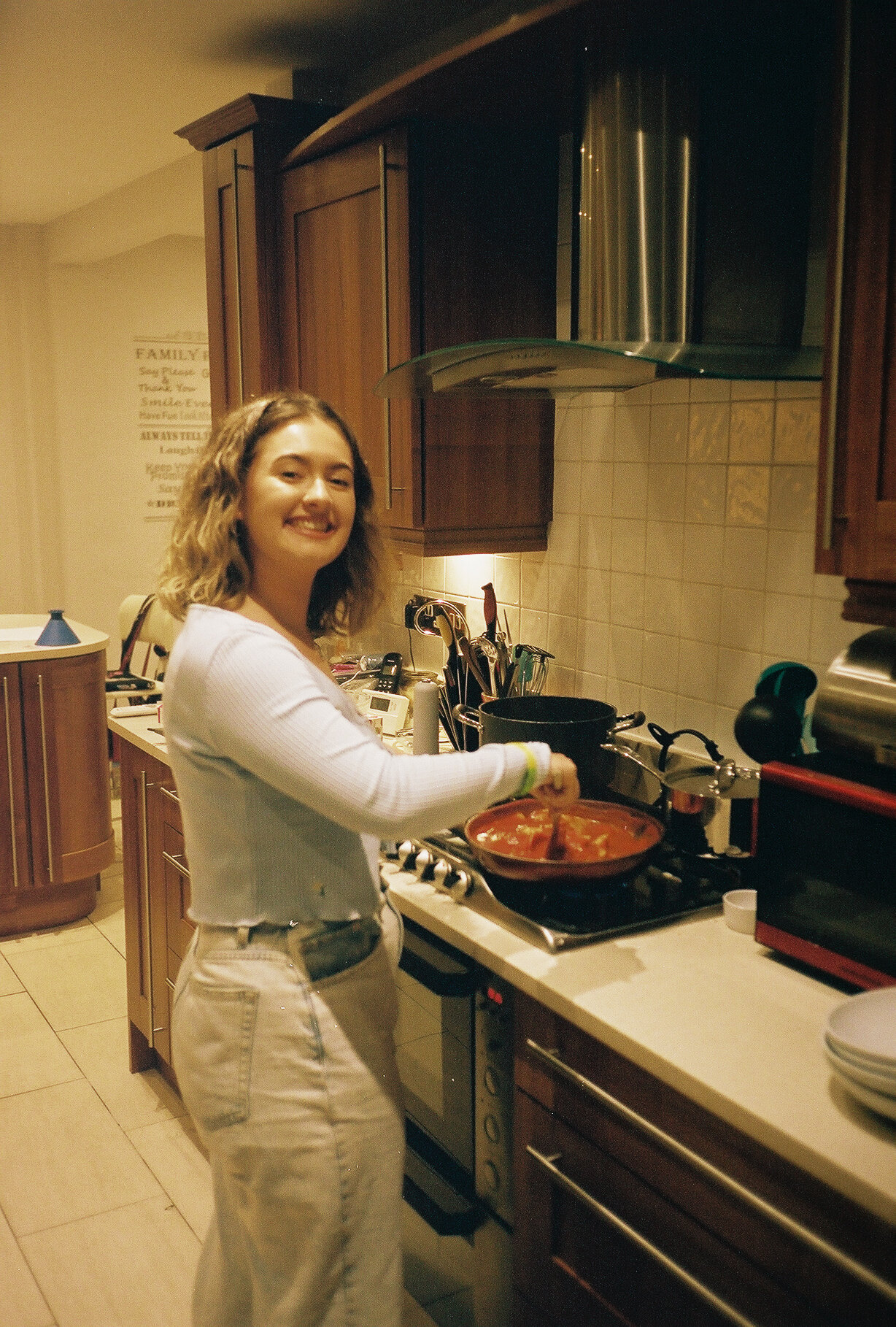
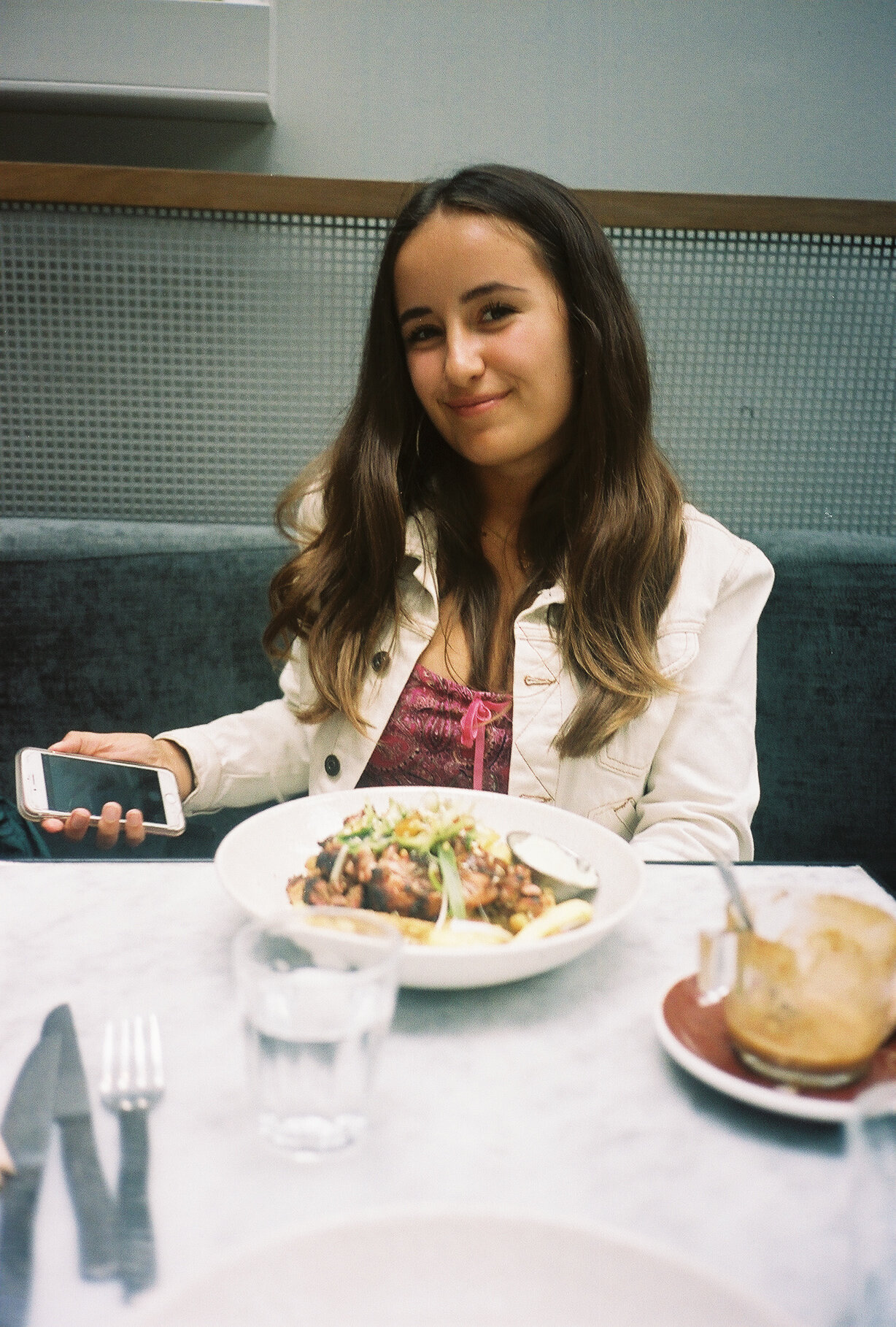
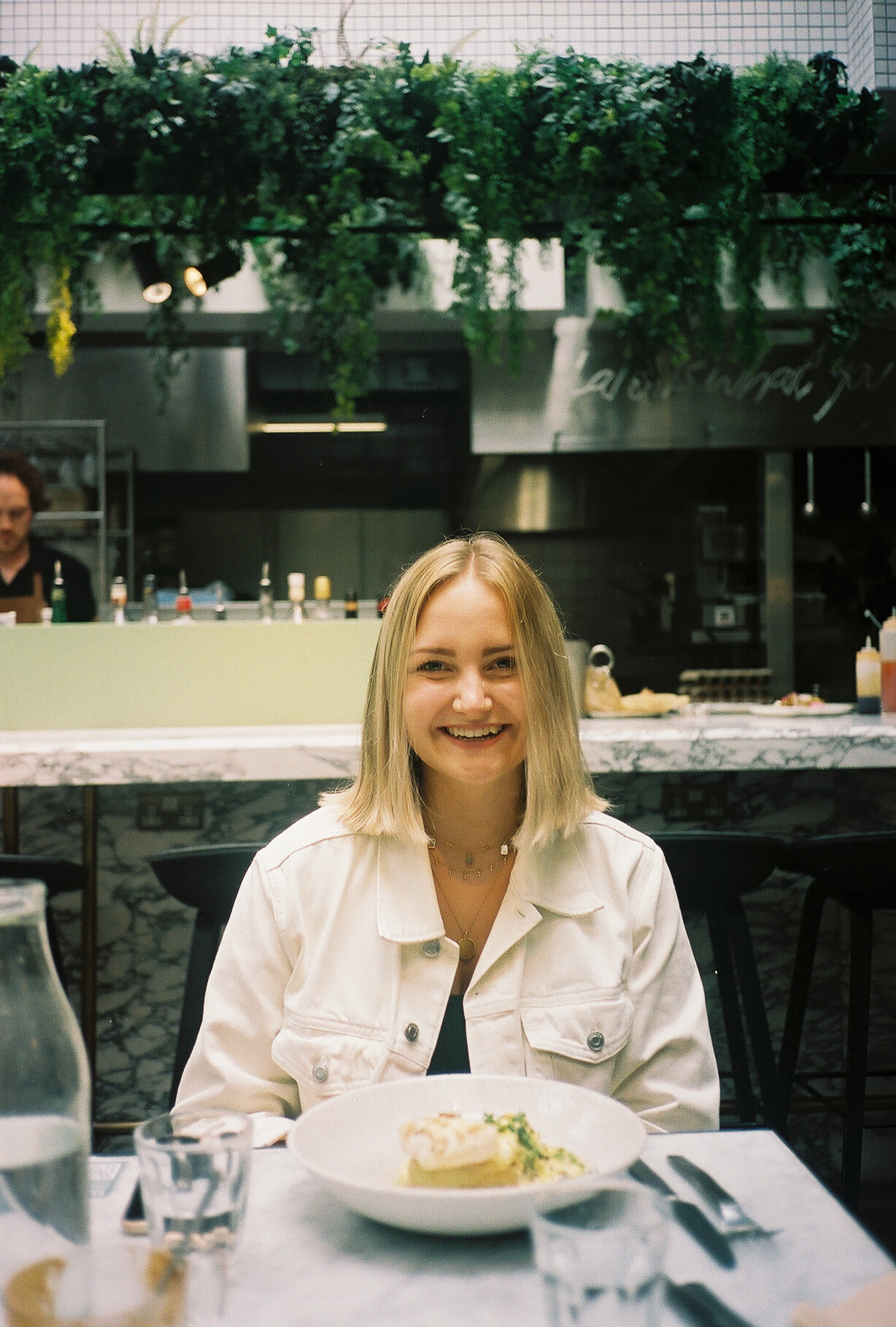
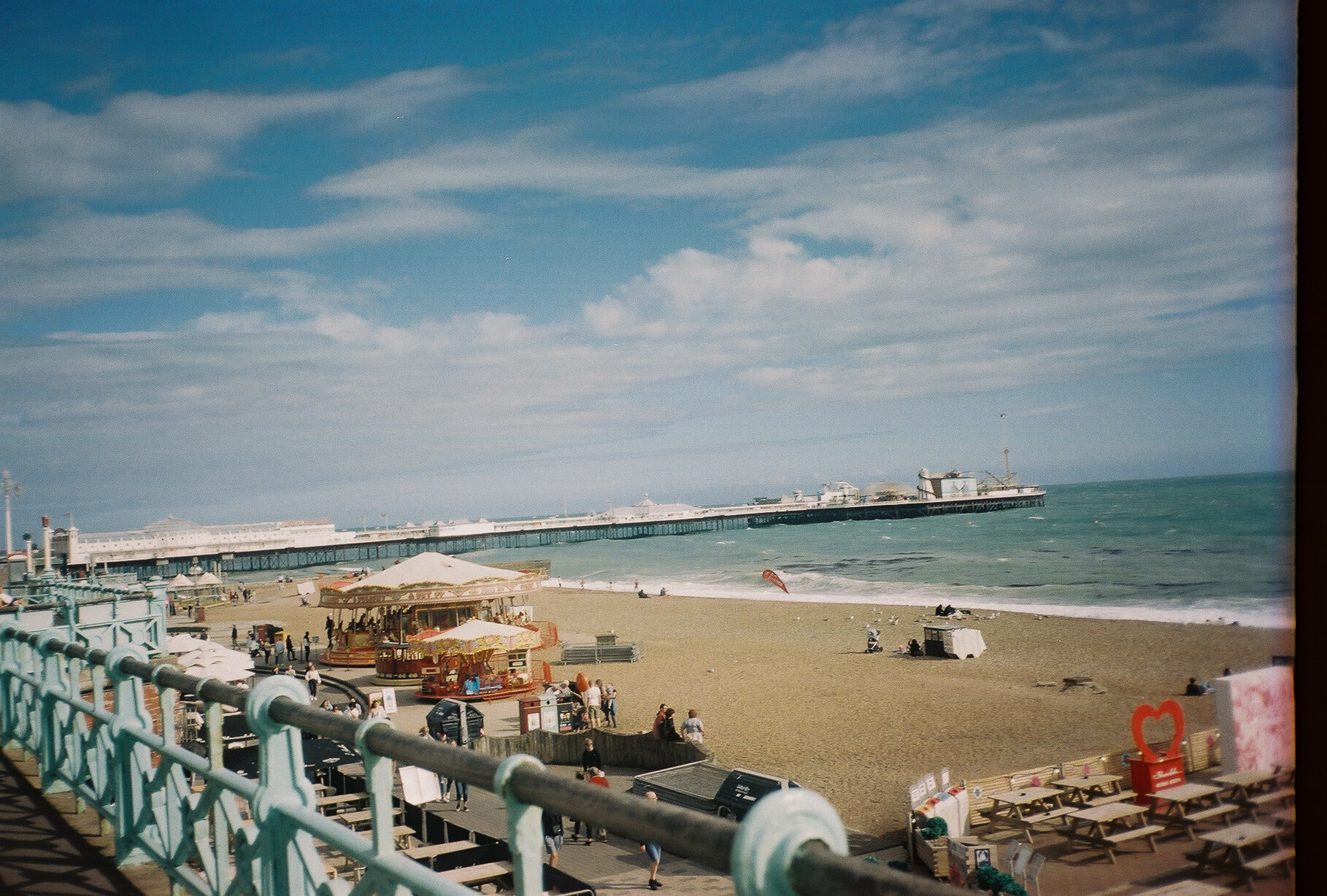
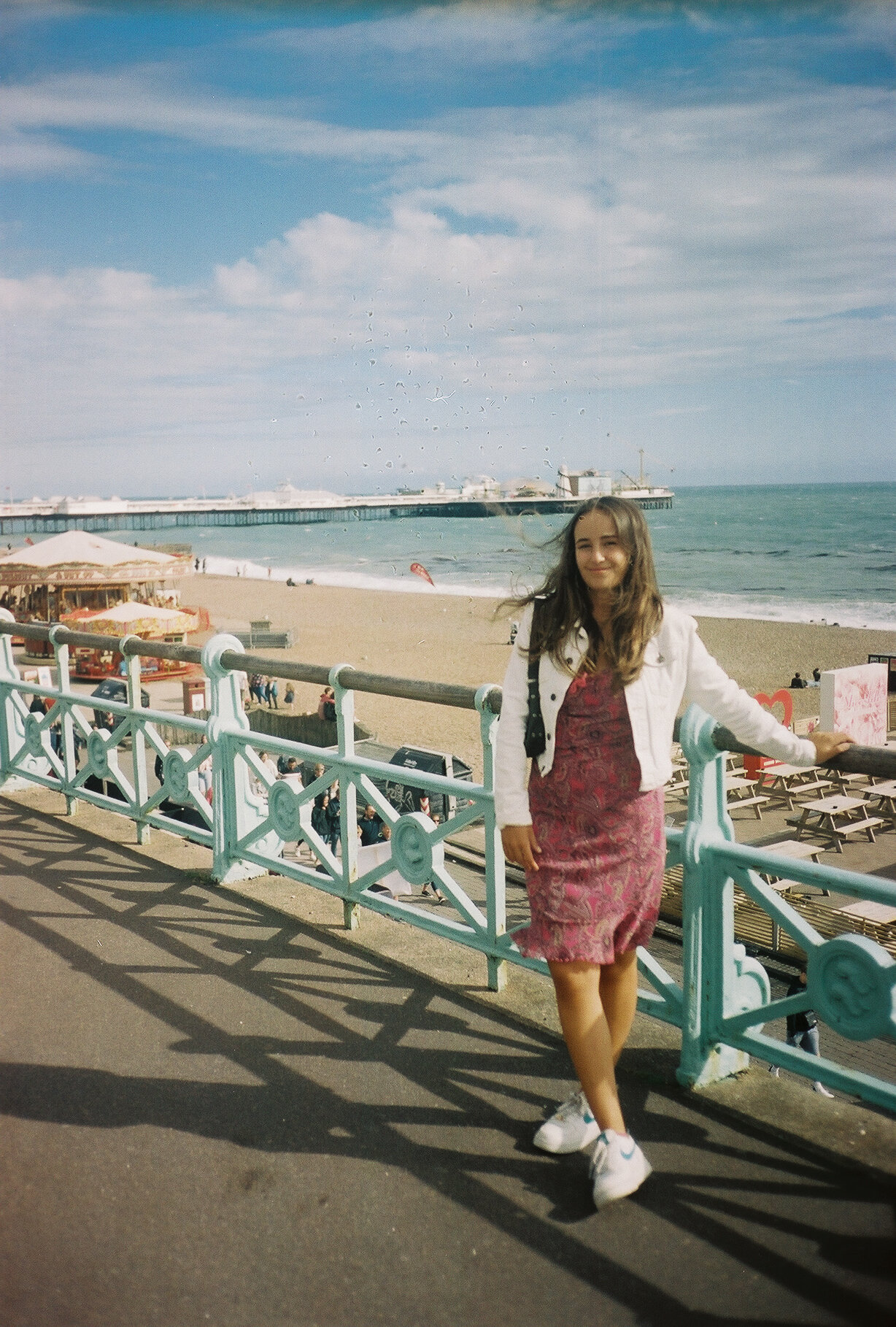
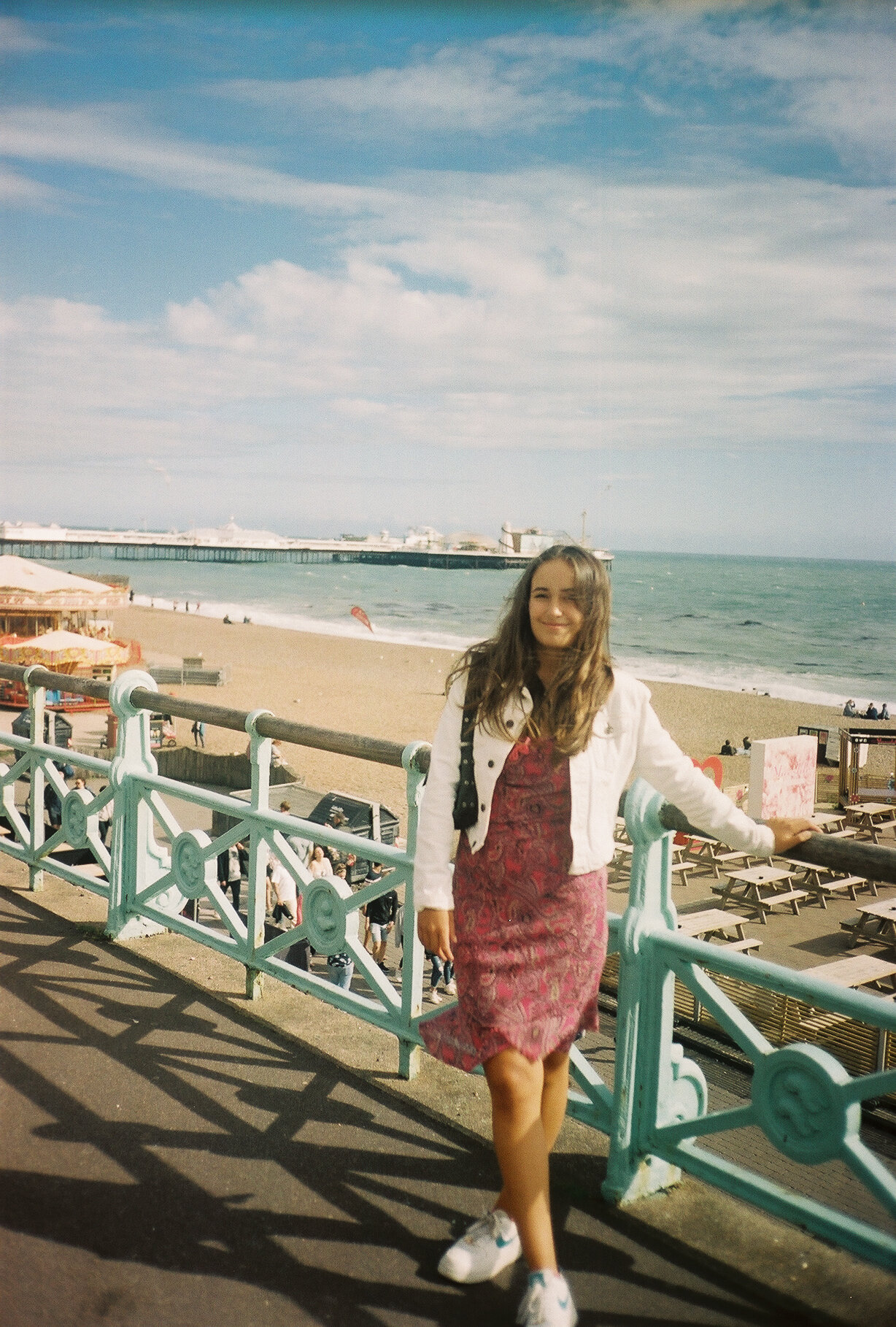
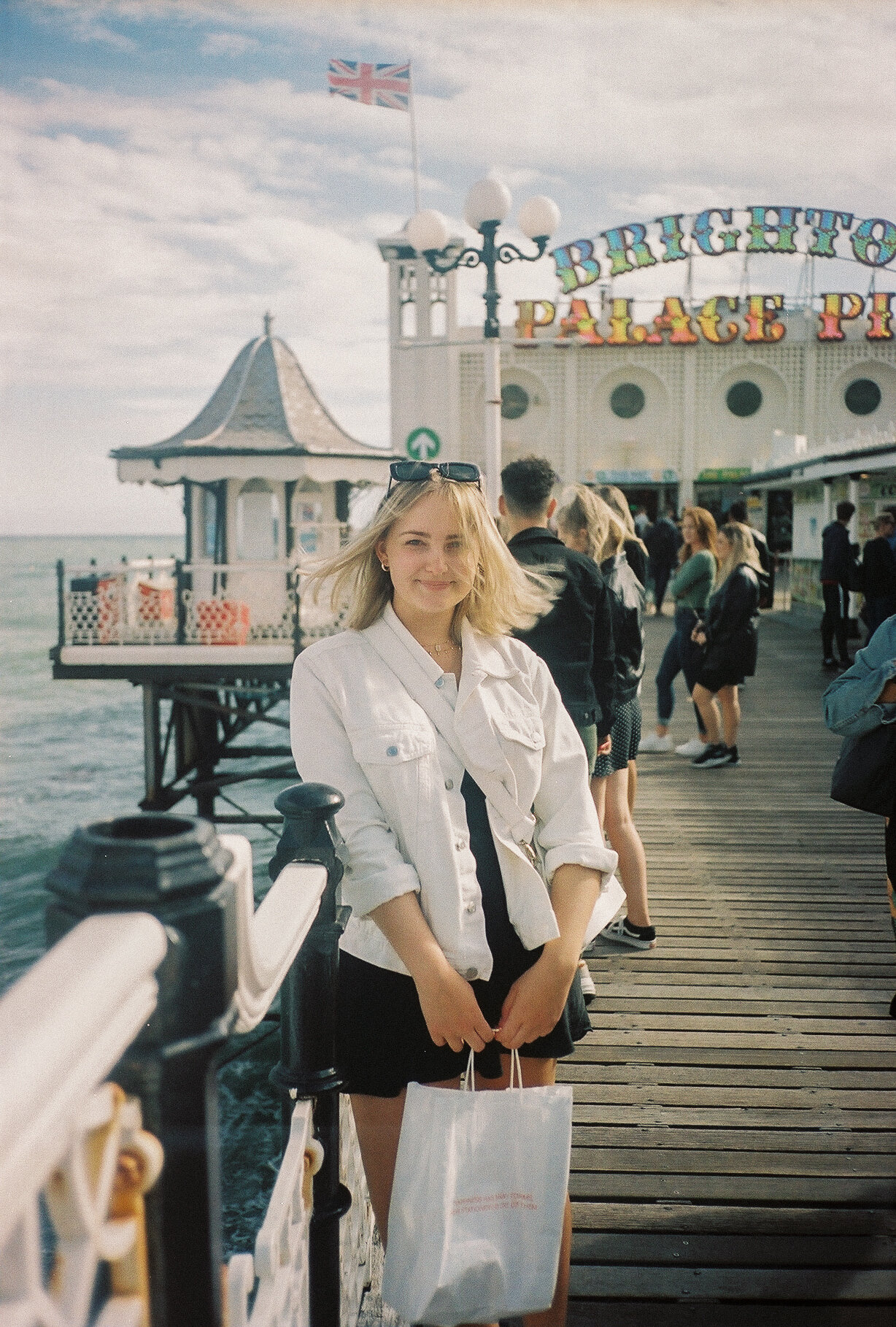
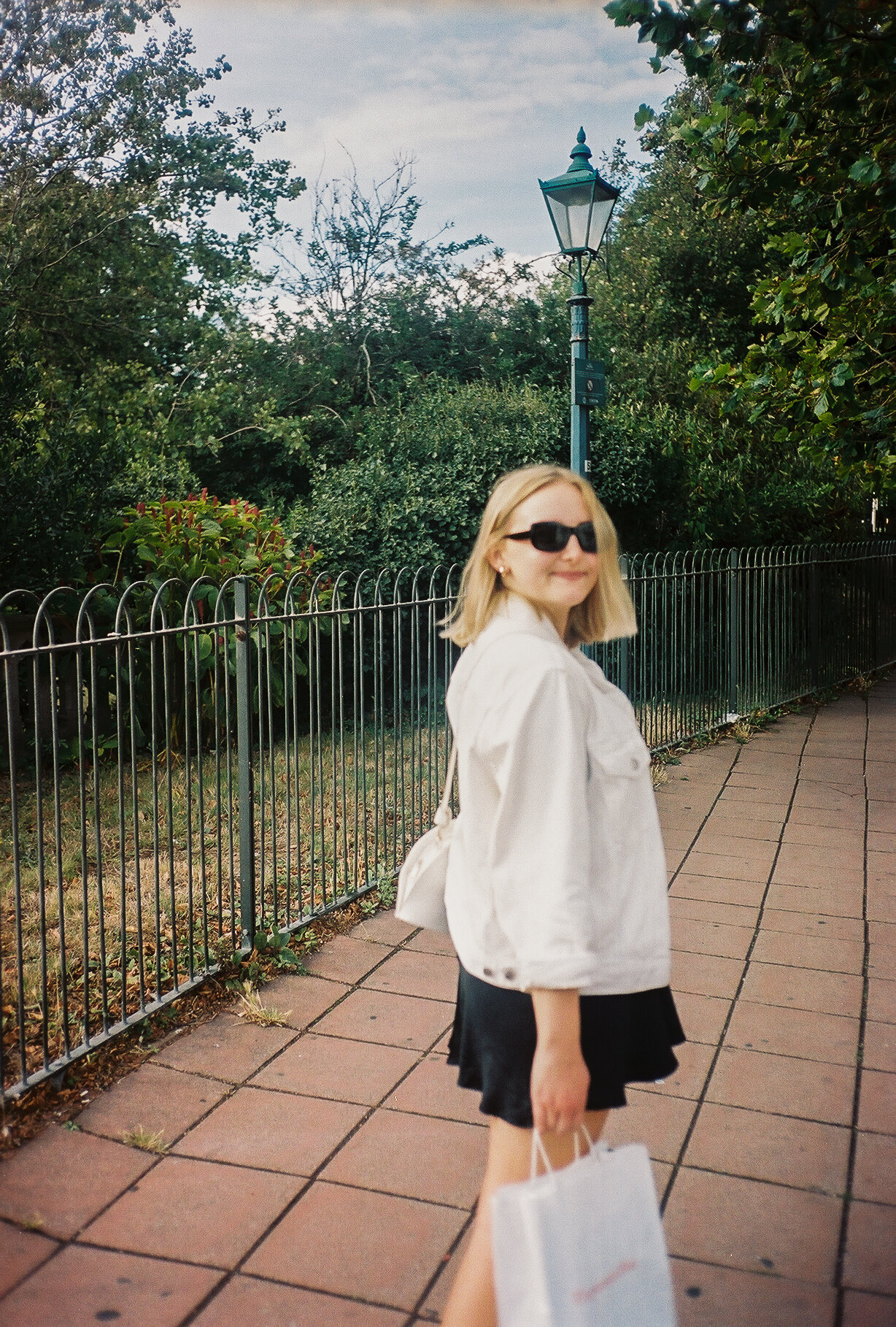
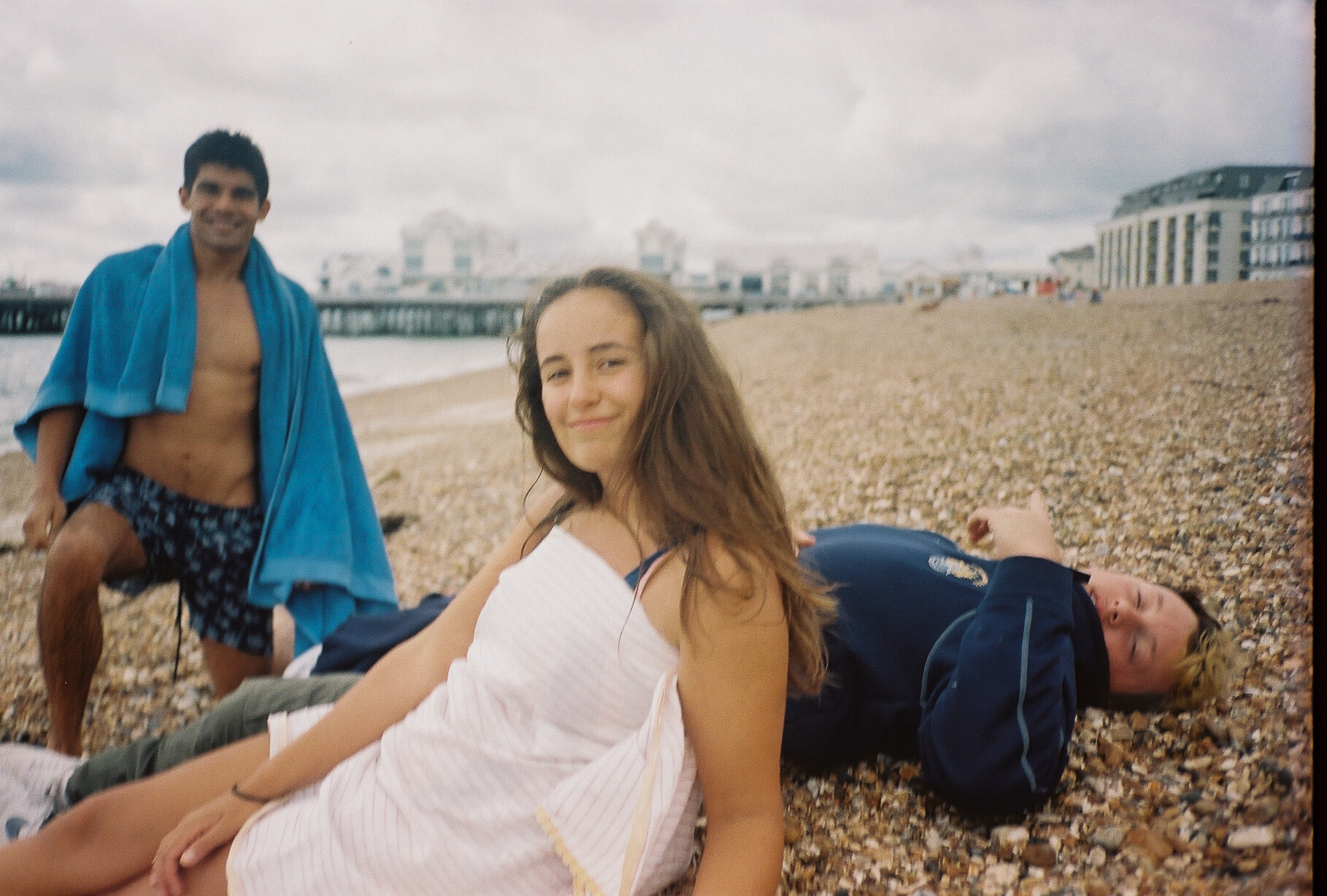
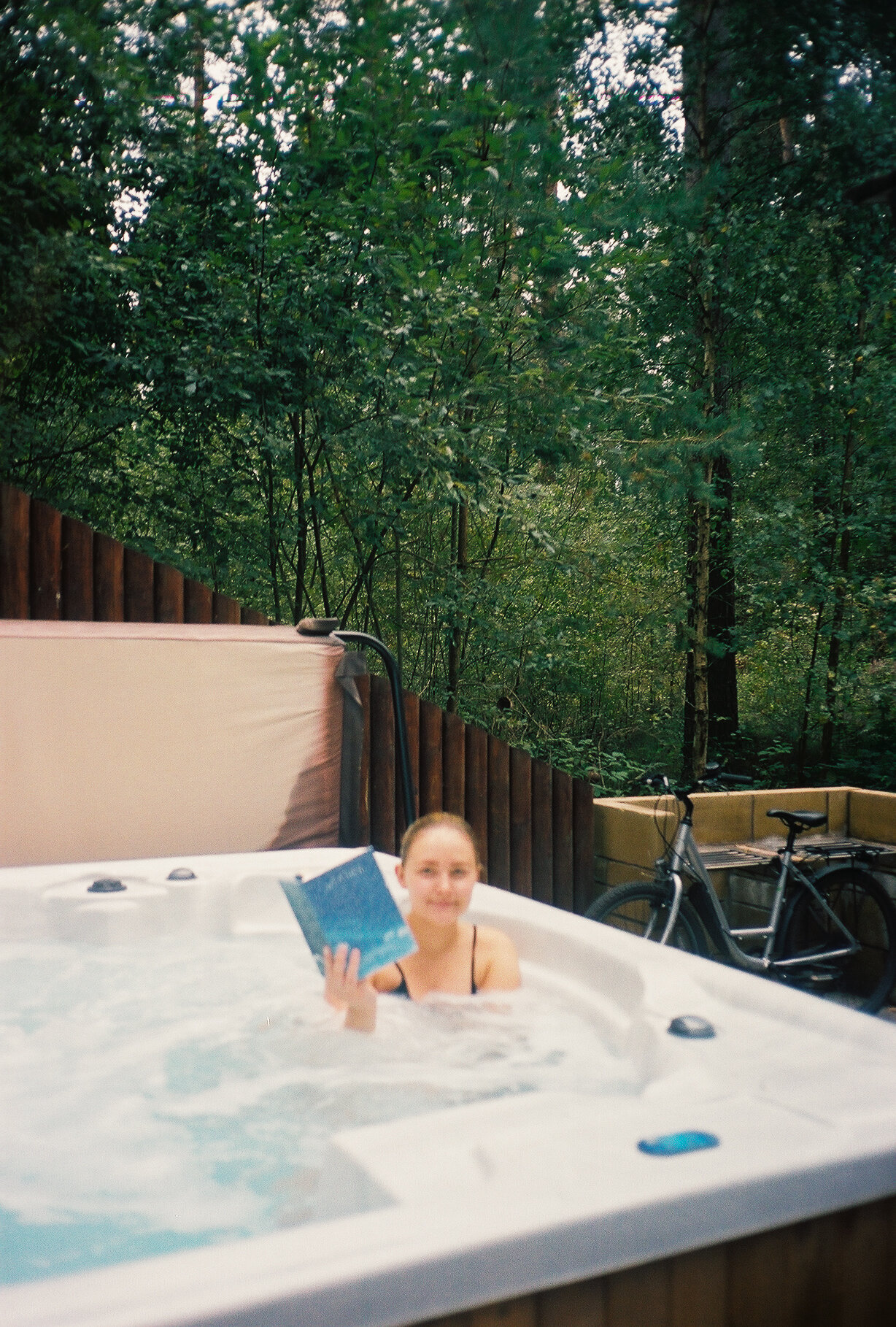
Despite coronavirus, I had one of my most social August’s ever and documented most of it on film. So here’s some photos from a week in Wales, a long weekend in Portsmouth, a day trip to Brighton and a rogue photo of me in a hot tub at Centre Parcs…

The Monthly Media Catchup: Everything I Read, Watched & Listened To | August 2020

The end of August is always a bittersweet time for me because summer is my favourite time of the year and there are very few things, in practice, that I like about winter. But I also love the start of a new school year, and although this year is the first one I’ve spent out of education, I still have that ‘back-to-school’ feeling and I appreciate the order and structure that comes with it. So whilst I’m sad to be saying goodbye to what was actually one of my most social summers ever, despite coronavirus, I am looking forward to a few more nights in and longer days at my desk (give me 3 weeks - maximum - and I’ll be over it).
Usually, August is a month of relaxation for me, as I go on holiday to escape the world and relax. But this year I’ve been going on UK holidays and visiting friends, in order to re-enter the world and catch up on all the socialising I missed out on during the months we spent in lockdown. With that, I’ve consumed far less culture than normal and I actually have no TV shows or films to report on. I’ve spent barely any time sitting down in front of the TV this month and when I have, I’ve been watching, to my shame, Glee. This started as something I’d watch when I was hungover but I spent so much of my time hungover in July and August compared to normal, that I just decided to start watching it full-time. I still have a couple of seasons to go, though, so I’ll report on that next month, probably.
This month, it’s just books, podcasts, articles and music then. I’ve read less books than usual, but the ones I have read have all been phenomenal. I’ve also become kind of obsessed with Ali Smith’s seasonal quartet… despite never having read any of the books. I’ve ordered Autumn* though and it’s at the top of my to be read list for Autumn, as I’ve been fascinated by all the long reads on Smith’s seasonal quartet coming to a close. I started subscribing to Guardian Weekly this month, so the article section is a little bit Guardian heavy and there are some articles I’m recommending that are print only, but I’d really recommend subscribing as the magazine is great.
I’ve also discovered a podcast which I would easily describe as my favourite podcast ever. Much like July though, I’ve been listening to less podcasts, generally, and more music, although my playlist is a weird one this month. A strange thing happens every August where I start listening to pop music I never normally listen to and that’s been intensified this year by the release of WAP. As well as that, I’ve been loving Mahalia’s album, which is very in-character for me. Rambling introduction aside, here’s the small amount of things I read, watched and listened to this month…

books
Small island by andrea levy | ★★★★*
Small Island was this months’ book club pick (if you didn’t read last month’s MMC, my book club is collaborating with the Women’s Prize to read three past winners of the prize) and it’s one I’ve wanted to read for a while. The novel is concerned with the Windrush Generation and explores the lives of four characters: Hortense who arrives in London from Jamaica in 1948, Gilbert Joseph, a black man who fights for Britain in the war but is treated as a second-class citizen in post-WW2 Britain, Queenie, his white female landlord, and Bernard, Queenie’s husband who she assumes has died in the war.
Levy’s constructions of voice are so impressive. Polyphonic novels like this one rarely create four equally endearing characters, usually one stands out as superior. But I enjoyed every single narrative in this novel and appreciated the depth created around each of the characters. A beautiful novel that could be the definitive lesson, in my opinion, in pacing plot. 4.5 stars.
intimations by zadie smith | ★★★★★*
When I found out Zadie Smith had been writing a collection of essays during lockdown, it felt like the months I spent not being able to leave the house might have been worth it. I’m joking, obviously, but I can’t tell you how much ease Zadie Smith’s non-fiction writing brings me. It’s so comforting to know someone is thinking about the world we’re living in so intelligently and her writing style is everything I aspire to. Although if I could achieve 1/100th of what Zadie Smith achieves when she writes an email, even, I’d be happy. Here’s an excerpt from the book I loved:
But the young man in his twenties is still in peak dreaming season: a thrilling time, an insecure time, even at the best of times. It should be a season of possibility. Economic, romantic, technological, political, existential possibility. Yes, among all the various relativities to be considered, age is the one that can’t be parsed. The style of Cy - the style of all young people - now radically interrupted.

weather by jenny offill | ★★★★*
Jenny Offill is another author I admire. Literature that experiments with form isn’t something I always enjoy, but Offill strikes a balance that it is difficult to strike, that is challenging the reader, whilst also allowing the book to flow in a way that makes it easy to read. Weather, shortlisted for the 2020 Women’s Prize for fiction, explores what it means to live through crisis, namely, an environmental crisis. Lizzie, the protagonist, is a librarian and is navigating a world which we might assume is our current world, but also could be any world in crisis, which makes it a disconcerting read. She’s also navigating her family life, looking after her alcoholic brother, her unsure marriage, her mother and her son.
Like Offill’s novel Dept. of Speculation, Weather’s prose is fragmented and it’s not always completely clear what is taking place. But I think this is an intentional stylistic choice and one that allows you to experience the world of the novel in the same way her characters do: floating through it, acknowledging that things are unsure, but inevitably continuing forwards, soaking up all it offers you. One of my favourite moments from the novel was this:
Young person worry: What if nothing I do matters?
Old person worry: What if everything I do does?
podcasts
Brown girls do it too | ★★★★★
This podcast is everything I could ever want from a podcast and more. The concept is: three brown women who have never met before meet weekly to discuss every single detail of their sex lives, from masturbation, to ‘losing their virginity’ to the appearance of their vaginas. Their aim is to break down taboos around brown women talking about sex. But Poppy, Rubina and Roya are potentially three of the funniest people I’ve ever encountered, so I spent almost the entirety of the 4 hours it took me to listen to Brown Girls Do it Too belly laughing. It’s refreshing how candid they all are in talking about sex and I think everyone could learn so much from listening to it. I would pay so much money for a second season.
individual episodes:

articles
Intimations by Zadie Smith review – a wonderful essayist on the lockdown | The Guardian
Cast Adrift | Guardian Weekly (Print only)
If you’re not terrified about Facebook, you haven’t been paying attention | The Guardian
A Very Long Year: Ali Smith’s Seasons | Guardian Weekly (Print only)
music

The Monthly Media Catchup: Everything I Read, Watched & Listened To | July 2020

Affiliate links are marked with a *
I think every year when it gets to July, half of my conversations with any given people begin with the statement something along the lines with, “I just can’t believe it’s July already! Where does the time go?” But this year, almost all of my conversations feel like they begin with that and not just because it’s an easy form of small talk but because we’ve spent most of 2020 at home, living the same day over and over again. With the opening of bars and restaurants this month, I seem to have temporarily become an extrovert, as the idea of getting out the house is more appealing than it ever has been to me. I’ve been soaking up all the social contact I can get but, with that, have been consuming less culture than usual.
The culture I have consumed, however, has been great, including some easily binge-able TV series that total less than 10 episodes each (ideal for commitment-phobes like me) and some really interesting books. As seems to be a theme since cinemas have closed, I haven’t watched many films. In fact, I haven’t watched any this month, just a documentary that I enjoyed so much I’ve been thinking ever since I need to watch documentaries more, although that’s yet to happen. I’ve been moving away from podcasts and have started to listening to music more often, so there’s a playlist this month. But I’ve largely been listening to albums that were released during my teenage years (as everything else about my life is reflecting them at the moment): Drake’s Take Care, Frank Ocean’s channel ORANGE and Beyonce’s BEYONCE, which I think I’ve decided is my favourite Beyonce album, although that’s an almost impossible decision.
Preamble over, here is everything I read, watched and listened to during the month of July this year…

BOOKS
When I lived in modern times by linda grant | ★★★*
At the beginning of lockdown, I started a book club with some friends from uni, as well as some people who I know call friends who I had connected with on social media. We met on zoom weekly to discuss what we’d been reading individually as well as a discussion topic that varied each week. As lockdown came to an end, I saw an opportunity for reading groups to get involved with the Women’s Prize initiative #ReadingWomen, a project to encourage people to read previous winners of the Women’s Prize. We were sent three books, Small Islands by Andrea Levy, The Lacuna by Barbara Kingsolver and this one, When I Lived in Modern Times by Linda Grant.
The idea of this book really appealed to me, so much so that I actually bought it myself earlier in the year (it was actually on my last shopping trip before lockdown began). It follows a young Jewish woman from London who emigrates to the future Israel in 1946. I am shamefully uneducated on the Israeli-Palestinian conflict and this book certainly helped to provide some more context on the issues surrounding it, as well as the extra reading I was encouraged to do as a result of reading it. The protagonist is young and self-centred and, as a result, the novel presents the conflict very much from the perspective of a Jewish person. Whilst this was valuable in some ways, as her character certainly both encouraged and discouraged empathy towards the Israeli experience in very nuanced ways, I do think I would have preferred if the novel would have offered a more balanced outlook on the conflict, as there was a noticeable lack of Palestinian voices. Perhaps this is down to my own lack of education, as if I was educated on the subject I could have considered the book and its slightly biased point of view objectively but I do also think that, with it being such a complicated and sensitive issue that so many people lack education on for whatever reason, it’s important to always depict differing experiences when writing about this conflict, fictionally or otherwise.
how do we know we’re doing it right? by pandora Sykes | ★★★★
Pandora Sykes is one of my favourite cultural critics and I read every article she writes, as well as obsessively listening to her podcast, The High Low. So, obviously, I was very excited about her book (I’ve had it on pre-order for over a year). How Do We Know We’re Doing It Right? is a book of essays that tackle subjects that are distinct to the 21st century, perhaps even exclusively the 2010s. From wellness, to fast fashion, to the epidemic of business, the book is wide in its scope but does a great job at picking up on topics that are all somewhat relevant to each other.
What I love about Pandora’s voice, especially in this book, is that she is unconcerned with offering authoritative perspectives on subjects. Whilst I write and read opinion pieces regularly, I often find myself feeling exhausted by them and their mission to offer answers on subjects in 500 words or less, even if what they are writing about requires far more exploration than that. Pandora’s ethos in this book seems to be focussing on asking questions, rather than answering them and in doing so she pokes holes in phenomenons of daily life that have become normalised for most of us, offering nuanced and unique thoughts on topics that are written about regularly. It’s research heavy, which I appreciated, but also manages to be very easy-to-read and I flew through this book in a few days.
lote by shola von reinhold | ★★★★
I think the concept of this novel will either immediately appeal to you or it won’t, but its plot is almost entirely up my street. It follows present-day narrator Mathilda’s fixation with the forgotten black Scottish modernist poet, Hermia Druitt. I wrote my dissertation on an author who was marginalised from the modernist movement and the thing that I find most interesting about the modernist movement is the marginal spaces within it. In academic spaces, I feel like there are constantly discussions about rediscovering the archive and this is largely achieved in these spaces by reading books that were otherwise forgotten. But I think LOTE offers a way to rediscover artists and writers who have otherwise been neglected in a way that feels really modern.
The form of the novel is really interesting, with excerpts from various texts including a book called Black Modernisms that details the lives of various black people who were involved with the modernist movement, which was really educational. Alongside that, it follows Mathilda, who is fixated by the historical group The Bright Young Things and is involved in archival research concerning them in a London museum, when she comes across a photo of Hermia. The rest of the novel takes place in Dun, as Mathilda applies for a residency there as a means of finding somewhere to live and also discovering more about Hermia, who spent a great deal of time in Dun. The residency she is a part of is made up of highly pretentious academic-type people, which made for some hilarious moments in their extremely niche accuracy, but her investigation of Hermia offers fascinating insights about beauty and luxury, particularly how these things can exist and can hold power when we consider them outside of their usual boundaries, that is, within a system of capitalism (this was also something my dissertation was concerned with and something I am fascinated by).
This book is so intensely literary in a way that usually annoys me (e.g. Woolf’s Mrs Dalloway or Joyce’s Portrait of an Artist) but I really enjoyed it here. I think it’s because Von Reinhold writes with so much self-awareness and they are also interested in amplifying marginalised voices rather than the voices of those who already hold power in many ways, as the Woolf and Joyce novels do, in my opinion.
I’d highly recommend this book if it sounds like something that would appeal to you. It was published this year as part of Jacaranda’s Twenty in 2020 initiative, as they become the first publisher to publish 20 titles by 20 Black British writers in one year and there are some other books on the list that I am keen to read, so I’d recommend taking a look at that!

TV
hollywood (Netflix) | ★★★★
Set in post-World War II, you guessed it, Hollywood, this series follows aspiring actors and filmmakers who are trying to make it in the world of show business. It’s a Ryan Murphy series and it received really bad reviews, but I loved every episode and I’m coming to realise that I am a big fan of Ryan Murphy’s work (see also: my next recommendation). Hollywood presents a somewhat utopian vision of the American filmmaking industry, as producers and filmmakers put themselves on the line to create diverse film. It’s not historically accurate but I found it to be very moving, to see what could have come out of self-sacrifice and to see just how powerful diverse representation is in film (I sobbed throughout the entirety of the final episode).
the politician season two (netflix) | ★★★★
This is another Ryan Murphy show with fairly bad reviews but, again, I enjoyed it. I think I might have enjoyed Season Two of The Politician more than season one which is not the general consensus. But I loved the New York setting and its satirised depiction of how American politics and, in particular, American elections work. I loved episode five, which profiled a mother and daughter; the latter was voting for Peyton, the protagonist, and the former, his opponent. This episode does what the show does best, represent current issues in a humorous but reflective way.
the morning show (apple tv) | ★★★★
I saw this show promoted so much at the start of the year but, as I often do, waited a few months to watch it. It tackles issues surrounding the #MeToo movement as the host of America’s most popular morning show is fired as a result of predatory behaviour. It stars Jennifer Anniston and Reese Witherspoon who were really convincing in their roles. I was skeptical about having two such high-profile actors playing alongside each other (especially because I see them, first and foremost when they’re together, as Rachel and her sister) but The Morning Show is really a credit to their acting ability. I thought the series did a great job at exploring the nuances around the #MeToo movement, particularly cancel culture, and how high-profile figures claim to have had everything taken away from them whilst still having, ahem, a mansion in upstate New York and a 10 bedroom apartment in Manhattan.
FILM
everything is copy (Sky) | ★★★★
Nora Ephron is a writer who I turn to when I’m looking for something easy to read, wise words and a good old belly laugh. This documentary tracks her entire life, particularly her career and I found it totally fascinating.
PODCASTS
prose before hoes | ★★★★
If you’ve read one of my Monthly Media Catchups before, you’ll know I love a book podcast. This is a new one that combines alcohol and books, as the hosts, Camilla and Elle, discuss everything they’ve been reading whilst having a drink. As someone who doesn’t necessarily enjoy the taste of alcohol, and largely drinks, like a teenager, to get drunk, I enjoy the books part of the podcast more than the alcohol part. But I have similar reading tastes to the hosts and often am reading the same books they are, which makes for great listening. Also, I love the title of this podcast.
doing it right with pandora sykes | ★★★★
Alongside her book, Pandora started this podcast to explore some of the topics her essays are interested in, interviewing experts in their fields and pop culture figures. I’d highly recommend the episode with Sinéad Burke in particular. She’s an incredible speaker and this episode was so educational on issues surrounding disability.
individual episodes:
ARTICLES
How to Report on Internet Culture and the Teens Who Rule It | NY Times
Eliza Clark: ‘I’m from Newcastle and working class. To publishers, I’m diverse.’ | The Guardian
MuSic

Lockdown on 35mm Film
Here are a collection of photos I took over the past few months which kind of represent my experience of lockdown, apart from the fact that they were mostly taken on sunny days (and there was a fair bit of rain) and there are no photos of me in pyjamas (of which I spent a lot of time in).






The Monthly Media Catchup: Everything I Read, Watched & Listened To | June 2020

June 2020 is a month that will go down in history as a time when the Black Lives Matter movement gained huge traction after the tragic death of George Floyd on 25th May 2020. I hope it is the start of an even bigger movement that changes the way we think about race and makes real difference to the lives of black people. I have been making more effort than normal this month to read books by black authors, including books that educate me on the black experience in the U.K and the U.S and this is something I’ll be doing for the rest of my life, not just this month, although it feels particularly pressing right now. I shared some books that I have found to be extremely educational on my Instagram page including Why I’m No Longer Talking to White People about Race by Reni Eddo-Lodge, Citizen by Claudia Rankine and Sister Outsider by Audre Lorde, but I thought I’d share some works here by black authors that were not written on the basis of educating their readers on race (although many of them are educational regardless):
Stay With Me by Ayobami Adebayo (my favourite book)
Americanah by Chimamanda Ngozi Adichie
My Sister the Serial Killer by Oyinkan Braithwaite
What We Lose by Zinzi Clemmons
I Know Why The Caged Bird Sings by Maya Angelou
Their Eyes Were Watching God by Zora Neale Hurston
White Teeth by Zadie Smith
Changing My Mind by Zadie Smith
The Underground Railroad by Colson Whitehead
The Color Purple by Alice Walker
White is for Witching by Helen Oyeyemi
There are more recommendations of books by black authors in the books section of this months Monthly Media Catch Up, as well as the usual TV, film, article and music recommendations.
books
brit(ish) by Afua hirsch | ★★★★★
I went to a talk with Afua Hirsch at Manchester Literature Festival in 2018, where she discussed with Nikesh Shukla some of the experiences and topics featured in this book. Afua’s experiences of what it means to be black in Britain really stuck with me, specifically the story of her name, as she spoke about how throughout her life, she resented people mispronouncing it but when she visited her mother’s home, Ghana, realised she too had been mispronouncing it her whole life. In Brit(ish), Afua explores details of her personal life in this way and relates them to the historical experience of black people in Britain. It’s a unique form that is so engaging, moving and it makes the research and history she recounts accessible in a way history books often aren’t.
The fact that it’s taken me so long to read this book makes me stare at piles and piles of my unread books and wonder what other gems are lying there that I’ve been putting off, because this was one of the best books I’ve read in a long time. Afua is such a beautiful writer and is so generous with her personal experiences, stories and family history. I am so thankful to her for writing this book.
It’s a must-read for every British person but especially white British people because it is so educational on Britain’s colonial history. If you’re from Liverpool, I urge you, in particular, to read this book as there are so many shocking details about the city’s black history, from its relationship to the slave trade to the death of Mzee Mohammed and so much more. I think often, and I’m guilty of this myself, Liverpudlians think Liverpool is a city that is totally progressive and innocent because it is so left-wing, but, whether we like it or not, it’s part of a country with a dark colonial past and is by no means exempt from the implications of that.
girl, woman, other by bernadine evaristo | ★★★★★
Some books are ruined by the hype surrounding them, as they inevitably fail to live up to the impossible standards set by booksellers, reviews and their impact on society. But some books are so unique, well-written and timely, that nothing could ever ruin them, not least that everyone is in agreement with regards to their brilliance. Girl, Woman, Other sits in the latter category.
Girl, Woman, Other tells the lives of 12 women who are mostly British and mostly black but vary in their ages, professions and life experiences. For a book that is separated into 12 distinct stories, it flows effortlessly and is absorbing in a way I didn’t think possible for a novel that doesn’t necessarily have a plot. I loved how the stories became interconnected at various points in the book and I also adored the writing style; there are few full stops in the book and too often, stylistic choices like this frustrate me. But this one made sense, as some stories read like poetry and was also made meaningful by the novel’s depiction of how people’s lives and stories inevitably weave together.

i am not your baby mother by candice brathwaite | ★★★★
I am very fussy when it comes to audiobooks, meaning I listen to very few. Generally, they have to be: non-fiction, personal, read by the author and, ideally, I can put a face to the voice or can at least recognise the voice. This one was ideal as I’d followed Candice on Instagram and heard her on a few podcasts. Plus, this is an incredible book and Candice is a brilliant storyteller.
In a similar style to Brit(ish), I Am Not Your Baby Mother is part memoir, part education. Candice recounts her experience as a black mother, as well as providing facts and figures on black motherhood more generally in Britain. The stories Candice tells are moving and shocking, from not being believed by doctors whilst she was life-threateningly ill after giving birth to her first child to making the difficult choice to move out of the city where she was born, London, when she had a son, for fears about knife crime and how it affects black boys and men in the capital.
I’d highly recommend this book, specifically as an audiobook, as well as following Candice on Instagram.
the vanishing half by brit bennett | ★★★
This new release was receiving all the hype on Instagram this month and I totally fell for it. Unfortunately, I think the high expectations I had of this book did tarnish it a little bit, but, nevertheless, I completely understand why so many people love it.
Set between the 1950s-1990s, it follows the lives of Desiree and Stella, mixed race twins who are born in the town of Mallard. Mallard is a town that almost exclusively houses mixed race people and its residents shun dark-skin black people. Desiree and Stella move away from the town when they are young but are separated for the rest of their lives when Stella tries to pass as white, succeeds and starts a new life as such, whilst Desiree continues to identify as black. This part of the novel was the strongest for me, as it explored the intricacies of colourism and allowed the reader insight into Desiree and Stella’s lives and thoughts.
The second part of the novel follows Desiree and Stella’s daughters, which I enjoyed less. The writing was still beautiful and the ideas fascinating, but, for me, the plot became slightly overcomplicated and I yearned for deeper insight into almost all of the characters.
I’d definitely still recommend reading this book as I enjoyed the reading experience on the whole, I just wish it was double the length it is so I could have stayed in its world for longer and got to know the characters better.
the new jim crow by michelle alexander | ★★★★
The final book I read in June is the most academic of them all. The New Jim Crow puts forward the argument that the war on drugs and the system of mass incarceration in America is an intentionally formed new caste system, a reincarnation of Jim Crow. I find it difficult to believe that anyone could read this book and not be convinced by its argument, as it is so well-researched and expansive, covering all elements of the criminal justice system in America and how it affects black people, from stop and search, to the court of law to how rights are drastically restricted for felons.
It also provides fascinating insights on how colourblindness came to be considered as a positive thing and why it is, in fact, a regressive way of considering race. It is research-heavy, which is useful, as I was constantly folding pages to come back to and I feel much more armed with facts and explanations to have discussions about systematic racism in America, especially with those who are skeptical that racism still exists. If you’re looking for the same kind of education, this book is a brilliant place to start. It was by no means and easy read and it took me a while to get through but it was so worthwhile.
tv
Dynasty (Netflix) | ★★★★
I asked for recommendations of TV shows on Instagram at the beginning of the month, tailored to my very specific taste in TV (keywords: women, camp, great clothes, basic). A friend recommended Dynasty, describing the main character as ‘Blair Waldorf on steroids’ which completely sold me on it and is also completely accurate. It follows Fallon Carrington, a young woman who is from an extremely rich family that lives in Atlanta, as she tries to become a successful businesswomen and tackle the kind of problems that crop up in soap operas like this one: sudden deaths, kidnapping and marital affairs. It’s the ultimate easy watching and there’s also a musical episode so, yeah, right up my street.
film
The Social Network (Netflix) | ★★★★
This is one of those films I’ve been meaning to watch for years and have only just got round to now. I am fascinated by the creation of social media and the corruption of Facebook in particular, so I was bound to enjoy this film. It made me want to delete social media more than ever but, alas, I’m still here but hopefully, with a more skeptical lens on the digital world. Also, Jesse Eisenberg was so great as Mark Zuckerberg and I’m kind of glad that I waited so long to watch this film because it means I got to see Zuckerberg fumble in front of AOC before watching it, which made Eisenberg’s portrayal of him as an awkward college student all the more convincing.
Easy A (Netflix) | ★★
I think I’ve definitely watched this film in the past, although I obviously wasn’t particularly impressed with it then either as I have no recollection of the plot. The idea for this film is ok, I guess, but it was ruined for me by the amount of insensitive jokes and remarks. I understand that films are a product of their time but the undertones of racism and misogyny in this film were unnecessarily frequent, to the point where I couldn’t enjoy it at all. Plus, 2010 wasn’t that long ago. The extra star is for Stanley Tucci- he was great.
Fleabag (Amazon Prime) | ★★★★
I managed to watch the original play version of Fleabag on Amazon Prime before it was taken down at the end of June and it was just as brilliant as the show. It’s so impressive that Phoebe Waller-Bridge manages to cultivate the same humour and pathos as she does in a full-scale TV production, whilst sitting alone on stage on a chair and I felt like it gave me even more insight into the character of Fleabag and the show. I’ve only knocked off a star because it just isn’t the same watching theatre online for me. If the conservative government allow for theatres to go under, it’s over for them bitches.
podcasts
Freelancing for journalists | ★★★★
I have been trying to navigate the world of freelance journalism this month with varying levels of success and this podcast has been a great guide. It covers finances, networking and pitching and is being made during the pandemic, so is relevant for the current moment too.
At home with Lily And anna | ★★★★
This podcast is the ultimate easy listening as bloggers Lily and Anna chat about their weeks as well as different discussion topics every week including body image, university and ageing.
individual episodes I enjoyed:
articles
I became a member at Gal-dem this month and have been really enjoying their content, including their newsletter. Some of my favourite articles from Gal-dem and other publications I’ve read this month are included here:
The Life of a Song: ‘I Wish I Knew How It Would Feel to Be Free’ | Financial Times
Falling Out of Love With Modernist Literature | LitHub
What does self-care look like when you’re black, in the media and can’t switch off? | Gal-dem
How Iceland Beat the Coronavirus | The New Yorker
How to love well, according to Daniel Jones, the editor of Modern Love | Sunday Times Style
Paths of desire: lockdown has lent a new twist to the trails we leave behind | The Guardian
Afua Hirsch On The Crucial Black History Lessons All Schools Should Be Teaching | British Vogue
Haim: ‘Men were like, “Get her off the stage, why is she making those faces?”’ | Independent
‘The waste and excess is more visible’: how coronavirus is shaking up fashion | The Guardian
I fell into the emotional labour trap, then my wife divorced me | Sunday Times Style
music
I didn’t make a playlist this month but I’ve been listening to Pip Millett’s entire discography, Rex Orange County’s latest album, Pony, lots of Destiny’s Child and Beyonce (anyone else become obsessed after rewatching her Glastonbury performance?). Since it Haim’s new album Women in Music, pt.III came out, I’ve been listening to that on repeat too. Oh, and this Spotify playlist:

The Monthly Media Catchup: Everything I Read, Watched & Listened To | May 2020

May was the month that I finally completed my English Literature degree. And how did I celebrate? By reading, of course!
But, seriously, the novelty of being able to read off-syllabus whenever I want is one I’m not sure will ever wear off and it’s been made even more exciting by the UK’s unseasonably warm weather. Waking up, heading straight to the garden with my book and taking breaks inside whenever I got too warm to watch an episode of Sex and The City? Maybe I could get used to this whole lockdown thing…
Books
mr salary by Sally Rooney | ★★★★*
After watching Normal People, I needed another Sally Rooney fix. Luckily, I’d ordered this short story after finishing her first and second novels last year and hadn’t got round to reading it. Mr Salary is about Sukie, who is returning home to Dublin, and her relationship with Nathan, a family friend she moved in with when she was a teenager because of difficulties at home. In typical Rooney fashion, it’s simple but endearing and explores the dynamics of a romantic relationship that is complicated due to external factors. I really enjoyed it and have since ordered two more books from this collection of Faber Stories by other authors, as I love the idea and the beautiful covers.
exciting times by naoise dolan | ★★★★*
Naoise Dolan has been compared to Sally Rooney, largely because she is an Irish millennial writer, I think, but perhaps also because, like Rooney, she writes about romantic relationships so well. Exciting Times follows Ava, who is living as an expat in Hong Kong and teaching English as a foreign language, and her weird living arrangement/relationship with a banker, Julian, as well as her romantic relationship with Edith. It’s witty and hilarious and almost every sentence carries socio-political commentary, but it is done in a way that somehow feels cleverly subtle. The commentary is largely focussed on being Irish and how this affects her experience of being an expat, as she is expected to teach Anglo-English as opposed to Irish-English, as well as the feminist politics of accepting money/housing off a partner, which I found really interesting. I absolutely loved this book and really recommend it. 4.5 stars.
I feel bad about my neck: and other thoughts on being a woman by nora ephron | ★★★*
I picked this collection of essays up on a weekend when I was feeling a bit off and couldn’t really get into any of the books I was trying to read. This one was perfect. These essays were written late in Ephron’s life and they are mostly interested in ageing as a woman. An essay that stands out to me in retrospect was actually about Ephron’s huge, rent-controlled, bougie apartment in New York, however, which provided me with at least a day of dreaming about living there. Like Eprhon’s most well-known novel, Heartburn, this collection of essays didn’t blow me away, but I devoured them in, basically, a day, as they’re such easy reading and can be a real tonic when you’re feeling a bit crap. But I don’t necessarily subscribe to the deification of Ephron, purely because there are other writers whose craft I admire more (see the next review) and I don’t think the topics Ephron discusses are anything revolutionary, although I enjoy how she manages to discuss everything with humour and a certain light-heartedness that really translates to the reader.
changing my mind: occasional essays by zadie smith | ★★★★*
Zadie Smith is my favourite non-fiction writer that I’ve read, even though her fiction, whilst I admire the writing hugely, is not my go-to. The precision, structure and self-awareness in her non-fiction writing is something I can only aspire to and I read and re-read every word in this collection so closely to try and get my head around how she does it. I’ve come to the conclusion that it’s just pure, natural genius.
The essays in this collection range from cultural commentary and reviews to personal essays to literary analysis. The only reason I’ve knocked a star off is because, at times, I had no awareness of the topics she wrote about, and I think the intended reader should have had some, and it did also feel that these essays had just been thrown together, rather than carefully curated. If this was a writer who hadn’t perfected her craft, I don’t think I would have enjoyed it at all. But the reason it took me almost 2 months to read is not down to lack of enjoyment but because I just really wanted to sit with and savour every sentence. My favourite essays were ‘Dead Man Laughing’, in which she discusses an almost universal experience, the death of her father, without cliche but in a way that is meaningful and uniquely touching, as well as her essay on ‘Rereading Barthes and Nabokov’. I want to include an excerpt from the latter that I think will resonate with everyone who has studied English Literature:
‘It’s probably for the best that [Nabokov] didn’t live to see the kind of post-Barthes (and post-Foucault) campus criticism that flowered on both sides of the pond during the eighties and nineties. Wild analogy; aggressive reading against the grain and across codes and discourses; a fondness for cultural codes over textual particulars. You remember the sort of thing:
The Trans-gendered Suitor: Refractions of Darcy as Elizabeth’s True Sister in Pride and Prejudice.
Daisy, the Dollar, and Foucault’s Repressive Hypothesis: Portraits of Sexualised Capital in The Great Gatsby
Please Sir, Can I Have Some More: Bulimic Rejections of Self in Oliver Twist.
I’ve written a lot of essays like this. And found it a wonderful thing, to feel so free. The novel was mine to do with as I wished, to read upside down, back to front or in entirely anachronistic terms. That kind of freedom makes writers of readers, liberating us from the passive and authoritarian styles we are taught in school (Hard Times = British education system in Victorian England). When we read instead in an active way we get to reinscribe dusty old novels into our own interests and cocnerns. There is a joy in getting someone to hand us their butterfly so we can spend twenty pages making the case for its being our giraffe.’
Some people call this collection of essays pretentious, and one GoodReads reviewer said Smith seemed like she was ‘trying to be erudite’. But having read and listened to every interview of hers I can get my hands on, I think she really is just very clever and you can’t take that personally - just enjoy and appreciate that we are lucky enough to live during the same time as her. Ok, I’m done! Read Zadie Smith!

kartography by kamila shamsie | ★★★*
I bought this novel after seeing Kamila Shamsie in conversation with Jeanette Winterson way back in 2017, having read Shamsie’s fantastic novel, Home Fire. Kartography is one of her earlier novels, one that I’ve been recommended when I’ve mentioned to people that I love Home Fire and, although I enjoyed it, it didn’t hit quite the same as Home Fire. It’s set in Karachi, the city in Pakistan where Shamsie is from and I think part of the reason I didn’t enjoy it as much as Home Fire is because I’m not aware of the political goings on in Pakistan as much as I am of those in the UK and America, which is no fault of Shamsie’s, only my own. But I also think that this novel is very different to Home Fire, in that, whilst it’s interested in political commentary, it’s centred on a love story, between two young adults, Raheen and Karim, whose parents swapped fiancees before they were born, yet remain best friends. There is a mystery behind this fiancee swap that is eventually revealed at the end of the novel but the main storyline is that of Raheen and Karim and their relationship. It’s definitely worth a read, as Kamsie’s signature wit and humour is there, if not as much in Home Fire, and it is a beautiful portrayal of Shamsie’s home town. I also learnt a lot about Pakistan, its history and its politics, so it was definitely worthwhile, but sometimes I was a little bored with the love story narrative. 3.5 stars.
Trick Mirror by jia tolentino | ★★★★*
I feel as though I’m late to this book, although I’m sure Jia Tolentino would have much to say about the idea of being ‘late to a book’ and how this idea has been constructed by an obsession with keeping up, bred by social media and, inevitably, the capitalist society we live in. I’m sure she’d say it much better than that. This was the first book, alongside Kartography, I read after completing my degree and it has made me so excited about the reading opportunities I have now my ‘reading for fun’ books aren’t limited to those I can read just before bed. This essay collection interrogates what it means to live in the contemporary world, from using social media, to reality TV, to campus sexual assault, to big fancy weddings and so much more. Tolentino has an incredible mind and her voice, skeptical yet thoughtful about the trivial and the serious, is one that I am so glad that exists within journalism. I can’t wait to read more of her work.


TV
sex and the city (SKY) | ★★★★★
I had 3 goals for lockdown: 1. get into tea, 2. watch Sex and the City, 3. learn to do a headstand. I’ve managed the ones that don’t require me to leave my bed and/or pull out a yoga mat. Sex and the City was the PERFECT quarantine watch. It’s essentially a rom-com spread out over 6 seasons with great 90s style (my favourite era for fashion), and commentary on sex, relationships and being a woman that is partly still relevant now and I’m sure was revolutionary when it was created. There are certainly problematic elements and it is a reflection of the time it was made in every way (the good and the bad) but I think as long as we acknowledge the issues it has and educate ourselves to ensure our beliefs are not the same as some of the ones the characters adapt, then we can appreciate the show for what it is. And what it is is a celebration of friendship in the very aspirational context of four women, some of whom barely work, who have lots of money, and make the most of the New York they are living in. Fuck Big, Aidan is ok, but, as usual, Samantha was right in choosing Smith Gerrard. He’s the only man I really like in the series. My favourite moment from the entirety of the 6 seasons is pictured below (Samantha is such a gem):

little fires everywhere (AMazon prime) | ★★★
This is TV series was developed by Reese Witherspoon’s production company, based on a book of the same name. I haven’t read the book, as I prefer this kind of plot-driven narrative in TV format, rather than in a novel, but I was excited about the series anyway, as I loved Big Little Lies. I binged it in two days and I thought the first few episodes were gripping and provided a brilliant commentary on race and class in America. The last couple of episodes, particularly the last one, however, became so far-fetched and disengaged that it’s tainted my memory of the show. It’s definitely worth a watch as the first few episodes live up to my memory of Big Little Lies, the ending, however, does not.
Film
sex and the city 1 and 2 (netflix & amazon prime) | ★★★★
Obviously once I finished watching the series, I watched both of the films. I’ve watched them before but they’re much better when you know the characters and their back stories. They’re not as good as the TV show, because they’ve adopted a kind of Hollywood glamour that the TV show, rightfully, didn’t have and they are also cliched in a way that the TV show generally wasn’t. But it did make me think that every long TV show with a big fan base should follow up with two movies that aren’t quite as good as the show to provide closure for its viewers. Gossip Girl 1 and 2 anyone?
little women (2019) (Amazon Prime) | ★★★★★
I promise I’m not going to rave about Little Women again (you can read my review, which, in short, says I love it so much, here). But I’m including it on this list to provide the very important news that it’s now available to buy on Amazon Prime and I have obviously bought and watched it, and loved it just as much on a third viewing.
mystic pizza (netflix) | ★★★
This was my only Netflix party watch of the month! It’s a classic rom-com featuring Julia Roberts about three sisters who are navigating relationships with different men. It’s nothing revolutionary but definitely a cosy, easy watch. Plus, I’ll watch anything that features Julia Roberts
he’s just not that into you (Netflix) | ★★★
Another easy rom-com! I do feel as though that this film has got the formula for a rom-com down to a tee, but it’s not one that I regularly re-watch and I think it would be more interesting and relevant, like most things, with more diversity.
joan didion: the center will not hold (netflix) | ★★★★
I always knew Joan Didion lived a fascinating life but I didn’t really know what it entailed. This documentary did a great job of filling me in and it was, indeed, fascinating. I’d recommend reading this New Yorker article after watching the documentary.


Podcasts
table manners | ★★★★
This podcast has been recommended to me so much but, for some reason, I’ve resisted it up until now. Actually, I tried to listen to the episode with Haim a couple of months ago but gave up when I realised that making a podcast with 5 people does not work. I’ve finally gotten into Table Manners this month, anyhow, after listening to their recent episode with Florence Pugh. I’ve listened to a few other episodes since then and I really enjoy Jessie and Lenny’s dynamic and I think they do a great job of making their guests comfortable enough to talk openly with them. Other episodes I’ve listened to so far include those with Emilia Clarke (this one was also great), Dolly Alderton and Antoni Porowski.
individual episodes i enjoyed:

Articles
I’ve been reading lots of articles from all my usual sources this month but I’ve also really gotten into Penguin’s features section - see below for my recommendations from Penguin and some of my other favourite publications and sites.
Curtis Sittenfeld interview: what would Hillary have achieved without Bill Clinton? | Sunday Times
Don't worry, I live with all these books: the socially distant joy of reading outside | Penguin
I Don't Know How To Say This But... I Miss Feeling Hot | Man Repeller
A bow and a courtesy: how Jane Austen's age of social distancing reflects our own | Penguin
music
There’s no playlist this month as I’ve pretty much exclusively been listening to Joni Mitchell, but I would really recommend this Guardian article on where to start with Joni Mitchell, as I think she’s the perfect artist to be stuck in your house with, as well as to take along on your daily walks.
you might also like…

The Monthly Media Catchup: Everything I Read, Watched & Listened To | April 2020 (BUMPER LOCKDOWN EDITION)

My coping mechanism during lockdown has been to escape into the lives and worlds of others and it’s provided me with so much solace and much-needed escapism. To celebrate how great all forms of media can be for this purpose, I’m offering up a bumper lockdown edition of the Monthly Media Catch Up with all the usual categories as well as a General Entertainment section, with all the random things that have been keeping me entertained as well as the usuals.
This month, I think I’ve balanced uni reading and reading for pleasure pretty well and have managed to watch a fair few TV series, alongside Sex & The City - although I won’t be chatting about it this month because, somehow, I still haven’t completed it - and re-watching The Bold Type for the umpteenth time. I’ve also watched a lot of films (for me), maybe more than ever?! Netflix Parties have been something that I’ve been really enjoying and I’ve watched (mostly re-watched) some brilliant films with my friends via this medium.
Feel free to skip through categories depending on what you’re looking for, although there are some real gems in each of them so I’d, obviously, recommended reading them all, especially now the ‘I don’t have time’ excuse is a phrase of the past.
Books
Animal’s People by Indra sinha | ★★★★*
This novel, that I read for my Humans & Other Animals module at uni, follows Animal, who survived the 1984 Bhopal disaster but sustained serious spinal injuries as a result of it which means he can only walk on all fours. Because of this, he rejects his humanness and, in this novel, he tells the story of his friends who are fighting for justice after the disaster and an American doctor who claims she wants to help, particularly, how these events affect him. The novel is written in dialect that is specific to Animal and his tone is often humorous, which I really enjoyed. The story is also gripping and moving at times, and highlights lots of issues including white/western privilege and, of course, the boundaries between human and animal.
None Turn Back by storm jameson | ★★★*
The final Storm Jameson book I read for my dissertation! This one is also the final book in the Mirror in Darkness series and is set during the 1926 General Strike. I enjoyed it and I liked how the trilogy ended, but if you’re interested in reading Storm Jameson, I would start with A Day Off and if you like that, Company Parade. If you loved both of these, I would say the rest of the Mirror in Darkness trilogy, but if you only liked them, I think Company Parade is the best in the series and the next two are slightly disappointing.
my year of rest and relaxation by ottessa moshfegh | ★★★★*
This novel is about a young woman living in New York who decides to try and sleep for a year, after her both of her parents die and she inherits a great deal of money, so is able to do so. I really enjoyed this novel. It was witty and hilarious and the protagonist was horribly unlikeable which added to the humour even more. Her friendship with her closest friend Reva was fascinating and her therapist’s rants had me laughing out loud. At times, I did find it very depressing, especially as it slowed down and became repetitive in the middle. But the novel was so unique that some of the slower parts really didn’t bother me as much and I loved the ending, which was so cliched that it was somehow innovative. 4.5 stars.

We are all completely beside ourselves by Karen Joy Fowler | ★★★★*
Another book I read for the Humans & Other Animals module! I loved this one. It’s difficult to explain as something is revealed on p.77, that I would hate to spoil for you, as the tension built up before this point is really necessary and pays off completely. But it follows Rosemary who, when we meet her, is a college student, but has clearly been deeply affected by her childhood with a sister who was taken away from her at a very young age. The novel tracks Rosemary’s life as she tries to deal with this, exploring the human/non-human animal boundary and the ethics of science. Like Animal’s People, though, it managed to find the perfect boundary between a fast-paced plot and confronting important issues. Although I think I enjoyed this one even more than Animal’s People because the concept is fascinating to me.
never let me go by kazuo ishiguro | ★★★★*
Again, I read this for Humans & Other Animals, although I have read it before a few years ago. This one is a bit like We Are All Completely Beside Ourselves, in that information is revealed to you throughout the novel that, if I told you what it was now, it wouldn’t have the same effect. What I will say is that it’s semi-dystopian and tracks the lives of three students, Kathy, Ruth and Tommy, who are brought up at a boarding school called Hailsham, who know less about the trajectory of their lives than they think. It’s a really novel and thought-provoking idea for a book and I also really enjoy the characters, as they’re all extremely complicated and, at times, unlikeable, which I think makes the book an even more interesting read.
The Interestings by meg wolitzer | ★★★★*
I read this book after hearing Dolly and Pandora rave about it on The High Low, which is how lots of books make it on to my shelves. I’ve heard a lot of people say they loved this book, which I think gave me very high expectations. This is never a good way to come to a book, or anything, in my opinion, because it means I’m constantly looking for flaws. I don’t know if this says more about me than expectations as a concept generally. Nevertheless, although I enjoyed reading this book and was excited to get back to it once I had put it down, I didn’t love it by any means. The only character who I found really endearing was Jonah and he probably had the least time dedicated to him out of all the characters, which is a shame. I had the same problem with it that I had with the The Secret History by Donna Tartt which is that, for me, there were too many people and we saw too much of their lives, so anytime I became interested in a particular incident, we’d soon moved on from it, and the plot lines that Wolitzer did hold on to and thread throughout the novel just weren’t interesting to me (read: Goodman as a character). It’s for sure worth a read if you’re looking for an easy read and I did enjoy Wolitzer’s writing, it just wasn’t my favourite. 3.5 stars.


TV
Quiz (ITV) | ★★★★
I saw this show advertised a lot and, like the basic Fleabag-loving bitch I am, I was drawn to it mostly by Sian Clifford. It’s a drama/comedy that’s only three episodes long (which is perfect for me, as I have serious commitment issues when it comes to TV series) and is based on Charles and Diana Ingram who supposedly cheated on Who Want’s To Be a Millionaire. It was really funny and I was honestly on the edge of my seat throughout (this is the level of drama I can just about deal with on TV.)
Unorthodox (Netflix) | ★★★★
My nan recommended this show to me and I decided to watch it, despite usually avoiding “serious” TV, as she assured me that it wouldn’t be too much for my fragile self. And I loved it! It’s based on the story of a 19 year old woman who fled her home and her Orthodox Jewish family in New York to move to Berlin. Like most of the things I clearly enjoy, it was equal-parts educational and gripping and has made me desperate to visit Berlin again. Plus, all the characters were really complicated, which was interesting (apart from Moishe, what a dick.)
normal people (BBC) | ★★★★★
I am truly lost for words when it comes to this series. Having read Sally Rooney’s novel, Normal People, a couple of years ago, I was really looking forward to the BBC adaptation, but it was better than I could have ever accepted. I usually can’t sit still long enough to watch more than two episodes of anything at a time, but I was so enthralled by Normal People, that I watched the entire series in a day. One week later and I still feel so moved by it. I can’t watch a clip from the series online without bursting into tears. I can’t recommend it enough if you’re craving any kind of escapism, although, do be warned, that if you watch it in a day like I did, you may be unable to talk to anyone in the days following.


film
Mistress America | ★★★
If you’ve read my blog before, you probably know that I’m a big Greta Gerwig fan. Netflix clearly knows this too as they have been constantly recommending this film to me for the past couple of months. It’s nothing revolutionary but I really enjoyed it. It stars Gerwig, who is in her mid-late twenties and presents as the “cool girl”, and Lola Kirke, a college student who greatly admires Gerwig’s character. If you track what I’ve consumed in this (or any) blog post, you’ll notice a lot of it is in New York, as this immediately gives any piece of media an added charm for me, and it certainly did here. It was an easy watch that I enjoyed but it’s not neccesarily something I’ll remember.
Erin Brokovich | ★★★★
I’d somehow never seen this film and was really excited to watch it, having loved all of Julia Robert’s other films. This one really exceeded my expectations, with the added socio-political layer, as well as Robert’s classic charm (and great looks). Erin Brokovich is a struggling mother who gets a job doing admin at a lawyer firm, but she soon becomes invested in a case that is looking at how the water in a town has been poisoned by a gas and electric company. 4.5 stars.
you’ve got mail | ★★★
As well as Julia Robert’s films, I’m trying to make my way through the Meg Ryan classics, and this one, which also stars Tom Hanks was perfect for a relaxed Saturday night whilst I was also filling in scrapbooks. Ryan and Hanks meet anonymously in an online chat room, unaware that in the real world they are rivals, professionally, as Ryan owns an independent book store and Hanks works for the family business, a corporate book store business who are trying to shut down independents. It felt nostalgic in so many ways, obviously in that online dating is a novelty rather than the norm here, but also in that any book store is a good book store nowadays, given how few and far in between they are. The film is definitely dated which I enjoyed but I don’t think it’s one I’ll go back to again and again.
clueless | ★★★★
I re-watched this classic via Netflix Party and loved it so much. I mainly enjoyed Cher’s iconic outfits and quotes.
legally blonde | ★★★★
I’ve watched this before but I forgot how great the story actually is. It’s genuinely feminist and the script is hilarious. Also, I’ll watch Selma Blair in anything.
podcasts
sugar calling | ★★★★
In this New York Times Podcast, created specifically for lockdown, Cheryl Strayed calls up older writers, to get their words of wisdom on how to deal with these “unprecedented times.” It’s the perfect listening for your daily walk and I can highly recommend starting at the very beginning, with the episode calling up George Saunders, whose words feel like a warm hug, which, I’m sure, we’re all craving more than ever.
honourable mentions:

articles
How Does Infidelity Work During Lockdown? by Lisa Taddeo | Sunday Times Style
Drew Barrymore on the Importance of Letting Go | Sunday Times Style
David Sedaris: I sneak outside to a New York in which I am the only person | The Times
general entertainment
NY Times Daily Mini Crossword (I do this every day)
New Yorker Digital Jigsaw (perfect for when you’re bored during an online class)
PhotoBox personalised jigsaw (I had one made of my cat, which is so much fun)
The humble Nintendo Wii (switches are expensive and nothing beats playing Mario Kart on a Wii)
Barre Balance Online (such a lovely community and Natalie is the best instructor)
Healthy With Hannah Workouts (Hannah is the only person who actually motivates me to do burpees, but don’t tell her that)
The Anna Edit Cookies (the tastiest thing I’ve ever baked, I’m partial to the white chocolate ones)
Paperchase Scrapbook (scrapbooking is a lovely way to fill the time and this scrapbook is the best I’ve found)
Understanding Fashion: From Business to Culture course on FutureLearn (I’ve been doing this course on a free trial on FutureLearn and it’s really comprehensive)
music
My April playlist amassed a total of three songs because I’ve mostly been listening to album’s and other people’s playlists this month. So, here are said playlists I’ve been listening to. The first is by the wonderful Liv Playlist and the second is the best workout playlist I’ve ever come across (it’s also great for dancing around your room and pretending it’s 2015). Happy listening!

How Do We Navigate Social Media Now It's The Only Way to Socialize?

In December of last year I came back to my parents home for the weekend and decided to take this time off social media. For me, social media is not an inherently negative place. But it is time-consuming and sometimes brain-numbing and I spend far too much time on my phone when I could be doing things that are useful but more importantly, things that bring me genuine happiness and contentment.
I feel lucky in that I don’t find myself falling into the ‘comparison trap’ of social media, and specifically Instagram, like many do. On bad days, I feel envious of others whose lives look better than mine but most days, those types of thoughts don’t enter my head. Because of this, I’d never considered taking time off social media as something that would be useful for me, as this is the reason many others choose to do so.
The day I decided I would have a weekend off social media was Friday 13th December, the day after the General Election. The result of the General Election made me feel extremely emotional (angry, sad, despairing) and as my Twitter, Facebook and Instagram feeds demonstrated, the same was true for many other people. This emotion and the fact that social media was dominated by news of the general election, something that I wanted to escape, made it clear to me that I needed a few days off.
So I deleted all of my social media apps and wasn’t tempted to check them over this 3 day period because I knew that it was a particularly negative space that weekend. I spent my time doing uni work and also relaxing, trying to do some of the things the time I’d spent endlessly scrolling had stolen from me, namely, reading and writing. But at the end of the weekend, I felt worse. Or maybe not completely worse, but definitely more lonely than before.
It made me realise how much of my social life was coming from social media. I’m thankful for social media for this, as it’s allowed me to meet so many wonderful people and find communities I wouldn’t have in the physical world. And it’s certainly helped me to grow and change as a person. But I also came to the conclusion that, of course, it wasn’t healthy to be getting so much of my social contact from social media, as nothing can replace genuine face-to-face, physical contact.
Luckily, the first few months of 2020 were far less busy for me work-wise than the last months of 2019 were, so I was able to socialise for real a lot more. And I felt so much better for it. I also tried to lower my screen time, which I did, although I won’t be sharing numbers because, as numbers often are in so many different scenarios, I think they can be a source of comparison and shame.
We often laugh as we refuse to share our screen-time with others because we are embarrassed that ours is so high. But perhaps this is because we are uncomfortable with the reasons as to why we are unable to practice self-control when it comes to social media. For a lot of us, we lose control because we seek validation and connection from social media where we don’t have it in our own lives. For me, social media allowed me to subdue feelings of loneliness. For others it might be finding validation on social media in order to forget, for a while, crippling insecurity, or to be able to enter the more ideal world you’ve created yourself, in order to escape the unhappiness you’re genuinely feeling.
Since self-isolation has begun, I’ve been totally unable to control the time I spend on my phone and the same feeling of scrolling-induced claustrophobia that I was feeling in the last months of 2019 has returned. But a social media detox doesn’t feel like an option for me right now, as much as it might help in normal circumstances, because I am craving social contact in any form I can get it, given the current situation, and I’m not about to give that up in any shape or form.
When I listen to people speak, or write, about having breaks from social media or giving it up altogether all I can think is: you are so lucky. This is because the people who tend to do this, or at least those who I’ve heard discussing it, are those who live with their partners or lots of friends and are getting the social contact we all crave from inside their households. I am lucky enough to live with a friend in usual circumstances and I feel more than able to take time off social media when we’re staying in our flat at the same time and I’m going to uni or even the library every day surrounded by people. But when I come home for the weekend and it’s just me and my close family, a social media detox doesn’t feel like a healthy thing to do. Because as much as I love my family, I’m not getting the same social connection I get from my friends, partner and colleagues from them.
Having moved back in with my parents during lockdown, I feel at a loss as how to navigate social media at this time. Should I be policing my screen time, to ensure I’m leaving time to do the things that fulfil me and make me happy? Or should I stop putting pressure on myself to do anything as it’s supposed to be done and just go with how I feel?
The problem is: I often don’t have the choice to see how I feel when it comes to social media, because it’s so instinctive to me to pick up my phone and start scrolling that I lose hours and days to it without even realising. For example, when I’m reading a book and I google the definition of a word and suddenly, it’s 30 minutes later and I’m deep into a Twitter thread. Or, I’ve woken up in the morning and decided to quickly check my emails before getting out of bed, but suddenly, an hour has disappeared and I’ve reached my screen time limit for Instagram. Or, I’m on a walk, and I’ve checked my weather app to see what time the sun will set, to make sure I get home before it goes dark, but I have a message from a woman who likes my Instagram page, and I end up spending the whole walk messaging her about common interests. By the end of the walk, I haven’t appreciated the sea or the sand or the sky, but I’ve made a new friend.
The point is, social media brings both positivity and negativity into my life but a potentially destructive part of my personality, which I’m sure is true for others too, is that sometimes I crave that negativity or at least the mindlessness that social media breeds. This means using it instinctively might not necessarily mean only using it for positive interactions like the one mentioned above and also because, I truly believe I’m addicted to social media, so my instincts surrounding it might not necessarily be healthy.
If I deactivate my social media and put my phone in a drawer, I’d waste less time, I’d read more books, I’d probably be a better writer. I’d probably exercise more and be able to run a 10K, I’d probably keep my room tidy and I’d never feel stuck in a hole that I can’t get out of. But I’d also lose the friends I’ve found online and even some of the ones who I’ve found in the big wide world, at least for a short period, whilst social media is the best way to keep up with them. I’d also feel lonely and perhaps less creatively inspired and, definitely, like I’d lost a part of my identity (whether that’s a good part or bad, I’m not sure.)
There’s no easy way to navigate social media full stop, but even more so during a global pandemic. There’s no easy way to do anything during a global pandemic, really, but social media feels particularly difficult. Because we can look to survivors of previous pandemics for most other things, but not for this. This is the first ever global pandemic that society is trying to survive in the digital world and I don’t think we should underestimate the difficulty of that.
Today, I woke up and scrolled through social media for a straight hour. I then tried to get out of bed and into the shower but ended up scrolling for longer. By 12pm my screen time had hit three hours and I felt bad about it. I considered whether I felt bad about the number or just simply bad, from coming out of the scrolling hole and I came to the conclusion that it was both. I decided to leave my phone in my room and do a jigsaw and watch TV. I did this for four hours and my brain felt clearer. Tomorrow, I will partake in a weekly digital book club that is the highlight of my week by far during lockdown, and was only made possible because of social media. I might waste time scrolling, I might engage with some amazing people and feel more positive about my life and the world for it. Every time I enter the password to my phone and click on one of the infamous apps, it’s a gamble.
Social media makes me feel very bad but it also makes me feel very good. It exposes me to some of the world’s worst people and to some of the world’s best. I would even go as far to say that it exposes me to the best and worst versions of myself, to speak in the tongue of the digital age.
With every good comes a bad, with every friend comes a troll, with every hilarious meme comes a devastating news story, with every time-wasting scroll comes an opportunity that would otherwise never have presented itself to you.
“Social media:” opens the essay of an A-Level student in 3010, “It was the best of times; it was the worst of times.”
(Plot twist: the student is a robot. But at least he’s read Dickens.)
you might also like…



The Monthly Media Catchup: Everything I Read, Watched & Listened To | March 2020
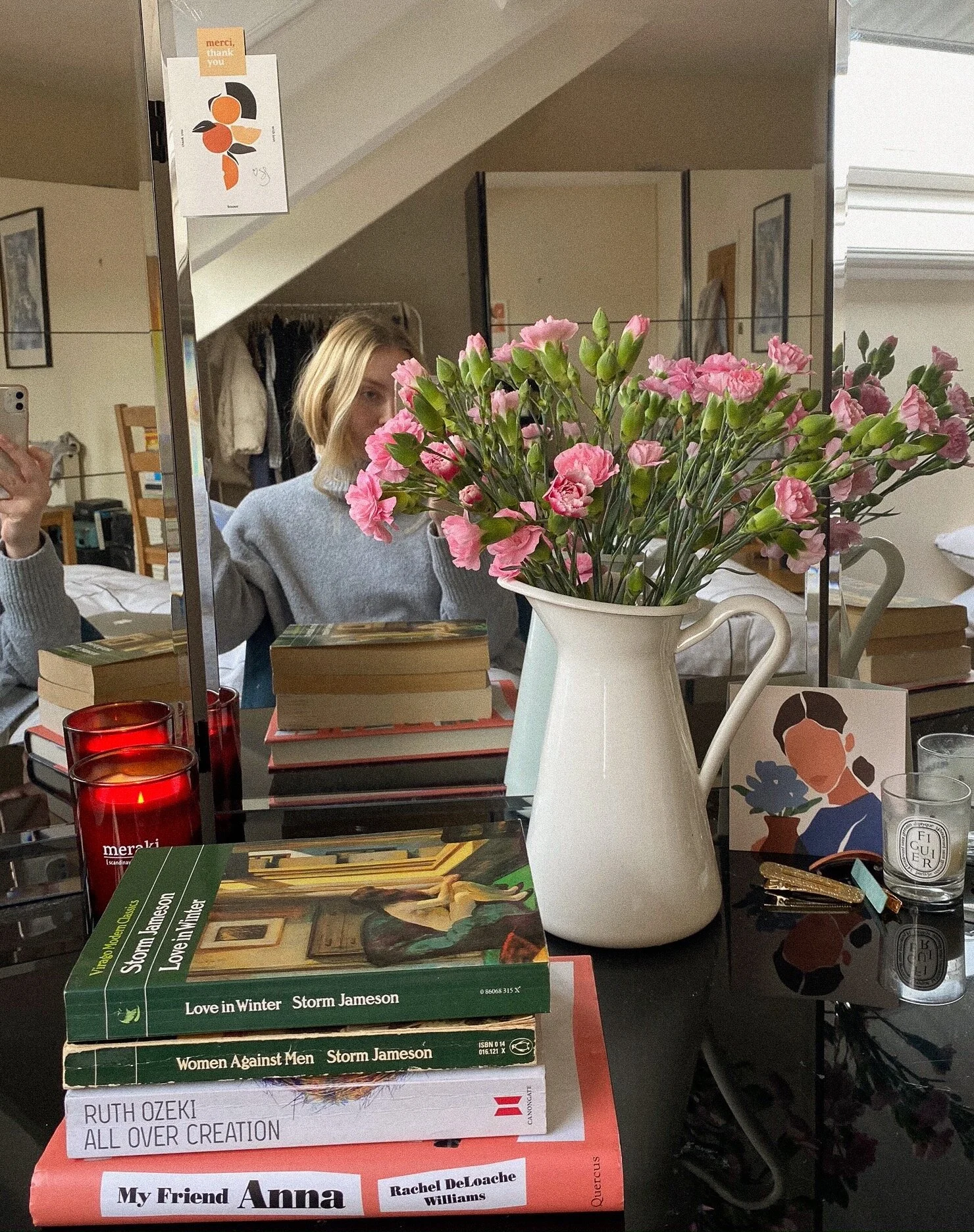
Anything marked with a * is an affiliate links.
The world might be ending, but I’m still consuming as much “stuff”, if not more, during this very weird period. I imagine April’s MMC is going to be a mammoth one, as I seem to have just settled into being able to relax and watch films/TV and read for pleasure (and for uni - what is “a degree” again?) Whereas March was mostly spent, for the latter part, trying to navigate what’s going on through long walks and video calls, and for the former, actually being quite busy and doing things in the real world- what a concept!
Despite this, I have managed to read, watch and listen to a decent amount during March and I hope you find something you might like in this blog post to keep you entertained in your home for the coming weeks/months, so staying in becomes less of a challenge to your mental health and more of a challenge to yourself of ‘how much great stuff can I consume during this time?’
Books
All Over Creation by Ruth Ozeki* | ★★★★
The first book I finished for uni this month was this novel. It’s books like these ones that make me thankful for my degree, as I never would have picked All Over Creation up otherwise. It follows a family in Idaho, of which the elderly parents are potato farmers, and their attempts to navigate the growing popularity of genetically modified food. It educated me a great deal on this topic but it’s also a brilliantly gripping story, exploring romantic relationships, race, motherhood, among other topics. Ruth Ozeki is definitely an author I want to read more of.
Women Against men by storm jameson* | ★★★★
As I mentioned in last month’s Monthly Media Catch Up, I’m writing my dissertation on the inter-war writer Storm Jameson, so I’ve been reading more of her work this month. This book is made up of three short novels. The final one, A Day Off (which I reviewed when I first read it last year) is my favourite and was the stimulus for my dissertation on the use of clothing in her literature. It’s a day novel that is so rich as it explores the thoughts of a working-class, Northern woman wandering around London. It’s symbolism is rich and the social commentary is so clever and discrete. The other books in the collection didn’t grip me as much but I still enjoyed them, as I do all of Jameson’s writing.

love in winter by storm Jameson* | ★★★
Another Jameson novel! This one is the sequel to Company Parade, that I discussed last month. It’s particularly concerned with the protagonist’s romantic relationships, which I found boring at times, but still generally enjoyed the novel because all of the characters are well-developed and complicated and, not to sound like a broken record, but her social commentary is so uniquely presented and enjoyable.
my friend anna By rachel deloache williams* | ★★★
This is the only book I read outside of uni this month! I’m glad I chose this one, as it provided an experience of total escapism. A true story written by a friend of Anna Delvey’s, who was convicted of fraud in 2019 after moving to NYC and pretending to be a German heiress to scam socialites (and non-socialites, like Rachel), out of lots of money. Hearing the story from Rachel’s perspective is fascinating, and I loved being sucked in to the New York lifestyle that is a million miles away from my life, and seeing how Anna manipulated it.
Whilst Anna is clearly the perpetrator in this situation and Rachel the victim, I did find that Rachel was too concerned with using this book to exonerate herself from any criticism (i.e. that she used Anna for her money) with constant passages about how hard it was on her, mentally and financially, that added nothing to the story apart from justifying herself. Of course, it’s understandable how difficult this situation would have been for her, but I would have enjoyed more self-awareness in the writing. Although, it was, at times, interesting for it to have been written in this way, as it really made it feel more like a fictional story with complicated, fallible characters.
tv
the bold type (Amazon Prime) | ★★★★★
I haven’t managed to watch anything new on TV this month, simply because I was, at first, busy and, later, too overwhelmed by the news to be absorbed into a new world on screen (I have a much worse attention span when it comes to watching as opposed to reading). So, I’ve been re-watching my favourite TV show, The Bold Type. I first encountered it last summer and it has since become my favourite show. Following the lives of three twenty-somethings working at a Cosmopolitan-esq magazine, it has that easy-to-watch aspirational quality, whilst also being very up-to-date when it comes to socio-political conversations about sex, race, gender, politics and so much more.
film
emma | ★★★★
My final trip to the cinema pre-quarantine was to watch this simply lovely film. I love how many period films based on classic literature with great costuming are being made at the moment, not least because it has made me realise that this niche is my favourite kind of film. Whilst it did not live up to my beloved Little Women, it had the same ‘figgy pudding film’ (i.e. twinkly and cozy) quality that I can easily get lost in. The casting was great (I’ll watch anything that involves Johnny Flynn) and the costumes were inspired!! I’m truly obsessed with the silhouettes of those dresses and I couldn’t care less if they are historically accurate or not.
Four Weddings and a Funeral | ★★★★
One goal of mine during lockdown is to watch all of the film and TV that I should have already watched. I’m not talking The Godfather and The Matrix (I have and will never watch either or any other films of that kind) but films I have never seen but will undoubtedly love. I started with this one that has been on my list for so long and I’m embarrassed to say it took me 21 years to watch. Watching this whilst doing a jigsaw was the best Sunday I’ve had in a while and it definitely lived up to what I expect from a 90s Richard Curtis film.

podcasts
Off Menu | ★★★★
I’d listened to a few episodes of this podcast in the past with guests I already liked but this month I’ve dived into the deep end and have become completely obsessed with it. Comedians James Acaster and Ed Gamble interview guests about their dream meals and whilst this is kind of interesting, it’s the humour that goes with it that makes the podcast so great and such a tonic at the moment. I recently listened to the episode with Catherine Cohen, who I hadn’t heard of beforehand but is absolutely hilarious. So I’d say start with that one, unless there’s another guest who you know of and particularly like.
honourable mentions:
articles
I thought I’d introduce a specific section in the MMC for articles, rather than clumping them together with podcast episodes. But I won’t be doing an individual review for each of them because I’m only mentioning the ones I enjoyed, as I can’t remember the ones I disliked (unless I really hated them, in which case, I might mention it.)
This will reveal that I read the Sunday Times Style in disproportionate amounts, as well as Man Repeller - sometimes The New Yorker, although, apparently, not during the beginning of a global pandemic. Here’s hoping I can get through the big pile of New Yorkers next to my bed during the middle of a global pandemic.
Anyhow, here are the articles I read during March, some of them are related to the C-word (how sad that this no longer means Christmas!), most of them aren’t:
Love is Blind’s Jessica and the gendered history of the ‘Hot Mess’ | The Sunday Times Style (Charlotte Edwards)
This meditation mania makes me anxious | The Times (Laura Freeman)
Who’s Still Swiping on the Dating Apps? | Man Repeller (Edith Young)
Should We Still Be Shopping? Leandra and Harling Discuss | Man Repeller (Leandra Medine and Harling Ross)
Verified Strangers | Vogue (Lena Dunham)
Bougie London Literary' Woman’s Lockdown Diary | Vice (Imogen West-Knights)
I’m 27 & Was Hospitalised with Coronavirus | Refinery29 (Jessica Morgan)
The death of Shukri Abdi: ‘She was failed when she was alive and she’s still being failed now’ | Gal-dem (Nimo Omer)
The Best Dressed of 2020 Awards Season, Illustrated | The Mancunion (Alex Bikard)
Social Distancing: This is Not a Snow Day | Medium (Asaf Bitton)
music
This month’s playlist is mostly feel-good songs, old favourites and those I have recently discovered. It includes what would have been Iceland’s Eurovision entry (I now hate it as I’ve listened to it, and learned the dance, 100 times too many), a bop from Dua Lipa’s new album and the best David Bowie song for dancing around your room when you feel like you’re going to implode due to over-exposure to your family/partner/child/self.
you might also like…


Trying (And Failing) to Be "Present" During My Daily Permitted Exercise
I often write stream of consciousness essays like this, mostly whilst walking or on public transport, but I never post them anywhere. However, this week I read this Man Repeller article about the need for personal essays during quarantine and it gave me the push I needed to publish this one. There might be more, there might not! But I hope you enjoy this collection of my thoughts during my walk to, on and from the beach the other day.

I took this photo accidentally whilst tying my shoe
Shutting the gate to my house, I send a photo of the Creme Egg I am carrying to my boyfriend with the caption ‘Going to the beach with a seasonal snack.’ Photos like this one have become somewhat the norm, 9 days into self-isolation, in order to update him on my day, always trying to be funny, succeeding only occasionally.
I bite the top of the creme egg and begin to devour the filling. Usually I wouldn’t do this in public, but with only one other person to be seen on my road, and my inability to care about anything, including how I appear to others, in such a time of overwhelm, I do it with added vigour, smiling like a psychopath.
I fix my earphones into my ears, and press play on a podcast I’ve downloaded specifically for this walk. It’s an “in conversation” with Zadie Smith and Chimamanda Ngozi Adicihe by the New York Public Library. ‘Am I listening this so I can tell Instagram I listened to this while walking to the beach or do I actually want to listen to it?’ I thought to myself. I decide I do actually want to listen to it, although only partly for pleasure and also for education, although the two have become somewhat amalgamated in my head. I struggle with the pretentiousness of that idea, as someone who is notoriously condemning of anything pretentious - books, films, lecturers, songs, lifestyles etc. But after three years of studying English Literature, I’m beginning to realise I now enjoy many of these things, as has been made glaringly obvious to me now I am back at home, self-isolated with my family. 10 minutes into the walk, and the podcast, I am undoubtedly enjoying it but I will still post about it on Instagram later.
Part of what I am enjoying about the podcast is the sounds of the audience, their mumbles, sneezes; their laughter as Adichie reads out a passage from her book that describes Brooklyn as smelling like ‘warmed up trash.’ I breathe in through my nose in an attempt to characterise the smells around me. “Shit.” I think. “It smells like shit. But a nice kind of shit, a fresh kind. Animal poo, rather than human.” It’s almost comforting, after long days and nights spent in doors with only stale air and the artificial smell of anti-bacterial spray.
I’m walking down a side path next to a field and peer in at the houses I can see past the low fences. One house has a small conservatory, with a low roof that I might have to duck my 5’4 body in order to get inside. There’s a shelf filled with books. I can’t see their titles but they are old books, backed in fabrics made out of primary colours, rather than the shiny, bright contemporary paperbacks and hardbacks that fill my shelves.
I leave the path and approach one of the most infamous houses in my area, marked, as usual, by a small police van sitting outside of it, that I’m sure could be used for a better purpose during lockdown than guarding this millionaire’s property. I walk past the walls of the house, that are thick enough to prevent you from really being able to see the house whilst walking, but thin enough that you can catch glimpses of it that make you want to stop and stare. A design that I’m sure, like Gatsby’s, is intentionally alluringly elusive, built to encourage envy. “I am not envious”, I think as I walk by, smiling at a man and his dog stood 6 metres away from me. “But I wouldn’t mind self-isolating in there,” I sardonically say out loud under my breath, catching a glimpse of the huge circular balcony that is the size of the entire bottom floor of my house.
I chose this path to the beach for its practicality, having only an hour and fifteen minutes to spare before an online Barre class but it is one that I am not familiar with. I see two paths ahead of me, one that turns into a field and one next to a house I recognise. I opt for the latter, after skim reading a sign about the history of the area.
Once I am walking on it, I realise that there were in fact 3 paths, and I had not walked far enough to the one that was actually the quickest way to get to the beach. The path I am walking on is hardly a path at all, more of a break in marram grass made by those who were braver than me and followed their own navigation rather than that of a sign. I follow in their footprints, stopping every now and then as I notice a new path opening up beside me, sometimes taking it.
Arriving at the beach, there is, unusually, no breeze and I realise I do not need the puffer coat that is tied around my waist that I brought specifically to guard myself from the tough wind sent on by the ocean. I am greeted in the best way: by an enthusiastic dog with a ball in his mouth. I go to stroke him then realise, better not, pets can carry it without showing symptoms, and pass it on to others. I smile at him and he, irritated by my inability to imitate his glee, heads back to his cooperating owner.

I walk down the beach for around 10 minutes, taking photos and videos of the sand, the sea, the sun and my outfit. I consider posting them to Instagram now to encourage everyone to experience this spring-like day, but decide to post them later, half out of selfishness, of getting to be one of the few who chose to abandon their Netflix bingeing session (ignoring the ‘are you still watching?’ notification) and take their once-a-day permitted exercise, half because I want to use this time to be away from my screen, something that is increasingly difficult when the only social contact I get is on social media.
The irony is, I have been tapping away at my phone, writing this piece for the entirety of my walk. The podcast I was listening to is paused 11 minutes in.
I imagine the middle-aged people around me judging me, for spending my daily exercise on my phone. I’ve probably prompted a conversation in them that will fill the rest of their walk or run, about the toxicity of social media. “Well, too bad for them because I am not on social media but, writing.” I think to myself, irritatingly smug in the knowledge that their assumptions about me are wrong, ignoring the possibility that my assumption about what they’re thinking could also be incorrect.

To be truthful, being a person who writes is far more addictive than social media anyway. Hearing someone tell me they liked a sentence I wrote, or coming up with said sentence, produces far more adrenaline than a like on social media. And it takes me out of the moment more too. Because whenever I am seemingly in the moment, I’m reading, or listening to words (having mostly given up on music since the advent of podcasts) and sometimes, but admittedly less often than the others, writing them.
Maybe tomorrow I will use my daily walk to be. To be in the moment, to be adventurous. It feels as if this is how my time outside should be spent, seeing as there is now a limit on it. But I struggle to be in the moment, listening to the sounds of nature rather than the sounds of other people talking in my ears, or to be content to leave my thoughts in my head, instead, frantically writing all of them down, becoming distracted by something else I want to write about before finishing every sentence.
‘Excuse me, excuse me. Where’s the beach?’ A man, around my age, comes up to me, asking me this frantic question. I look up from my phone and turn around, to check the huge towering sand dunes behind me haven’t somehow disappeared. I see that they are, as expected, still there and point towards them. ‘The beach????’ He repeats, perplexed by my ignorance. I can smell his breath now he has moved closer, most definitely violating the 2 metre social-distancing rule; it smells like alcohol and I now understand his confusion. “Just follow that path down there,” I say, pointing. “Thanks!” He says and wanders off with his friend, the plastic bags they are carrying swinging and create a clinking sound from their contents.
“See now that’s what I should be doing,” I think to myself. “THAT would make a good story.”
you might also like…


Self-isolating? Read These Books
The coronavirus is inducing a feeling of collective panic, one that I’m certainly not immune to and if you are self-isolating, or will be in the future, this might increase that anxiety. This is because it’s an interruption of daily life, reminding you that something is wrong but, even more so, it’s because self-isolating will probably encourage you to spend more time on your phone, seeking social engagement via the news and social media in place of finding it in the real world. And the news and social media are not very nice places to be right now. I’ve logged out of Twitter and am trying to spend less time on my phone generally, as the hysteria is multiplied tenfold on social media, with self-isolating being one of the most stressful things for many.
But instead of thinking about it as self-isolating, why not think about it as time off work to catch up on all the TV shows, films, reading and listening you’ve missed out on during the last few months? I think reading is a particularly good idea because it feels productive, unlike Netflix bingeing sessions, so it will hopefully stop you from feeling like you’re wasting time which could, in turn, cause more anxiety. But what to read? There’s so much choice!
Firstly, look at the books dotted around your bookshelves and home that you’ve been meaning to get round to but just haven’t had the chance yet. This is such a great time to get to those! If there aren’t any, instead of toilet roll, why not panic buy books? Things that were written before the word coronavirus became a part of our everyday vocabulary, so you can become somewhat oblivious to it (whilst still remembering to wash your hands!)
Any book will do, but if you don’t know where to start, here are some ideas that I think will be perfect during self-isolation…
the ‘lose yourself in another world’ book
This kind of book is ideal for times of anxiety, as it’s bound to get you out of your own head. A novel with a gripping, page-turning plot is perfect for this, which is great because these types of books exist across all genres and so there’s something out there for everyone. Fantasy would be a particularly good one though, for obvious reasons of escapism. This isn’t my genre of choice but I have been meaning to continue reading the Game of Thrones books so maybe now’s the time?
Here are some other ideas:
the ‘i’ve been meaning to read that’ book
We all have books that have been sat on our to-read pile, digital or physical, for a long time. According to GoodReads, I have 165. This is the perfect time to read them because it will make you feel like you’re putting your time to good use and ticking things off your to-do list! For many people, these books will be classic novels, either the traditional texts we think about when we say classics, some of which I’ve read and enjoyed, I have listed below, and modern classics. But this category will be different for everyone!
Here’s some ideas of books that I’ve read and enjoyed:
the ‘well it could be worse’ book
Approach this category with caution. These kinds of books might not be good for those who feel total hysteria about the world we’re living in but equally, they may remind you that what feels like an apocalyptic time has got nothing on what some writers’ minds have come up with. I’m talking about dystopian fiction, of course! It’s one of my favourite genres and for me, I think this would be a good thing to read during self-isolation, especially if it’s a dystopia that isn’t particularly concerned with health or the environment, which are two things that make me feel anxious at the moment for obvious reasons.
So here is a list of some great dystopian fiction that is not particularly focussed on health or the environment (although it inevitably does touch on them so maybe avoid this list if you don’t think it would be productive for you):
Exit West by Mosin Hamid (some would argue that this is more magical realism but I think it can also slot into the dystopia category)
the ‘relatable comfort blanket’ book
I think we all need a comfort blanket right now and luckily, there are so many books that act just like them! I’m talking about the books that you can see yourself in, the feel-good books with hope at their core, or at least somewhere in and amongst their pages. Self-care books aren’t really my thing but there are a number of books that, although don’t fall into the traditional category of self-care books, have acted as such for me.
Here are some of them:
the ‘I’m educating myself’ book
Like the books you just haven’t got round to, reading an educational book can help you to feel productive during a time when productivity levels are low. Educational is often synonymous with boring and dull but this certainly isn’t the case with some of the more informative books I’ve read. In fact, many of them have been empowering, enlightening and have made me excited about new ways of looking at the world, and inspired me to make changes, big and small.
Here are some of my favourites:
Hopefully after seeing all the wonderful books there are out there to read, you’re feeling more positive about the prospect of not leaving your home for the foreseeable or it at least seems more bearable!
If you aren’t currently self-isolating, do try and support your local book stores, whether it’s a Waterstones or an independent, and stock up on books there, as this will be a difficult time financially for them. If you’re unable to, I’ve added clickable Amazon links for every book I’ve mentioned!
Happy self-isolating or as I like to call it, happy-sitting-in-bed-and-reading-all-day-guilt-free-time <3
The Monthly Media Catchup: Everything I Read, Watched & Listened To | February 2020

February was a month of settling in to my final semester of university, which brought with it a bout of deadlines that arrived much earlier than usual. With all this writing came less reading, but lots of collapsing onto the couch with some feel good TV, even some films, which is so unlike me as I am, generally, someone who watches films exclusively at the cinema.
After this intense period of watching I am once again out of TV shows to watch, so please leave any recommendations in the comments (I only really like light-hearted TV because I 1. am a wimp and 2. use TV as a way to relax so don’t enjoy anything stressful.)
As always, let’s start with books, of which there was a mere three this month…

Books
Perfume by Patrick Suskind | ★★★★
This was the first book I had to read for a university module about humans, animals and their intersection (which is super interesting.) I’ve actually read this novel before, as Sam bought me it for my birthday a few years ago because we used to semi-ironically listen to Nirvana and this was Kurt Cobain’s favourite book. Following a man who has an abnormally strong sense of smell which defines his life from his birth to his death, it’s a very weird, unusual story. It’s written in a similar style to Vladimir Nabokov’s prose, which I love, so the style of writing was probably my favourite thing about it, but the hilarity of the strangeness of the story is also great.
Expectation by Anna Hope | ★★★
I was definitely influenced to read this book by its social media coverage, as lots of my favourite people to follow Instagram sung its praises. Whilst I enjoyed its plot and the issues it explored, motherhood and friendship being two of them, I found the writing style to be a little dull, which made certain moments have less impact, and limited it from surpassing a 3 star review. An easy, enjoyable read? Definitely! But it’s not one I’ll particularly remember or will go out of my way to recommend.
I’m trying to monitor whether I’m reading books because I saw them on social media and unthinkingly added them to my ‘to read list’ or if because there something I’m really interested in. Instead of relying on social media, I’m trying to discover new books more and more by wondering round bookshops and picking up books that intrigue me, reading their blurb and maybe a few pages, rather than taking so many recommendations off social media, as I think I’m beginning to lose my own taste in books.
Company Parade by Storm Jameson | ★★★★
This is the first in a series of Storm Jameson novels that I’ll be reviewing over the next couple months, as her fiction is the subject of my dissertation. Jameson is an author who sat on the margins of the modernist movement and has long been forgotten, but I became fascinated by her after studying one of her novels on a module last year and have decided to focus my dissertation on her work. If anyone’s interested, it’s about how she depicts clothing as uniquely powerful for her female characters- still working on my title.
This novel follows a young woman from Yorkshire who moved to London to pursue a career in writing in the post-WW1 years. It partly explores the trauma of war on society and individuals but what I love about Jameson’s fiction is her capacity, which is way ahead of its time, to authentically explore and depict young woman, who are often working-class, in a way that has philosophical and socio-economic importance. I like to think of her as Virginia Woolf but with more social commentary. This is a bit of a lazy comparison but I feel like it’s the best way to get people to read her work, which they should because it’s great and a shame that it’s been forgotten.


Tv
Next in Fashion | ★★★★
I was really excited about this show, mainly because it’s hosted by Tan France and Alexa Chung, a duo I didn’t know I needed, but that makes so much sense. Happily, it did not disappoint and I enjoyed every episode. The designers were all really great personalities but were, equally, incredibly talented designers (good job casting directors!) I loved watching the process behind each design and I think the themes for each week were well-chosen, plus, the guest judges were really impressive and not outdated at all, which I think they sometimes can be shows like this one.
(Mild spoiler: I really wanted the runner up to win, mainly because his looks on the sportswear week and the climate week were incredible. This is very weird for me because I’m generally uninterested in menswear, so this did ignite a minor identity crisis. But the winner’s ultra feminine final collection won me over the end which reassured me of my roots in womenswear.)
Crashing | ★★★★
Since finishing Fleabag, I’ve wanted to watch this series, also created by Phoebe Waller-Bridge, but didn’t get round to it very quickly. I’m at once happy and sad that I finally did, happy because I finally watched it, sad because now it’s over. The humour is very much similar to that of Fleabag and although it isn’t quite as genius, it’s still a thoroughly enjoyable watch with weird and wonderful characters.
Love Is Blind | ★★★
This Netflix series really appealed to the part of me that is obsessed with the weirdness of American culture because, wow, is it weird. Weird in all the best ways that make great television, though.
I have to say though, as I watched the credits appear for the series finale, I felt my final brain cell slide begrudgingly down the side of my head, like a slug moving away from the grasp of a piece of kitchen roll. But we all need TV like this now again, especially when all your days are spent reading critical theory, there’s really nothing like good, sh*t TV.

Film
While we’re young | ★★★
I watched this at the beginning of the month, not solely because Adam Driver stars in it, but mostly that. It was a relaxed, funny watch and I really enjoyed it but it obviously hasn’t made that much of an impact on me because I can barely remember the plot. From what I can remember, it’s about a middle aged couple who become friends with a younger couple, sparking a mid-life crisis of sorts in which they try and re-live their youth.
parasite | ★★★★★
I’ve wanted to see Parasite for a while but, to be totally honest, I was put off a little bit because it’s a foreign language film and there’s subtitles. I thought this would make it a tiring watch requiring a lot of mental energy, especially in the cinema, but after the first 10 minutes, I didn’t even notice that I was reading subtitles rather than listening to words. The plot of this film was phenomenal, the humour mirrored my own down to a tee and the twists and turns it took consistently shocked me but made total sense. The social commentary running throughout it was also so affecting, without it being in-your-face, and completely universal, transcending language and countries. One of the best films I’ve watched in a long time.
booksmart | ★★★★
This is the perfect easy-to-watch, feel-good and hilarious film. I love that more films about female friendship are being made and I love that Beanie Feldstein is being cast in them because she is simply great.
fighting with my family | ★★★
When I suggested to Sam that we should watch a film about wrestling he was very confused. “Florence Pugh’s in it,” I explained. he was still confused. “She was in Little Wome-”, “Oh okay, I get it.”
I actually really enjoyed this film. Again, like Booksmart, it was easy to watch, funny and, at times, heartwarming. But I wasn’t always convinced by the script which was sometimes cliched and cringeworthy.

honourable mentions
particular podcast episodes, articles or any other bits of culture that don’t fit into any of the above cateogories

"Little Women Style" Will Take Over 2020, Trust Me

I’ll say this once and never again: Amy was right and Jo was wrong. That’s when it comes to the power of books anyway and that ‘Perhaps writing will make [things] more important.’ Amy’s hypothesis will be proven, I believe, by the effect Greta Gerwig’s film and the resurgence of the novel it has encouraged will have on the way we dress over the next year and perhaps longer. And I promise there’s reason to this other than the fact I’m trying to make my acronym WMJBOAWI (would Meg, Jo, Beth or Amy wear it?) happen.
Jacqueline Durran won the Academy Award for best costume for Little Women and wow, did she deserve it! The costumes in the film are intricately designed and constructed. For example, each daughter has an individual colour or two that they wear throughout the film, with Marmee wearing a combination of them all (this is the same with their hair styles). Also, Jo doesn’t wear a corset which ‘lends a freedom to how she can move’, which, for me, added a lot to Jo’s characterisation in the film, especially in the dance scene and hill scene with Laurie, when the way in which she moves is so distinctive. Speaking of this scene, notice that the waistcoat Jo is wearing is the one Laurie wore when Jo jokily got down on one knee to him earlier on in the film.
The costuming of the film fascinates me because I think it is so fundamental to why it worked so well and how, despite the many film adaptations of Little Women, this one captured the essence of the novel in such an evocative and imaginative way. For me, the colours of the film was a significant part of this and much of this is down to the costuming. Period film costuming is often grey and dull and hardly inspiring. But Durran opted for colourful costume, which is actually factually accurate in terms of what people were wearing contemporarily. As Gerwig explains in this video, fabric dye was new and exciting in the late 19th century and so it was trend-forward to wear brightly coloured clothes.


This attention to detail in the costuming in Gerwig’s Little Women is undoubtedly a significant reason as to why the film’s dress has been so inspiring for many. But this has only spurred on the “Little Women style” obsession that has been growing within the fashion industry for some time. This mostly takes the form of prairie dresses, championed by brands like Batsheva and The Vampire’s Wife, but anything billowy, floral and/or made up of pastel checks resembles “Little women style” enough for me to deem it so.
So why has this style of dressing gained so much momentum? Like many trends, I think it stems from a sartorial nostalgia of sorts, when wearing your third best dress to lounge around the house in was the norm. Don’t get me wrong, I won’t be trading in my pyjamas any time soon, but sometimes I get bored of casual dress codes, especially given the fact that my life provides very little opportunity for formality, sothe idea of wearing a beautiful, extravagant dress for no reason excites me.
Further, it’s comfortable! Long billowy dresses mean lots of room for food babies (the one I’m wearing in these photos even has an elastic waistband: swoon!) and they’re practical all year long. In winter, with tights and in summer, without (they’re especially great if you don’t want to get your legs out, for whatever reason).


The dress I’m wearing here is from Nobody’s Child and I adore it. I’ve been loving wearing it in winter (with tights and thermals underneath) and I am looking forward to taking it into spring with, I get excited just thinking about it, bare legs! I love wearing this dress with more masculine pieces like these ankle boots to channel my inner Jo and I think the myriad types of styles this trend can work for is one reason why it will take over. Nobody’s Child is great for “Little Women style”, especially if you’re looking to find it from a brand with ethics at its heart, and I’m currently trying to avoid the website in order to protect my bank balance.
“Little Women Style” is a romantic, nostalgic and fun way of dressing and one that, when the situation allows, I’ve rarely been straying from. Anything to be more like Jo March and, luckily, it’s not quite as difficult as writing a book about your family or turning down Timothee Chalamet’s marriage offer.

The Monthly Media Catch Up: Everything I Read, Watched & Listened To | January 2020

(affiliate links are marked with a *)
T-shirt: Roberta Einer SS20
Cardigan: & Other Stories*
Trousers: Mango (old, similar here*)
Necklace: Missoma*
Hair clips: ASOS*
Oh hi! So the Monthly Media Catchup has disappeared from my blog over the past few months. This was not intentional but a side-effect of an overwhelming amount of university work (final year really is difficult, who would have thought?)
But no one wants to hear about the amount of work I or anyone else has, so let’s just get straight into everything I read, watched and listened to during January.
My birthday and Christmas fall within 30 days of each other and most of my presents for both of these occasions consist of books. Every year, I look forward to compiling a list of books to ask for for Christmas and my birthday and this years list was particularly long. I started a couple of the books over the Christmas period (amongst them,Find Me by Andre Aciman, the sequel to Call Me By Your Name which I really disappointingly disliked) but have been digging deeper into the huge pile during the first month of 2020, before my university reading really kicks in.
I’ve also been watching A LOT of TV. I’m not sure if I watched more than one single TV show in its entirety from September-December. Partly because of the aforementioned busyness but also because I just couldn’t find anything that I liked enough to commit to. But January has brought lots of new releases and, to be honest, I’ve more or less been watching the same thing as the rest of my Instagram feed, but I thought I’d touch on them anyway, in case you’ve somehow missed them.
I found that I was consuming a lot of media recommended to me via social media this month, meaning I’ve been watching TV shows and reading books I might not have otherwise. In some ways, this has really paid off (see the TV category) but in others, specifically when it comes to books, I think I’d like to trust my own taste more in the future. Not that I disliked any of the books I read, but that there are other books on my shelves I might have enjoyed more, even if they’re not currently as popular/trendy.
Anyway, now the obligatory preamble is over, onto the reviews…
Books
Three Women by Lisa Taddeo | ★★★★★
How nice to start the year off with a 5 star review! Three Women has been on my to-read list since its release and it was one of the most difficult books to resist in my attempt to buy fewer books over the past year. Luckily, this anticipation paid off. Taddeo’s book follows the lives of three women, Maggie, Sloane and Lina. Specifically, it follows their sex lives, exploring their desires, emotions, and instincts in depth. Taddeo spent around 8 years looking for and spending time with these women in order to write such a book and the fact that the book reads like a novel is a huge credit to her as a journalist and a writer. It’s beautifully written and I found every detail fascinating. What I think is so special about this book is that Taddeo dedicates so much importance to female desire as its own entity, a privilege, unlike male desire which is often explored in fiction and non-fiction through the male gaze, it is rarely given.
I’ve seen this book criticised because firstly, “not much happens”, but this is baffling to me, because I thought so much happened! No, there isn’t much of a plotline but it’s non-fiction and real-life doesn’t have a plotline, and authentic female desire is not programmed the way we’ve seen it in books and other forms of media, which is perhaps why people are uncomfortable or bored with the book. Secondly, because it isn’t representative. However I think it’s important to remember that Taddeo is not trying to represent all women, just three women. But I do hope that many writers take inspiration from this book and write texts of this kind about different kinds of women. I hope to read many, many stories like these ones about thousands of diverse women in my lifetime, and I can only hope that, as a society, we begin to value them enough to allow this to hapen.
Calypso by David Sedaris | ★★★★
David Sedaris’ essay collections have been doing the rounds on social media, having been plauded for their humour and wit. I decided to read his most recent collection of essays and I enjoyed them a great deal. I didn’t find them laugh-out-loud funny but they largely put a smile on my face, especially the stories set in the UK. I’m currently taking a Non-Fiction Creative Writing Class and I definitely found them useful in that respect, although I can’t see myself being desperate to pick up more of his writing in the near future. 3.5 stars.

Educated by Tara Westover | ★★★
Another book I was influenced by social media to read, specifically by Sunbeamsjess, who is one of my favourite bloggers and chose it for her January book club. Westover’s memoir follows her life from her unorthodox Mormon childhood to leaving her family to study at Cambridge University and Harvard. I love the concept of this book and the parts in which the book was true to its title and Westover explored receiving an education for the first time in her late teens were fascinating. But I found that it focussed slightly too much on her childhood and it was particularly gratuitous in describing the violence she experienced, which, although I’m sure was traumatizing and I am not trying to diminish it, lost its impact after so much repetition, for me, especially because specific acts of violence were described over and over again. At times, I was gripped to the book’s storyline but at others, I wanted to put it down. It’s definitely worth a read if you’re willing to sit through the frequent scenes of violence because Westover’s story and her writing generally is great.
TV
Unreal (Amazon Prime) | ★★★★
I found this series in Pandora Sykes’ essay The Authentic Lie and I was so glad I did because it brought to an end the excruciating few months in which I had nothing to watch on TV. It’s a fictional series that looks at the production of a reality show that is similar to The Bachelor and Love Island. It’s a fascinating look at how real reality TV is and how producers manipulate contestants but it’s also an exciting and gripping watch, full of cliffhangers and great characters, whose emotional lives you become invested in. The first series was by far the best but I think it’s worth watching them all.
You, Season 2 (Netflix) | ★★★
I binge-watched the first season of You this time last year so I was looking forward, as was the rest of social media, to the second season. I enjoyed it a lot although I wasn’t able to watch it as quickly as I did the first season. Whilst it is bingeable and an easy watch, it’s also a great exploration of white male privilege. I’ve only given it three stars because I didn’t mourn it being over and I often forgot that I had even been watching it when I was doing other things.
Sex Education, Season 2 (Netflix) | ★★★★
I think I might have liked Season 2 of Sex Education even more than the first one. It’s genuinely educational as well as heartbreaking, engaging and funny. I loved Aimee’s plotline as well as Jackson and Viv’s and especially Maureens <3
Cheer (Netflix) | ★★★★★
I’d seen people raving about this on social media and I was tempted to watch it, but I’m not a huge fan of documentaries and I know nothing about cheerleading so I put off doing so. However, when my friend recommended it to me and I’d finished all the other series I’d been watching, I finally caved in. Thank god I did because it is incredible! The stories it tells about the people it depicts are unbelievable and it warmed my heart to see how their team sport brought them altogether despite (and because) of their backgrounds. I also love how it showed the stamina and fitness cheerleading requires. Having grown up dancing, people were quick to dismiss it and declare that it ‘wasn’t a real sport’, but this series proves that to be undoubtedly incorrect.
I actually adore Jerry, he’s probably the best person I’ve ever encountered and Morgan’s admiration of Monica was beautiful (I feel you though, Morgan, Monica is incredible). Also, the scene when La’Darius’ brother cries watching them compete. I CAN’T. I’m already rewatching the series.

Films
Little Women | ★★★★★
Okay, so I first watched Little Women in December but I went to see it again in January, which is convenient because it means I get to talk about it here, even though I’ve already discussed it on every other platform, online and offline.
Little Women is one of my favourite novels ever because it has so much sentimental value and also, it’s a genuinely brilliant story of sisterhood (you can read my full review in this blog post). I watched the 90s film so much growing up with my Nan so when I heared that Greta Gerwig was directing a new adaptation for 2020, and with a cast of some of my favourite actors, I was hysterical.
Now some may say I was biased going into the movie, and that I would have loved it even if it was terrible. But actually, my expectations were very high. Being such a big Little Women fan means that I know all the details and I think about the characters a lot and so I’m very pedantic. But Gerwig did such an incredible job at depicting them and making a story that has been told so many times refreshing and new. I can’t think of a film that I like more than this one and I hope the fact that it’s about women and is by women doesn’t deter people from going to watch it. If it does, it’s their loss.
Podcasts
The PanDolly Podcast | ★★★★
If you, like me, are missing The High Low whilst it’s on maternity leave, I’d definitely reccomend The PanDolly Podcast. This podcast preceded The High Low, and it’s a lot more of the low than the high, but it gave me my fix of Dolly and Pandora (I actually listened to every episode in the space of about 2 weeks so really, it gave me even more than my fix.) I’m now re-listening to The High Low and I’m really enjoying doing so. It’s interesting to hear them discuss past events as it gives you a reminder of the what has been going on in the world (always useful) and it’s also entertaining to hear them discuss, for example ‘Prince Harry’s new girlfriend, Meghan Markle’, when we are so used to this being the case now and so much has changed.
Literary Friction | ★★★★
I’ve been a long time Literary Friction fan but I’d got out of the habit of listening to the podcast. But discovering their ‘minisodes’ has got me right back onto it. I particularly enjoyed Minisode One on the books they hated (what does this say about me?) and Minisode Eight on the books they read because they were assigned them, but they actually loved.

Honourable mentions:
Sometimes, I listen to a podcast episode because there’s a guest on it who I admire or they’re discussing a topic I’m interested in, but I don’t necesarilly listen to any of the other episodes or subscribe to the podcast. Here are some of those:
Soundtracking with Edith Bowman - Episode 174: Greta Gerwig on the Music of Little Women
Awards Chatter - 314. Florence Pugh - ‘Little Women,’ ‘Midsommar’ & ‘Fighting with My Family’
Ctrl Alt Delete - #68 with Lena Dunham: Dealing with Life Online and Offline
The Best Books I Read in 2019

2019 has been a weird year in terms of reading for me personally. As my degree has become more intense and I’ve been reading more than ever for university purposes, I haven’t been able to read as much for pleasure. This has been really difficult as reading is my favourite way- and possibly my only way- to relax. But reading around 200 pages a day, often more, for university means I am usually too mentally exhausted to read for pleasure in the evenings, and not only this, but I feel as though it could hinder my degree, as I don’t have the best capacity for retaining information and so I do think, in this case, it’s very much possible for me to read too much.
Because of the intensity of my degree during 2019, I’ve read more than ever, although less novels than usual, and certainly less for pleasure. Despite this, I’ve also craved reading more than ever, and one of the reasons I’m so excited to graduate is so I can read more. Yes, I have really just said that I’m excited to finish my English Literature degree so I can read more books- I hate myself too.
Anyway, according to GoodReads, I’ve read 44 books this year and I’ve managed to narrow them down to 9 favourites, as well as an honourable mention. 5 of these books were read for uni, proving that my degree does have some value and 5 of them were books I was re-reading, so I’m not really sure whether or not it’s fair to include them but I am doing so anyway. Interestingly, a lot of the books I’ve read this year are fairly short (probably all around the 300 page mark or shorter) and I think this is because I am generally impressed by books that can do a lot in a short space of time.
If your New Years Resolution is to read more, I can thoroughly recommend all of these books. And on that note, I’d love any book recommendations you might have, so please do leave me them in the comments! Anyway, on to the books…
Call Me By Your Name by André Aciman
I watched the film version of this in 2018 and was desperate to read the novel, which I finally got round to in August of this year. I read it poolside in Corfu which is the perfect location to read this dreamlike novel. I’ve doted on it ever since and it’s definitely my book of the year. It’s a beautiful story, beautifully written and is just so full of feeling. I don’t know if this will make sense to anyone else and it’s not something I’ve necessarily experienced very much before but I felt sick reading the prose in this novel because it was just so good. Sick in a good way: as in completely overwhelmed and transported, almost like an out of body experience, not to be dramatic or anything.
Unfortunately, I read the sequel - Find Me - in recent weeks and it was honestly appalling. There’s nothing I hate more than a pointless, pretentious book and that’s what this felt like. Plus, it had around 12 pages of Oliver & Elio content, which is obviously what everyone who read CMBYN was there for. Anyway, this doesn’t take away from how much I love Call Me By Your Name, but if you read it and are tempted to read the sequel too, I would advise you to not to if you want to keep your Aciman experience positive.
I promise I’ll move on soon but before I do, I want to include the last line of the novel, which just broke me (potential spoilers):
“If you remember everything, I wanted to say, and if you are really like me, then before you leave tomorrow, or when you’re just ready to shut the door of the taxi and have already said goodbye to everyone else and there’s not a thing left to say in this life, then, just this once, turn to me, even in jest, or as an afterthought, which would have meant everything to me when we were together, and, as you did back then, look me in the face, hold my gaze, and call me by your name.”
Lolita by Vladamir Nabokov
A controversial pick but one I firmly stand by. I re-read this for a university module and was impressed even more than I was the first time I read it by how truly clever this book is, because it manages to convince so many readers that its plot is about a romantic relationship, rather than about paedophilia, which, just to be clear, it is. I think it goes to show how powerful and important language is and how it can be used and is used (cough cough 2019 general election cough cough) as a form of manipulation.
I do also find it fascinating how people are so uncomfortable with this book to the point of refusing to read it. We don’t condemn plots that are centred around murder or torture, even those that romanticise it like American Psycho (although that comes with its own set of problems aka the author being a bit of a dick). Yet, we are almost scared of this book because of how it sets out to manipulate you into siding with its narrator. It’s one I think I could re-read and re-read and find interesting every time, because of its many forms of manipulation and so, who knows, maybe this will be on my 2020 list of books.
Home Fire by Kamila Shamsie
Another re-read! I was so excited to see this novel turn up on one of my module lists earlier this year as I read it a couple of years ago and loved it. It was published in recent years and it taught me a lot about islamophobia within our society. On top of this, it’s also a gripping and fast-paced read that I was on the edge of my seat throughout reading, even the second time.
Little Women by Louisa May Alcott
Surprise, surprise: another book I re-read! This one is different though because I’ve read this novel countless amounts of times since I was a little girl. It’s a comfort read that I love to come back to around Christmas, and it was particularly exciting to read it this year before seeing Greta Gerwig’s film adaptation, which I loved so so much. The story encapsulates what it means to be a sister so well, the good, the bad and the ugly, and the story is timeless. Upon reading it for the umpteenth time (and after watching the film), I’ve come up with a new theory: if you’re an older sister, you love Jo and dislike Amy, if you’re a younger sister you like Amy and dislike Jo (or at least find her irritating). I am firmly in the first ballpark and am very proud to say that I am most similar to Jo, according to a very credible BuzzFeed quiz I did.
Focus by Arthur Miller
This is a book I read for university earlier in the year and is one of the few uni books I’ve read that I found truly addicting. It’s set in post-war America when the protagonist gets a new pair of glasses and is consistently mistaken as Jewish, and is discriminated against as a result of this. It unfortunately feels like a pressing and relevant story over 70 years after its publication and I think its concept is a clever one that encourages readers to be more empathetic and understanding of those around them.
White is For Witching by Helen Oyeyemi
I read this novel for my Gothic course and it’s book like these that make me really appreciate my degree as I’m sure I never would have picked up a book like this one (the form is weird, as is the subject matter) but it totally blew me away. It makes very little sense but, unlike many pretentious novels I’ve read that are nonsensical only to be pretentious, this is part of its genius. It’s a comment on how we think about race and immigration in the UK through the lens of a Gothic vampire novel and I hope that short summary at least intrigues you to read it. One of my reading resolutions of 2020 is definitely to read more Oyeyemi!
conversaTions with friends by sally rooney
After reading Normal People at the end of 2018, I was eager to read Rooney’s first novel, and I liked it even more than the first one. I read it at the beginning of 2019 so my memory when it comes to its plot is flagging, but I do remember how much I loved Rooney’s prose and the thought-provoking and honest ways she writes about relationships. I am eagerly anticipating more of her fiction!
the vegetarian by han kang
This was one of the last books I read in 2019 and I’m so glad I finally got round to it as I’ve wanted to read it for a while (thanks to my friend Devi for lending me it and giving me the push I needed to read it!) Much like White Is For Witching, this book made little sense. It’s also a thin little book but it manages to pack so much in! I loved how it considered vegetarianism and feminism at once as, even as someone who is both of these things, it presented many ideas concerning these the ideologies in a way I’d never considered before.
honourary mention: othello By william shakespeare
I was so excited to re-read my favourite Shakespeare play for uni this year: it honestly felt like what my entire degree had been leading up to. Typically, it fell on a week when my tutors were striking so we didn’t get to discuss it in very much detail, but I adored re-reading it. It’s so ahead of its time and provokes discussions that are as relevant today as when the play was published in Elizabethan times. It will forever hold a special place in my heart after studying it at A-Level and I was relieved that I still loved it as much as I did as a bright-eyed 16 year old now, 3 years into an English Literature degree.
So You're Feeling Hopeless After The General Election...

Photo taken in Shakespeare & Co in Paris, 2018. A reminder that we all need going into 2020.
The General Election has happened. The Tories gained a huge majority. It’s shit. It’s disappointing. It’s scary. You’re probably feeling hopeless about the state of the country, of the world even. But wallowing in this hopelessness is not productive in any shape or form, for yourself or for the bettering of the world.
What is productive is fostering the hope you’ve been feeling over the last month in the run up to the General Election at the prospect of a better, more equal country and using it to creative positive change. The General Election may be over, but the world is not and there are so many things you can do to make the world a better place, even if the ruling party choose not to.
Hang on to the issues you care so deeply about, whatever has struck a chord for you during this election, whether that’s the NHS, the climate crisis, homelessness or whatever else. Find charities and campaigns that are championing these issues and become a part of them. Becoming a part of something you believe in, in which you can see clear change happening as a result of your actions is so rewarding and will turn at least some of your feelings of hopelessness into optimism. And although the prospect of the Tories being in power for another 5 years is daunting, this is 5 years in which you can campaign for whatever political party you believe in, rather than just doing so a couple of months before the election which is not as effective both because of the tension people are feeling and the limited time.
You can do this with your time or money, whatever works best for you but I would add that giving up your time is especially rewarding. However considering there’s only 12 days till Christmas (at least that was always going to be a silver lining after the election), consider giving charitable gifts this year, whether it’s donating to a charity of your choosing on someone else’s behalf, or buying a gift from the ChooseLove store for someone (I particularly love this idea).
What is key here is actually making change happen. Although social media seems like a great platform for activism at times, especially if you have a large follower count, it can be superficial and have little effect on the world, which can be frustrating. Whilst being out in the real world, making change through your actions has the opposite effect and is deeply fulfilling.
The connections you can make campaigning in real life are also often so much more sincere and impactful than those you can make through social media too. This is largely because social media is somewhat of an echo chamber for most of us, in which we only see our own left-wing views repeated back because, of course, we don’t want to follow people we disagree with.
I think the social media echo chamber is a significant reason why the General Election results might feel so devastating to many young people because it’s easy to be fooled by the 700 people you’re following that everyone thinks about the world in the same way you do, forgetting that there are over 66 million people living in the UK with incredibly diverse views.
This floored me during the past election and particularly during the EU referendum, as, although I was too young to vote in it, it initiated my interest in politics. But the politics I was interested in and thus surrounded myself with, were left-wing and pro-EU and thus, I was devastated by the result of the referendum. Whereas in this election, by staying informed as much as I could on what’s going on in the real world, the shock was minimised and my mental health has not been affected to such an extent.
Now I’m not advising be-friending Tories or filling your Twitter feed with opinions you disagree with. Instead, just gain an awareness. Read newspapers whose political leaning might be a little more right-leaning than your own, or at least be aware of what they’re saying. Talk to people who aren’t just your closest friendship group. Don’t immediately close off a conversation with someone just because their views are more right-wing than yours. By any means, you don’t need to be uber-polite to them. But at least engage in the conversation, if only to affirm that the politics you believe in are the ones you want to champion.
This awareness is not only necessary to advance any sort of left-wing politics (as the divisiveness we create in staying in our own bubble and shouting at anyone who might disagree with us is deeply harmful) but also to protect your personal mental health because being overly-optimistic unfortunately often leads to disappointment and despair. Although I am deeply saddened by the results of the General Election, by staying informed, it’s not far from what I expected. And for me, being able to prevent such despair is critical to my mental health.

Photo by @badasscrossstitch on Instagram
Finally, stay off social media as much as possible for the next few weeks. It’s going to be a site of tension, divisiveness and anger and it’s not a positive space in any sense, neither for your mental health or for creating a better world. Spend your time, instead, educating yourself, volunteering, becoming an activist, with your loved ones, with yourself and maybe even with your counsellor.
Because it’s absolutely okay if you do feel devastated by the result of the General Election. It’s okay if you think it’s triggered some of your mental health issues. Some might see it as ‘just politics’, but for many this General Election came with so much hope for the future and Thursday night’s exit poll probably felt like that broke down entirely. However, the world is not ending and there are so many ways we can make it a better place, but before you can do so, you have to ensure you’re in a good place. Although do consider doing both at the same time. Volunteering and activism can be an incredible way to feel fulfilled and improve your mental health, giving your able to do so, alongside whatever else you might need to stay healthy, including medication and counselling.
There is so much to be anxious about as we enter 2020 and this Tory government is certainly part of that, especially for vulnerable people in society. But lets channel our despair and fear into making a better country and a better world and lets use our time, money, voices- our privilege in whatever form it takes, to protect those who are truly vulnerable and to fight for what we care about.

I Want To Be Politically Engaged But I Also Want To Breathe| How I’m Approaching Politics in 2019

I am a naturally inquisitive and empathetic person. I feel most excited and fulfilled when learning new things and discussing important and progressive ideas. Politics energises me, but it also exhausts me.
I’m writing this on the eve of the 2019 General Election, of which I have become consumed with. It’s the first time I’ve felt exhilarated by British politics in years. But I’m also anxious. I’m angry. I’m overwhelmed. I can’t sleep because I’ve spent the entirety of all my days over the past month, especially the parts in which I’m supposed to be relaxing, reading and watching videos about the upcoming election. I’ve even been out posting leaflets for my local Labour party in an effort to do something that isn’t just shouting into the echo chamber that is social media. And I want to do this! I am choosing to do this!
But to understand what is going on in the world and to attempt to do something about it, for me, is all-consuming. I can’t draw the line between being involved in politics and maintaining my mental health. The injustice that I witness in staying so insistently informed stays with me, after closing tabs and deleting apps and turning the lights off to go to bed. It permeates my thoughts and my speech, as I struggle to partake in a conversation without slipping into talking about politics and the current state of the world. It even permeates my body, as my anxiety is so intrinsically linked to my physical health, and can often render me physically sick.
But I’m not writing this post in an attempt to gain sympathy. I imagine a great deal of people feel this way and that is why so many people remain apolitical. But as Grace Beverley put, a woman who is using her platform for so many fantastic causes, and as many have reiterated: ‘being apolitical in itself is a political act, and in fact an inherently selfish one.’ And to be able to be apolitical is a privilege, as that means that you’re lucky enough to be in a position where politics doesn’t directly negatively impact your life, as it does for so many POC, the LGBTQ+ community, people living in austerity and an endless amount of other groups of people.
So for me, to remove politics out of my life is not an option, and I think the guilt this would cause would be unbearable. Over the past couple of years to try and balance the overwhelm politics has caused me, I’ve tried to stay less informed. Whilst I’ve still generally understood what’s going on in the world, mostly the Western world, I’m embarrassed to admit, and in politics, I’ve attempted to distance myself from it. But as I mentioned earlier, I’m an inquisitive and empathetic person who wants to feel connected. To read a short BBC summary of an event in order to ensure I’m basically informed is so unfulfilling and frustrating for me, even if it does mean I can fall asleep within an hour of putting my head on the pillow. I want to stay informed and I want to fight injustice and this general election has reminded me of that.
To be able to do so without it affecting my mental and physical health quite so negatively will be a challenge. But it’s a challenge that I really believe in. And as someone who lives with a huge amount of privilege and is lucky enough to have the option to remain apolitical, I think it would be unbelievably selfish and individualistic for me to do so. And politics that advantage the individual over society are not the types of politics I believe in.


I am painfully cynical about the result of today’s General Election because cynicism is most definitely a coping mechanism I use to shield myself from disappointment, which I fear so much, especially for an election which is as critical as this one.
But I am also hopeful and when I cross the Labour box at my polling station today, I will do so with a hopefulness that there are people who want the same world that I do and who are fighting tirelessly in order for it to materialise.
Politics can make you feel hopeless and isolated but know that your democratic right to vote today is an opportunity for agency and one that we must all take. It’s empowering and even if everything else about the current state of politics makes you despair, this is your chance make your claim on how you want the world to be, and you MUST use it!


I’ve told myself that I won’t be staying up to watch the election results be counted but it’s very likely that I’ll still be up at 3am tonight, probably having bitten off my entire fingernails with anxiety. It’s not good for my health (or my Christmas manicure) but it’s good for my mind and my soul and frankly, it’s non-negotiable, because I naturally care and I am hopeful that caring can make the world a better place.


Paris Fashion Week on 35mm Film
I’m finally sharing my film photos from the week I spent in Paris for fashion week. I can only apologise for the lateness of this post due to lots of catching up on work post-Paris and some issues with my film that were mostly my silly mistakes as a result of extreme exhaustion.
But it sometimes feels nice to share photos retrospectively. Despite only returning from Paris just under 3 weeks ago, I already feel nostalgic about it looking at this roll of film. To explain why I was lucky enough to spend a week in Paris during fashion week, I went with the brand I intern for and was working in a British Fashion Council sponsored showroom on their behalf.
I didn’t actually take any film photos in the showroom or in any of the other fashion-y places I went to during the trip. The photos were mostly taken on the streets of Paris and in the amazing AirBnB we stayed in, but I hope you enjoy them anyway.


The apartment we stayed in was incredible. It was owned by an artist who lived in the apartment below and every corner was filled with incredible art, furniture and there was even a huge tree in the middle of the living room. It was the most interesting place I’ve ever stayed in…


There were mirrors everywhere in the apartment, even on the ceilings, it felt very Parisian.


Galeries Lafayette


The best way to spend a Sunday afternoon in Paris, at Janine Love Sundays- they do the most incredible vegan food.


My favourite bookshop in the world (despite how excessively busy it is)


The bathroom was the best part of the apartment.


you might also like…


A New Approach to Clothes Shopping

Just a heads up, these photos were taken for a different blog post that I then decided that I didn’t want to write, so I’m using them for this one instead, that I very much do want to write, even though they have no relevance whatsoever to the subject matter!
I’ve been thinking a lot lately about ways of shopping sustainably that aren’t:
Never buying clothes ever again
Exclusively buying clothes from sustainable fashion brands
Only shopping second hand
Each of these, especially the first one, feels too restrictive to me at the moment and when I try and put any of these methods into place, they are never successful. The truth is, I love shopping; I love clothes and I love getting dressed and new clothes do provide me with a lot of satisfaction, inspiration and genuine happiness.
Maybe this is materialistic- in fact, I’m sure it is. But having been brought up in a material world, as Madonna put it 15 years before I was born, it’s difficult and I would say impossible to just snap out of it, especially if, like me, fashion is the thing, or one of the things, you’re most interested in, and if, like me, it helps you to form your identity and is the source of a lot of your self-confidence.
So I’m trying to let go of any methods or mindsets that are completely abstinent in their approach, not because they’re not necessary, they completely are, but because, for me, they don’t work and I am desperate to find a sustainable way of approaching shopping for fashion that really works.
But although sustainability and the fact that our planet is in imminent danger is at the driving force of my new approach to shopping, it’s not the only reason for it. Having begun to clear out my wardrobe quarterly, I’ve noticed how many pieces in my wardrobe have been worn only a few times. I know a lot of people struggle with buying things for a particular events and only wearing them once but personally, I don’t find that this happens to me. My issue is the impulse purchase; the “oh it’s only £8 in the sale and I like it, why not?”


Well, why not is because this type of purchase is always the one that I’m getting rid of when I’m clearing out my wardrobe. These bargain pieces are the ones that fill up my wardrobe and make me feel like I’ve got nothing to wear, because all of the pieces in my wardrobe that I truly love are buried by these items of clothing that I feel more or less indifferent towards, after the gratification of finding such a bargain, that usually wears off within a few weeks.
Not only this, but these types of purchases are the ones that encourage fast fashion retailers to keep making cheap, disposable clothes that they can sell and make for cheap prices, in bulk and in the least sustainable, and most cost-effective way.
So, I’ve decided rather than having a wardrobe full of A LOT of clothes that I like, I want to have a wardrobe full of a selection of clothes that I love. Not a capsule wardrobe by any means (my bulging wardrobe doors will tell you that), but I am definitely taking some tips from the philosophy of the capsule wardrobe, the main one being that quality is better than quantity.
And I have decided that, for me, there is no real way to tell if I truly love a piece of clothing other than the price. I am never going to spend £80 on something (and that is A LOT of money for me on a student budget) unless I love it and know I will get lots of wear out of. And so, despite my limited funds this is the way in which I want to shop.


My plan is to buy one or two expensive pieces per month, ideally from sustainable brands but I am not going to feel endlessly bad about it if they do end up being from high-street brands or non-sustainable brands, because I know they will be sustainable purchases in that I will wear them for a long time and look after them well.
But because of my aforementioned shopping addiction, one or two pieces just aren’t going to cut it for me. I’d love to tell myself that they will, but realistically, if I set myself this target, I’ll only end up in and amongst the Topshop sale racks on my way home from uni buying those very pieces that never stand the test of time in my wardrobe. Getting dressed in the morning is often my favourite part of the day and I know I will feel the urge to buy more if I don’t have new pieces in my wardrobe to style, it’s not a sustainable mindset but it’s not something I can change overnight either, so I’m trying to find sustainable methods to deal with it.
The method I’m currently trying is that, along with my one or two expensive pieces a month, I’m also allowing myself to do as much second hand shopping as I want, and trying to visit charity shops at least weekly. If I slip and buy one or two high-street pieces a month at a lower price point, again, I’m not going to punish myself. One or two is better than four or five and I hope that, with time, I will stop buying from fast-fashion retailers altogether!
But, in reality, I’m not going to be able to afford many new clothes anyway after my investment pieces (I’m thinking of spending either around £80-120 on one item or £50-£60 on two items), so hopefully that will mean I have no choice but to abandon the high street and head to the charity shops.


So far this month, I’ve bought a dress in the & Other Stories sale for £26.55, obviously not a great start but it was a classic piece and I would like to think that I would have bought it at full price if I had the money to do so, and that it will last a long time in my wardrobe because of its timelessness. I have also spent £50 at Uniqlo on a jumper and a skirt (£25 each) but, again, both are great quality, classic pieces that I really don’t think I will grow tired of. Finally I bought a vintage playsuit that cost £19, which is in line with my new approach because it’s second hand.
So, clearly things aren’t going completely to plan yet, although Uniqlo and Stories are definitely better than lots of other fast fashion brands because they produce less clothing, but nevertheless, their sustainability credentials just aren’t good enough. I’m struggling with my investment pieces because I find it difficult to know when it’s the one I should be buying and I so I put the purchase of in case I see something I like more, but then this leads me to the high-street because I need to fulfil that space in my wardrobe (or the shopping urge) elsewhere. So maybe I should just be going with my gut instinct with investment purchases- any tips on this are welcome!
Anyway, I hope I can keep you updated on how this new approach to fashion goes, but so far this month (and during August) I’ve definitely bought less new clothes than I normally would, so my mindset must be changing, now my purchases just need to follow!

you might also like…